Robotic Prostatectomy in India: Nerve-Sparing Techniques, Recovery, and Patient Outcomes

16/6/2026, 1:25:56 PM 9 min read Tibbi Turizm
Robotic Prostatectomy in India: Nerve-Sparing Techniques, Recovery, and Patient Outcomes
Prostate cancer is the second most common cancer in men globally. For patients diagnosed with localised disease, the question that follows almost immediately is not just whether to have surgery, but what kind, and what it will mean for the two functions most men worry about losing: urinary continence and sexual potency.

Robotic-assisted radical prostatectomy (RALP) has become the dominant surgical approach for localised prostate cancer at high-volume centres worldwide, and for good reason. Data from a 2024 comparative study confirmed that continence rates at 9 months are 91.69 percent with robotic surgery, compared to 79.87 percent with laparoscopic surgery alone. Potency rates with the bilateral nerve-sparing robotic technique reach 18.96 percent at 9 months, nearly 3 times the rate seen with the laparoscopic approach at the same interval, with continued improvement over 12 to 24 months.


In India, the da Vinci Xi robotic system is available at over thirty accredited hospitals across Delhi, Mumbai, Chennai, Bangalore, and Hyderabad. Robotic prostatectomy at these centres costs between USD 7,000 and USD 14,000, compared to USD 30,000 to USD 60,000 in the United States. For international patients from the GCC, Africa, Southeast Asia, and the UK, this combination of clinical quality and cost access makes India one of the most compelling destinations for prostate cancer surgery.


What Is Robotic Prostatectomy and How Does the da Vinci System Work?

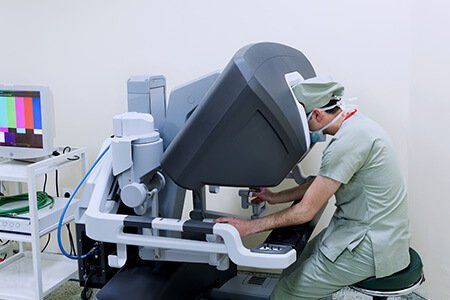
Robotic-assisted laparoscopic prostatectomy uses the da Vinci Surgical System, a multi-arm robotic platform controlled by the surgeon from a console in the operating room. The system does not operate autonomously. Every movement of the robotic instruments precisely mirrors the surgeon's hand movements at the console, scaled down and filtered to remove tremor.


Robotic Prostatectomy Procedure

  • Five to six small incisions of one to two centimetres are made in the abdomen, through which a camera and specialised robotic instruments are inserted
  • The surgeon views a high-definition, three-dimensional magnified image of the operative field, with resolution and depth perception significantly beyond what the naked eye or standard laparoscopic camera provides
  • The robot's EndoWrist instruments replicate the full range of wrist motion, including angles that the human hand cannot achieve in a narrow operative space
  • The prostate is dissected from surrounding structures, the bladder neck is reconnected to the urethra, and lymph nodes are sampled if the clinical staging warrants it


The da Vinci Xi vs Earlier Generations

The da Vinci Xi (fourth generation) is the current standard system at India's leading robotic surgery centres. It improves on earlier models by enabling multi-quadrant reach without repositioning, improving arm placement to allow simultaneous multi-quadrant surgery, and reducing footprint. Some Indian centres now operate dual-console systems, in which a senior surgeon and a trainee or specialist colleague both have simultaneous access to the operative controls.


Robotic vs Open vs Laparoscopic: What Does the Evidence Show?

Three surgical approaches exist for radical prostatectomy, and the evidence clearly stratifies them by functional outcome.


Comparison of Robotic, Open, and Laparoscopic Prostatectomy

Approach

Continence at 9 Months

Potency at 9 Months

Hospital Stay

Open Radical Prostatectomy70 to 80%40 to 60% (nerve-sparing)5 to 7 days
Laparoscopic (LRP)79.87%6.39%3 to 5 days
Robotic (RARP)91.69%18.96% (rising to 69-82% at 12 months with bilateral NS)1 to 2 days

Robotic surgery's advantage over laparoscopic is most pronounced in the early recovery period. Both approaches catch up with open surgery at twelve months on most functional parameters, but the robotic approach consistently leads in early continence and potency recovery, which matters significantly for quality of life during that recovery window.


The oncological outcomes (cancer control, margin-negative rates, biochemical recurrence) are equivalent across all three approaches in well-matched patient populations.


Nerve-Sparing Technique: Trifecta and Pentafecta

The prostate lies adjacent to two neurovascular bundles, collections of nerves and vessels that run along each side of the gland and control erectile function. A surgeon's ability to spare these bundles while achieving complete cancer removal determines whether a patient retains sexual function after surgery.


What Do Trifecta and Pentafecta Mean?

Trifecta measures three outcomes simultaneously: urinary continence, return of potency, and PSA undetectable at follow-up. Data show trifecta rates of 71 percent at twelve months and 76 percent at twenty-four months following bilateral nerve-sparing robotic prostatectomy.


Pentafecta includes the absence of 90-day complications above grade 3 and negative surgical margins. Nerve-sparing patients achieve pentafecta at 15.1 percent, compared with 4 percent in non-nerve-sparing patients.


Types of Nerve-Sparing Techniques

The degree of nerve preservation depends on cancer location, stage, and individual patient factors.


Full Nerve Sparing (Intrafascial)


  • Preserves the maximum amount of nerve tissue
  • Typically considered for low-risk, localised prostate cancer
  • Offers the greatest potential for preserving erectile function


Partial Nerve Sparing (Interfascial)


  • Preserves most of the neurovascular bundles
  • Provides a slightly wider surgical margin
  • Often used for selected intermediate-risk cases


Non-Nerve Sparing (Extrafascial)


  • Removes the neurovascular bundles when cancer is close to or involves these structures
  • Prioritises cancer control over nerve preservation


How Nerve Sparing Affects Erectile Function

Nerve-sparing techniques can significantly influence postoperative sexual function. In a high-volume single-surgeon study, 97% of men who had normal erectile function before surgery reported satisfactory erectile function after full bilateral nerve-sparing prostatectomy.


Dr. Gagan Gautam, Chief of Uro-Oncology at Max Healthcare in New Delhi and one of India's most experienced robotic prostatectomy surgeons, has observed that patient outcomes track closely with surgical volume: "The nerve-sparing dissection in robotic prostatectomy is one of the most technically demanding aspects of the procedure. The learning curve is long, and the gap between a surgeon who has performed 200 procedures and one who has performed 2,000 procedures is evident in continence and potency outcomes. Volume is not the only predictor, but it is the most honest one patients can evaluate before choosing a surgeon."


Who Is the Right Candidate for Robotic Prostatectomy?

Not every prostate cancer patient requires surgery, and not every surgical candidate is best served by the robotic approach. The decision involves a combination of staging, risk stratification, patient age, and preference.


Ideal Candidates for RALP

  • Clinically localised prostate cancer (stages T1c to T3a) without evidence of distant metastases
  • PSA below 20 ng/mL at diagnosis, though higher PSA does not preclude surgery if staging confirms localised disease
  • Gleason score up to 8 to 9 in patients where multiparametric MRI and biopsy confirm organ-confined disease
  • Patients under 75 years with good performance status and a life expectancy exceeding ten years
  • Men who place high importance on sexual function preservation, where nerve-sparing robotic technique offers the best prospect


When Active Surveillance May Be Appropriate First

Low-risk prostate cancer (PSA under 10, Gleason 6, clinical stage T1 to T2a) in older patients often warrants active surveillance rather than immediate surgery. RALP is most clearly indicated when Gleason score, PSA trajectory, MRI findings, or patient preference indicates the disease warrants definitive treatment.
 

Diagnostic Workup Before Robotic Prostatectomy in India

International patients travelling to India for robotic prostatectomy typically arrive with some investigations already completed. The standard pre-operative workup includes:


What Should Be Done Before Travel?

  • PSA measurement (recent, within three months)
  • Multiparametric MRI (mpMRI) of the prostate: now standard before or alongside biopsy, identifying clinically significant cancer with PI-RADS scoring
  • Systematic and targeted prostate biopsy with Gleason grading (ISUP grade group 1 to 5)
  • Staging CT scan of the abdomen and pelvis, and bone scan if PSA exceeds 20 or Gleason 8 to 10

Patients who arrive with complete imaging and histopathology allow the surgical team to assess nerve-sparing candidacy, lymph node dissection requirements, and approach planning before the first consultation.


How Much Does Robotic Prostatectomy Cost in India?

Robotic prostatectomy in India costs between USD 7,000 and USD 14,000 at accredited hospitals, depending on hospital tier, surgeon seniority, and whether extended lymph node dissection is performed.


Individual Cost Components

Component

Approximate Cost (USD)

Surgeon's fee (robotic uro-oncology specialist)1,500 to 3,500
Robotic system usage fee (da Vinci Xi per case)1,500 to 3,000
Disposable robotic instruments and draping800 to 1,500
Anaesthesia (general anaesthesia, full monitoring)400 to 700
Operating theatre (robotic suite)600 to 1,200
Hospital stay (2 to 3 nights general ward)300 to 600
Pre-operative investigations (ECG, blood tests, imaging review)200 to 500
Pathology (prostate specimen processing, margins assessment)200 to 400
Post-operative urethral catheter and nursing care150 to 300

Global Cost Comparison

Country

RALP Cost Range (USD)

Notes

India7,000 to 14,000da Vinci Xi, JCI-accredited centres
Thailand12,000 to 18,000Similar technology, higher pricing
Turkey8,000 to 14,000Growing robotic urology sector
Germany20,000 to 35,000European standard, higher base cost
UK (private)18,000 to 30,000NHS delays drive demand abroad
USA30,000 to 60,000Highest cost globally
Australia20,000 to 40,000Long public system waits

What Does Recovery Look Like After Robotic Prostatectomy?

Recovery from RALP is significantly faster than from open prostatectomy. The small incisions, reduced blood loss, and absence of major muscle division translate directly into shorter hospital stay and quicker functional recovery.


Hospital to Home

  • Night of surgery: patient is mobile and walking within hours
  • Days 1 to 2: discharge from hospital. A urethral catheter remains in place for seven to ten days post-operatively, removed at a follow-up appointment
  • Days 7 to 10: catheter removal and wound review. Most international patients are cleared to fly home by day ten to fourteen
  • Week 2 to 4: light activity resumes. Desk work from week two in most cases


Functional Recovery Timeline

Function

Expected Recovery Timeframe

Urinary continence (0 pads)50 to 70% by 3 months; 85 to 92% by 9 to 12 months
Return of erectile function3 to 18 months depending on nerve-sparing grade and age
PSA nadir (undetectable)Confirmed at 6 to 12 weeks post-surgery
Return to full physical activity6 to 8 weeks

Pelvic floor exercises (Kegel exercises) started before surgery and continued consistently after catheter removal significantly improve the speed of continence recovery and are part of the discharge protocol at all leading Indian robotic surgery centres.


PSA Monitoring After Surgery

PSA should fall to undetectable levels within six to twelve weeks of successful surgery. A PSA of 0.2 ng/mL or above on two consecutive tests indicates biochemical recurrence and warrants evaluation for adjuvant radiation or salvage therapy. Postoperative PSA monitoring is lifelong, and most Indian centres establish a digital follow-up protocol for international patients managed through their home urologist.


Conclusion

Robotic prostatectomy is one of the procedures where the gap between an experienced surgeon and an average one shows most clearly in outcomes that affect quality of life every day for years. Continence, potency, and PSA control are not abstract statistics. They are the functional reality the patient lives with after surgery.


India's leading robotic urology programmes deliver nerve-sparing RALP with da Vinci Xi, achieving internationally comparable outcomes at a cost that represents a 70 to 80 percent saving compared to Western prices. The saving is real. The qualifier remains the same as for any complex surgical procedure: the technology is only as good as the surgeon using it, and the surgeon's volume and subspecialty depth are the variables worth investigating most carefully before booking.


Take the Next Step

International patients considering robotic prostatectomy in India can send their PSA reports, mpMRI findings, biopsy histopathology, and clinical staging summary to us for a remote surgical opinion. We respond within 24 hours with a nerve-sparing assessment, lymph node dissection plan, and detailed cost estimate.


That review changes what the patient knows before they travel. It should happen before anything else is decided.


Disclaimer: This article provides general educational information about robotic prostatectomy options in India for prostate cancer. It does not constitute medical advice and must not replace a consultation with a qualified urological oncologist. Individual treatment decisions depend on cancer staging, PSA level, Gleason grade, patient age, functional status, and surgeon assessment. Patients should consult a specialist before making any decisions about prostate cancer treatment.

Əlaqəli xəstəxanalar

Keyfiyyətli sağlamlıq xidmətləri üçün bu mövzu ilə əlaqəli xəstəxanalar və tibb mərkəzlərini kəşf edin.
Medical Park Bahçelievler Xəstəxanası
Platin

Medical Park Bahçelievler Xəstəxanası

İstanbul, Türkiyə

Medical Park Bahçelievler Xəstəxanası İstanbulda 2007-ci ildə qurulmuş 242 çarpayılıq JCI tərəfindən akkreditə olunmuş xəstəxanadır. 33.000 kvadratmet...

Multi-specialty
Qurulub 2007
242 çarpayı
Akkreditasiyalar
Joint Commission International (JCI)
Qurğu
+13
BLK-Max Super İxtisas Xəstəxanası, Yeni Dehli
Platin

BLK-Max Super İxtisas Xəstəxanası, Yeni Dehli

Yeni Dehli, Hindistan

Yeni Dehlidəki BLK-Max Super İxtisas Xəstəxanası 650 çarpayı, 22 qabaqcıl əməliyyat teatrı və 13 Mükəmməllik Mərkəzi təklif edən Hindistanın ən yaxşı ...

Multi-specialty
Qurulub 1959
650 çarpayı
Akkreditasiyalar
Joint Commission International (JCI)
National Accreditation Board for Hospitals & Healthcare Providers (NABH)
Qurğu
+13
Fortis Memorial Tədqiqat İnstitutu (FMRI), Gurgaon
Platin

Fortis Memorial Tədqiqat İnstitutu (FMRI), Gurgaon

Qurqaon, Hindistan

Fortis Memorial Araşdırma İnstitutu (FMRI), Gurgaon, 2013-cü ildə yaradılmış dünya səviyyəli çoxixtisaslı xəstəxanadır. Xəstəxana 330 çarpayı, 15 əməl...

Multi-specialty
Qurulub 2013
330 çarpayı
Akkreditasiyalar
Joint Commission International (JCI)
National Accreditation Board for Hospitals & Healthcare Providers (NABH)
Qurğu
+13
Artemis Xəstəxanası, Gurgaon
Platin

Artemis Xəstəxanası, Gurgaon

Qurqaon, Hindistan

Artemis Xəstəxanası, Gurqaon, 2007-ci ildə yaradılmış JCI tərəfindən akkreditə olunmuş çoxixtisaslı xəstəxanadır. O, 9 hektar əraziyə yayılmış 750+ ça...

Multi-specialty
Qurulub 2007
750 çarpayı
Akkreditasiyalar
Joint Commission International (JCI)
National Accreditation Board for Hospitals & Healthcare Providers (NABH)
International Organization for Standardization (ISO)
Qurğu
+13
Kokilaben Dhirubhai Ambani Xəstəxanası, Mumbay
Platin

Kokilaben Dhirubhai Ambani Xəstəxanası, Mumbay

Mumbay, Hindistan

Kokilaben Dhirubhai Ambani Xəstəxanası, Mumbay, 2009-cu ildə yaradılmış JCI, NABH, NABL və CAP tərəfindən akkreditə olunmuş dördüncü dərəcəli baxım xə...

Multi-specialty
Qurulub 2009
750 çarpayı
Akkreditasiyalar
Joint Commission International (JCI)
National Accreditation Board for Hospitals & Healthcare Providers (NABH)
International Organization for Standardization (ISO)
Qurğu
+13
Medicover Xəstəxanaları, Hitech City, Hyderabad
Platin

Medicover Xəstəxanaları, Hitech City, Hyderabad

Heydərabad, Hindistan

Medicover Hospitals, Hitech City, Hyderabad, is a 400-bed NABH-accredited super-specialty hospital established in 2011. It is part of Medicover, a glo...

Multi-specialty
Qurulub 2011
400 çarpayı
Akkreditasiyalar
National Accreditation Board for Hospitals & Healthcare Providers (NABH)
Joint Commission International (JCI)
Qurğu
+13

Oxşar həkimlər

Bu sahədə təcrübəli həkimlər və tibbi mütəxəssislərlə əlaqə qurun.

Dr. Bibhas Ranjan Kundu

Dr. Bibhas Ranjan Kundu

Baş Məsləhətçi
40 illər təcrübəsi
Dr. Revathi R

Dr. Revathi R

məsləhətçi

22 illər təcrübəsi
Dr. Prasad Raju Kalidindi

Dr. Prasad Raju Kalidindi

Baş Məsləhətçi

25 illər təcrübəsi
Dr. Şakir Təbriz

Dr. Şakir Təbriz

Əlavə Direktor

17 illər təcrübəsi
Dr. Wichean Kamolpornvijit

Dr. Wichean Kamolpornvijit

məsləhətçi

38 illər təcrübəsi
Dr. Ukrid Kesthong

Dr. Ukrid Kesthong

məsləhətçi

10 illər təcrübəsi

Əlaqədar məqalələr

Bənzər sağlamlıq mövzularında daha çox məqalə və anlayışları araşdırın.
Hindistan vs Tayland: 2026-cı ildə ən yaxşı tibbi turizm yeri hansıdır?
Tibbi Turizm

Hindistan vs Tayland: 2026-cı ildə ən yaxşı tibbi turizm yeri hansıdır?

18/6/2026, 5:05:27 AM
9 dəqiqə oxu
Asiyada tibbi turizmi araşdıran xəstələrin əksəriyyəti eyni iki istiqaməti müqayisə edirlər. Hindistan və Tayland hər biri son üç onillikdə əhəmiyyətl...
Hindistanda ürək qapaqlarının dəyişdirilməsi əməliyyatı: növləri, texnologiyaları və bərpası
Tibbi Turizm

Hindistanda ürək qapaqlarının dəyişdirilməsi əməliyyatı: növləri, texnologiyaları və bərpası

18/6/2026, 4:16:32 AM
10 dəqiqə oxu
Ürəyin dörd klapan var və hər birinin bir işi var: qanın düzgün istiqamətdə hərəkətini davam etdirmək. Onlardan biri uğursuz olduqda, ürək bacardığı q...
İnsulin nasos terapiyası: necə işləyir, kimə fayda verir və 2026-cı ildə nəyə başa gəlir
Tibbi Turizm

İnsulin nasos terapiyası: necə işləyir, kimə fayda verir və 2026-cı ildə nəyə başa gəlir

16/6/2026, 8:29:27 AM
9 dəqiqə oxu
Gündəlik bir neçə inyeksiya ilə şəkərli diabeti idarə edən insanlar üçün, gündəlik illərlə davam edən müəyyən bir tükənmə növü var. Gündə dörd-altı en...
Piylənmə və Diabet: Bariatrik Cərrahiyyə hər ikisini birlikdə necə həll edir
Tibbi Turizm

Piylənmə və Diabet: Bariatrik Cərrahiyyə hər ikisini birlikdə necə həll edir

16/6/2026, 5:31:14 AM
9 dəqiqə oxu
Həm piylənməni, həm də 2-ci tip diabeti idarə edən insanların çoxu, hər iki vəziyyətin tək başına tələb etdiyindən daha ağır yük daşıyır. İki dəst dər...
Hindistanda Liposuction: Texnikalar, Xərclər və Bərpa Xronologiyası

Tibbi Turizm

Hindistanda Liposuction: Texnikalar, Xərclər və Bərpa Xronologiyası

16/6/2026, 5:14:21 AM
10 dəqiqə oxu
Liposuction is the most commonly performed cosmetic surgical procedure in the United States, with 347,782 procedures reported in 2023 alone, a 7 perce...
Hindistanda Facelift Cərrahiyyə: Prosedur, Bərpa və Ən Yaxşı Cərrahların Seçilməsi

Tibbi Turizm

Hindistanda Facelift Cərrahiyyə: Prosedur, Bərpa və Ən Yaxşı Cərrahların Seçilməsi

15/6/2026, 6:51:08 PM
8 dəqiqə oxu
Yaşlanma üzdə bərabər şəkildə baş vermir. Çənə xətti yumşalır və çənələrə çevrilir. Boyun tərifini itirir. Orta üz aşağı enir, nazolabial qıvrımları d...
Nadim Malik

Tibb yazıçısı

Tibbi nümayəndə Shield Healthcare Pvt. Ltd
B-Pharm

Nadeem Malik əczaçılıq sahəsində güclü akademik təcrübəsi olan xüsusi tibb yazıçısıdır. O, Moradabaddakı Teerthanker Mahaveer Universitetində əczaçılıq üzrə bakalavr (B.Pharm) dərəcəsinə malikdir və s... Daha ətraflı oxuyun

Veb saytımız çərəzlərdən istifadə edir. Məxfilik Siyasəti.