
Rotator Cuff Repair Surgery in India: Procedure, Success Rates and Cost
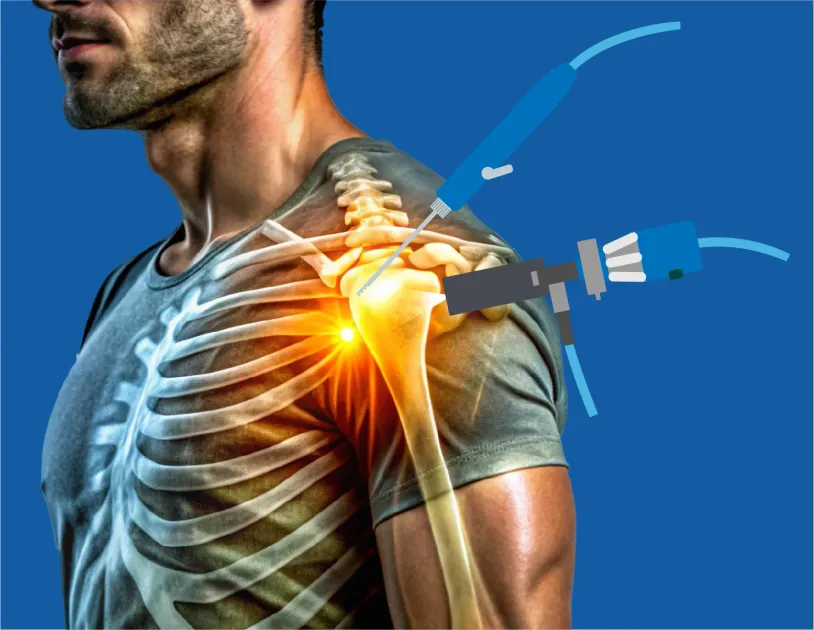
Reaching for a glass on a high shelf, putting on a jacket, sleeping on one side-these are the small, automatic movements that a torn rotator cuff turns into deliberate, painful decisions. The four tendons that form the rotator cuff hold the shoulder joint stable through every overhead motion, and when one tears, that stability disappears along with the strength and the pain-free range that depended on it.
Most rotator cuff tears do not heal on their own once the tendon has fully separated from the bone. For a full-thickness tear that limits function, arthroscopic repair remains the most effective intervention, restoring the tendon's attachment and, in well-selected patients, the shoulder's pre-injury strength and motion. Treatment success was reported in 77.5% of shoulders at 2 years in a large 2025 cohort analysis, with the factors predicting success or failure now well understood.
India performs a substantial volume of arthroscopic rotator cuff repairs annually at accredited orthopaedic and sports medicine centres, using the same suture anchors and arthroscopic technology as in the United States and Europe. Costs run to a fraction of Western pricing.
Quick Summary
Procedure | Arthroscopic Rotator Cuff Repair |
| Cost in India | USD 2,800–6,500 |
| Success Rate | Approximately 75–90% in appropriately selected patients; 77.5% treatment success at 2 years in a 2025 cohort study |
| Hospital Stay | Day-care or 1 night |
| Recovery | Sling for 6 weeks; most daily activities by 3–4 months; return to sports/heavy work in 6–9 months |
| Ideal Candidates | Symptomatic full-thickness tears, failed physiotherapy, acute traumatic tears, active patients |
| Why India? | Experienced shoulder surgeons, advanced arthroscopic techniques, internationally accredited hospitals, and substantially lower treatment costs than the UK and USA |
What Is the Rotator Cuff and What Happens When It Tears?
The rotator cuff is a group of four muscles and their tendons, supraspinatus, infraspinatus, teres minor, and subscapularis, that wrap around the head of the humerus and attach it firmly within the shoulder socket. Together they stabilise the joint and power rotation and elevation of the arm.
How Tears Happen
Rotator cuff tears occur through two main mechanisms:
- Acute traumatic tears: a fall onto an outstretched arm, a sudden heavy lift, or a forceful pull can tear a previously healthy tendon, often the supraspinatus
- Degenerative tears: repetitive overhead use, ageing tendon tissue, and reduced blood supply to the tendon's insertion point cause gradual thinning and eventual tearing, common in patients over 50 and in those with occupations or sports involving repetitive overhead motion
Partial vs Full-Thickness Tears
A partial-thickness tear involves only some of the tendon fibres and may be managed without surgery in many cases. A full-thickness tear means the tendon has completely separated from its attachment on the humeral head, and this category is where surgical repair becomes the primary consideration once non-surgical measures have been tried or are judged unlikely to succeed.
When Is Surgery Recommended for a Rotator Cuff Tear?
Not every rotator cuff tear requires surgery, and the decision depends on tear type, symptom severity, and patient factors.
When Surgery Is the Right Recommendation
- Full-thickness tears causing persistent pain, weakness, or functional limitation, particularly in younger or active patients
- Acute traumatic tears in an otherwise healthy tendon, where early repair produces better outcomes than delayed repair once retraction and fatty degeneration progress
- Failed conservative management: Physiotherapy, activity modification, and corticosteroid injection have been tried for six to twelve weeks without adequate improvement
- Tears affecting the dominant arm in patients whose work or sport depends on shoulder function
When Non-Surgical Management Is Reasonable First
Partial tears, degenerative tears in older patients with lower functional demands, and small full-thickness tears with minimal symptoms are often managed initially with physiotherapy focused on rotator cuff strengthening and scapular stabilisation, alongside activity modification and targeted injections for pain control.
What Happens If You Delay Rotator Cuff Repair?
Not every rotator cuff tear requires immediate surgery, but delaying treatment for a symptomatic full-thickness tear can make the repair more difficult over time.
As the tendon remains detached, it may gradually retract away from its original attachment on the bone. At the same time, the rotator cuff muscles can undergo fatty degeneration and atrophy, reducing their ability to function even after surgical repair. Larger chronic tears are also more likely to involve multiple tendons and have lower healing rates than tears repaired earlier.
For patients with persistent pain, weakness, or loss of shoulder function despite physiotherapy, early assessment by a shoulder specialist offers the best opportunity for a successful repair before irreversible changes occur.
How Is Arthroscopic Rotator Cuff Repair Performed?
Arthroscopic repair is the standard modern approach, performed through small portals using a camera and specialised instruments rather than the larger incision required for open repair.
- Anaesthesia: Typically a regional nerve block (interscalene block) combined with sedation, or general anaesthesia. Nerve block significantly reduces postoperative pain medication requirements.
- Portal placement: Two to four small incisions, each measuring less than one centimetre, are made around the shoulder for the camera and instruments.
- Diagnostic arthroscopy: The joint is inspected first to assess the biceps tendon, labrum, and the full extent of the rotator cuff tear before proceeding.
- Tendon preparation: The torn edge of the tendon is debrided, and the bone surface at the original attachment site (the footprint) is prepared to encourage healing.
- Suture anchor placement: Small anchors, made of bioabsorbable material or metal, are placed into the bone footprint. Sutures pass through the anchors and through the tendon.
- Repair configuration: Depending on tear size and tissue quality, the surgeon uses a single-row, double-row, or transosseous-equivalent suture technique to maximise the tendon-to-bone contact area and repair strength.
- Closure: Portals are closed with sutures, and the arm is placed in a sling.
The procedure takes 60 to 120 minutes depending on tear size and complexity, and is typically performed as a day case or with one overnight stay.
What Is the Success Rate of Rotator Cuff Repair?
Arthroscopic rotator cuff repair has an overall success rate of approximately 75% to 90%, although the exact figure depends on how success is defined. Most patients experience significant pain relief and improved shoulder function after repair, particularly when surgery is performed before the tear becomes large or chronic.
A 2025 retrospective cohort study of 302 shoulders reported an overall treatment success rate of 77.5% at two years, with success defined as a good functional outcome and no need for revision surgery. Larger tears involving more than two tendons and tears measuring over 25 mm were the strongest predictors of treatment failure, with both factors increasing the risk of a poor outcome by approximately threefold.
What Factors Influence Success?
The condition of the tendon at the time of surgery has a greater impact on the outcome than the surgical technique alone. Patients generally achieve better results when the tear is repaired before significant tendon retraction, muscle atrophy, or fatty degeneration develops.
The factors most strongly associated with better outcomes include:
- Smaller rotator cuff tears (under 25 mm)
- Fewer tendons involved (one or two maximum)
- Earlier surgical intervention before the tendon retracts too far
- Good baseline muscle quality at the time of surgery
- Commitment to postoperative rehabilitation program
Does Age Affect Rotator Cuff Repair Outcomes?
Age is an important consideration, but it is not the deciding factor on its own.
The same 2025 study found a treatment failure rate of 54.5% in patients aged 75 years or older, compared with 21.3% in younger patients. However, age became a significant risk factor primarily when it was accompanied by large tears, advanced fatty degeneration, and poor muscle quality. Patients in this high-risk group experienced treatment failure in approximately 75% of cases.
For patients younger than 75 years, age alone did not significantly worsen the prognosis. Instead, the combination of tear size, tendon quality, and muscle degeneration proved to be the strongest predictor of long-term healing.
Does Diabetes Reduce the Chances of Success?
Patients with diabetes can still achieve good outcomes after arthroscopic rotator cuff repair. Studies show that both well-controlled diabetes (HbA1c below 7%) and less well-controlled diabetes are associated with significant improvements in pain, shoulder function, and range of motion one year after surgery.
However, patients with higher HbA1c levels tend to recover external rotation more slowly. Optimising blood sugar levels before surgery may improve recovery, but diabetes alone is not a reason to avoid rotator cuff repair.
Open vs Arthroscopic Repair: Which Approach Is Better?
Arthroscopic repair has become the standard of care globally, though open repair remains indicated in select complex cases.
A 2024 comparative study found both arthroscopic and open repair groups showed noticeable improvement as the postoperative period progressed, with similar recovery times and functional capacity scores. However, patients treated with the open method reported slightly lower average pain levels.
The practical advantages of arthroscopic repair include smaller incisions, reduced soft-tissue disruption (no detachment of the deltoid muscle, as in open repair), lower infection risk, and a generally faster early recovery. Open repair remains relevant for massive, retracted tears where arthroscopic tendon mobilisation is technically limited, and for revision surgery in some cases.
Infection after arthroscopic repair is rare, occurring in approximately 0.03 to 3.4% of cases, and when it does occur, eradication rates with appropriate revision surgery and antibiotics exceed 94%.
How Much Does Rotator Cuff Repair Cost in India?
Rotator cuff repair in India costs between USD 2,800 and USD 6,500 at accredited hospitals, depending on tear complexity, repair technique, and hospital tier.
What Does the Total Cost Include?
Unlike many Western healthcare systems where hospital, surgeon, anaesthesia, and implant charges are billed separately, many Indian hospitals offer package pricing for international patients. Understanding how the total cost is distributed can help patients compare treatment quotes more accurately.
Component | Approximate Cost (USD) |
| Surgeon's fee (shoulder/sports medicine specialist) | 500 to 1,500 |
| Suture anchors (number depends on tear size) | 600 to 2,000 |
| Anaesthesia (regional block + sedation or general) | 200 to 450 |
| Operating theatre (arthroscopic equipment) | 400 to 900 |
| Hospital stay (day case to 1 night) | 150 to 500 |
| Pre-operative imaging (MRI, X-ray) | 150 to 400 |
| Sling and post-operative supplies | 50 to 150 |
| Inpatient physiotherapy initiation | 80 to 250 |
How Does India's Cost Compare with Other Countries?
India remains one of the most affordable destinations for rotator cuff repair without compromising access to modern arthroscopic techniques or internationally recognised suture anchor systems. Compared with private treatment in the UK, the United States, and several other medical tourism destinations, patients can often reduce treatment costs substantially while still receiving care at accredited hospitals.
Country | Rotator Cuff Repair (USD approx.) |
| India | 2,800 to 6,500 |
| Turkey | 5,000 to 8,000 |
| Thailand | 7,000 to 12,000 |
| UK (private) | 10,000 to 18,000 |
| USA | 20,000 to 40,000 |
Most accredited Indian centres offer all-inclusive packages covering consultation, the procedure, hospital stay, and initial postoperative follow-up. Patients should confirm whether the suture anchor brand and number, which can vary significantly by tear complexity, are included in the quoted price or billed separately.
What Does Recovery After Rotator Cuff Repair Look Like?
Recovery from rotator cuff repair is a longer process than the surgery itself suggests, and rushing it is the most common cause of re-tear.
- Week 0 to 6: The arm remains in a sling continuously, including while sleeping. The repair is at its weakest during this period and must be protected from active use. Passive range-of-motion exercises, performed by a physiotherapist rather than the patient, begin within the first one to two weeks.
- Week 6 to 12: The sling is discontinued under surgeon guidance. Active-assisted range-of-motion exercises begin, with the patient using the unaffected arm or a pulley system to help move the repaired shoulder.
- Week 12 to 16: Active range of motion without assistance, followed by the introduction of light strengthening exercises once adequate motion has been restored.
- Month 4 to 6: Progressive strengthening continues. Return to light work duties and most daily activities typically occurs within this window.
- Month 6 to 9: Return to overhead sports, heavy lifting, or physically demanding occupational tasks, guided by strength testing rather than time alone.
Patients with desk-based occupations can typically return to work within 2 to 3 weeks. Patients with physically demanding jobs that require overhead work or heavy lifting often need 20 weeks or more before a full return.
International patients should plan a stay of 10 to 14 days in India, covering surgery, early sling fitting, wound review, and initial physiotherapy guidance before flying home. Outpatient rehabilitation continues with the home physiotherapist for the months that follow, ideally guided by the Indian surgical team's protocol.
Rotator Cuff Repair Recovery Timeline
Recovery Stage | What Happens | Typical Milestone |
| Week 0–2 | Sling worn continuously. Pain control, wound care, and passive shoulder movement begin. | Protect the repair while controlling pain and swelling. |
| Weeks 2–6 | Passive physiotherapy continues. No active lifting with the operated arm. | Tendon begins early healing to bone. |
| Weeks 6–12 | Sling is gradually discontinued. Active-assisted and active shoulder movements begin. | Gradual improvement in shoulder mobility. |
| Months 3–4 | Progressive strengthening exercises are introduced. | Return to light daily activities and many desk-based jobs. |
| Months 4–6 | Strength and endurance training continue under physiotherapy guidance. | Most patients resume routine activities with improving shoulder function. |
| Months 6–9 | Advanced strengthening and sport-specific rehabilitation. | Return to overhead sports, heavy lifting, and physically demanding work after surgeon clearance. |
Takeaway
The single most important fact for any patient considering rotator cuff repair is that biological tendon-to-bone healing takes months, regardless of how skilled the surgical repair is. The suture anchors and arthroscopic technique determine the quality of the initial fixation. What happens over the following four to six months (protected motion, progressive strengthening, and patience with a process that cannot be accelerated) determines whether that fixation becomes a durably healed tendon.
The data are consistent in predicting success: smaller tears, fewer affected tendons, earlier repair before significant retraction and fatty degeneration, and age under 75 all favour a good outcome. None of these factors is within a patient's control once a tear has occurred, which is why timely diagnosis and referral, rather than delaying surgery, gives the repair its best chance.
India's sports medicine and orthopaedic centres perform arthroscopic rotator cuff repair with the same suture anchor systems and double-row techniques used internationally, at a cost that makes the procedure accessible to patients who would otherwise face a five-figure bill at home.
Need Help Finding the Right Shoulder Surgeon in India?
Choosing where to have rotator cuff repair involves more than comparing treatment costs. The surgeon's experience with arthroscopic shoulder procedures, the hospital's rehabilitation program, and the timing of surgery all play an important role in achieving the best possible outcome.
At Qonaq Health, we help international patients compare leading orthopaedic hospitals and experienced shoulder surgeons across India based on their specific diagnosis, treatment needs, and recovery goals. Our team can also assist with treatment planning, cost estimates, travel arrangements, and postoperative care coordination.
Contact us to discuss your case and receive personalised guidance for rotator cuff repair surgery in India.
Frequently Asked Questions
Is arthroscopic rotator cuff repair better than open surgery?
For most patients, yes. Arthroscopic repair requires smaller incisions, causes less soft-tissue disruption, reduces postoperative pain, and usually allows a faster early recovery. Open repair is generally reserved for selected large or complex tears.
How painful is rotator cuff repair surgery?
Most patients experience the greatest discomfort during the first few days after surgery. Modern pain management, including regional nerve blocks and multimodal pain medication, helps control postoperative pain effectively.
Can a rotator cuff tear heal without surgery?
Partial tears and some degenerative tears may improve with physiotherapy and activity modification. However, a full-thickness tear usually does not heal by reattaching to the bone without surgery.
How long should international patients stay in India?
Most international patients remain in India for 10 to 14 days after surgery to complete the procedure, undergo wound review, have a sling fitted, and receive initial physiotherapy before travelling home.
When can I travel after rotator cuff repair?
Many patients are medically fit to fly approximately 10 to 14 days after surgery, although the exact timing depends on wound healing, pain control, and the surgeon's assessment.
Can a repaired rotator cuff tear again?
Yes. Re-tears are more likely in large chronic tears, in patients with poor tendon quality, in smokers, and in patients who return to heavy activity before the tendon has completely healed.
How long do suture anchors remain in the shoulder?
Modern suture anchors may be bioabsorbable or non-absorbable depending on the implant used. They are designed to provide long-term fixation and usually do not need to be removed.
Is India a good choice for rotator cuff repair?
India is recognised for experienced shoulder surgeons, modern arthroscopic techniques, internationally accredited hospitals, and substantially lower treatment costs than many Western countries, making it a popular destination for international patients seeking shoulder surgery.
References
- Pérez MC, Costa TS, Carvalho Júnior LH, et al. Critical predictors of the outcomes of rotator cuff arthroscopic repair. Rev Bras Ortop (Sao Paulo). 2025.
- Takahashi R, Kajita Y, Iwahori Y, Harada Y. The relationship between clinical outcomes of arthroscopic rotator cuff repair and haemoglobin A1c. JSES Int. 2022;6(6):1095-1101.
- Menekşe S, Kınık H, Özkan FU, et al. Comparison of outcomes between open and arthroscopic rotator cuff repair. Adv Orthop. 2024;2024:10796185.
- American Academy of Orthopaedic Surgeons. Management of Rotator Cuff Injuries: Clinical Practice Guideline. Rosemont (IL): American Academy of Orthopaedic Surgeons; 2025.
Disclaimer: This article provides general educational information about rotator cuff repair surgery in India. It does not constitute medical advice and must not replace a consultation with a qualified orthopaedic or sports medicine surgeon. Individual treatment decisions depend on tear size, tendon involvement, muscle quality, age, and patient activity demands. Patients should consult a specialist before making any decisions about shoulder surgery.
Əlaqəli xəstəxanalar
Keyfiyyətli sağlamlıq xidmətləri üçün bu mövzu ilə əlaqəli xəstəxanalar və tibb mərkəzlərini kəşf edin.
Medical Park Bahçelievler Xəstəxanası
Medical Park Bahçelievler Xəstəxanası İstanbulda 2007-ci ildə qurulmuş 242 çarpayılıq JCI tərəfindən akkreditə olunmuş xəstəxanadır. 33.000 kvadratmet...
Akkreditasiyalar
Qurğu
BLK-Max Super İxtisas Xəstəxanası, Yeni Dehli
Yeni Dehlidəki BLK-Max Super İxtisas Xəstəxanası 650 çarpayı, 22 qabaqcıl əməliyyat teatrı və 13 Mükəmməllik Mərkəzi təklif edən Hindistanın ən yaxşı ...
Akkreditasiyalar

Qurğu
Fortis Memorial Tədqiqat İnstitutu (FMRI), Gurgaon
Fortis Memorial Araşdırma İnstitutu (FMRI), Gurgaon, 2013-cü ildə yaradılmış dünya səviyyəli çoxixtisaslı xəstəxanadır. Xəstəxana 330 çarpayı, 15 əməl...
Akkreditasiyalar


Qurğu
Artemis Xəstəxanası, Gurgaon
Artemis Xəstəxanası, Gurqaon, 2007-ci ildə yaradılmış JCI tərəfindən akkreditə olunmuş çoxixtisaslı xəstəxanadır. O, 9 hektar əraziyə yayılmış 750+ ça...
Akkreditasiyalar



Qurğu
Kokilaben Dhirubhai Ambani Xəstəxanası, Mumbay
Kokilaben Dhirubhai Ambani Xəstəxanası, Mumbay, 2009-cu ildə yaradılmış JCI, NABH, NABL və CAP tərəfindən akkreditə olunmuş dördüncü dərəcəli baxım xə...
Akkreditasiyalar


Qurğu
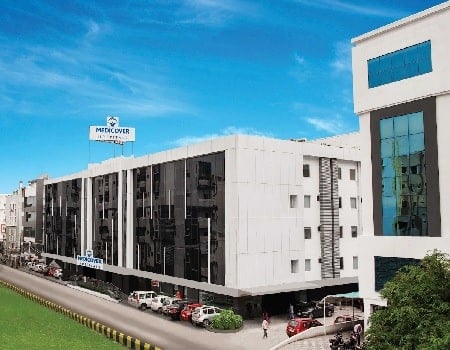
Medicover Xəstəxanaları, Hitech City, Hyderabad
Medicover Hospitals, Hitech City, Hyderabad, is a 400-bed NABH-accredited super-specialty hospital established in 2011. It is part of Medicover, a glo...
Akkreditasiyalar


Qurğu
Oxşar həkimlər
Bu sahədə təcrübəli həkimlər və tibbi mütəxəssislərlə əlaqə qurun.
Dr. Kanchan Bhattacharyya
məsləhətçi
Dr. Kalyan Guha
məsləhətçi
Dr. Rajinder Singh Gaheer
Baş Məsləhətçi
Dr. Ravi Bharadwaj
Baş Məsləhətçi
Dr. Rəncan Kamilya
Baş Məsləhətçi
Dr. Abheek Kar
məsləhətçi
Əlaqədar məqalələr
Bənzər sağlamlıq mövzularında daha çox məqalə və anlayışları araşdırın.
Hindistanda MCL və Menisküs Təmiri: Cərrahiyyə, Müvəffəqiyyət dərəcəsi və Bərpa
Best Countries for Orthopaedic Surgery and Sports Medicine in 2026
Hindistanda ACL Rekonstruksiya Cərrahiyyəsi: Prosedur, Qiymət və Müvəffəqiyyət Oranı
Hindistanda tərs çiyin dəyişdirilməsi: dəyəri, proseduru, bərpası
Hindistanda Kalça Bərpası Cərrahiyyəsi: Prosedur, Uyğunluq və Bərpa
Hindistanda Robot Diz dəyişdirilməsi: Faydalar, Nəticələr və Xərclər
Müəllif
Hamısına baxınNadeem Malik əczaçılıq sahəsində güclü akademik təcrübəsi olan xüsusi tibb yazıçısıdır. O, Moradabaddakı Teerthanker Mahaveer Universitetində əczaçılıq üzrə bakalavr (B.Pharm) dərəcəsinə malikdir və s... Daha ətraflı oxuyun
Veb saytımız çərəzlərdən istifadə edir. Məxfilik Siyasəti.
