Hip Resurfacing Surgery in India: Procedure, Eligibility, and Recovery

30/6/2026, 2:55:59 PM 13 min read Dalxiiska Caafimaadka
Hip Resurfacing Surgery in India: Procedure, Eligibility, and Recovery
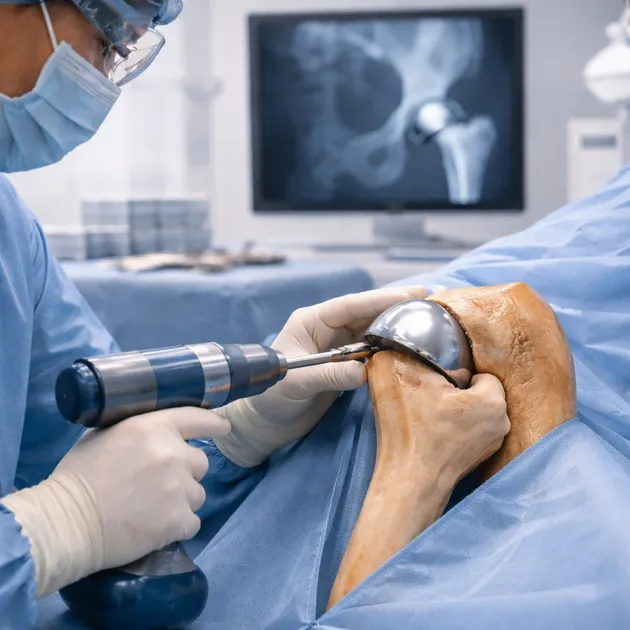
A 45-year-old man who runs, cycles, plays recreational football, and is told he has hip osteoarthritis faces a specific and uncomfortable decision. Total hip replacement is the default answer. It works, it lasts, and the outcomes data goes back decades. But it is also a procedure that surgeons traditionally told younger, active patients to delay as long as possible, because the prosthetic bearing wears out over time and a revision in the patient's 60s or 70s carries greater risk than the primary surgery.


Hip resurfacing offers an alternative that is precisely designed for this patient. Instead of removing the femoral head entirely and replacing it with a prosthetic stem inserted into the femur, resurfacing caps the existing femoral head with a metal covering, replacing only the acetabular socket. The patient's own bone is preserved. The femoral head remains. The resulting joint has a larger, more natural articulation diameter than a standard total hip replacement, a lower risk of dislocation, and a recovery that often enables patients to return to high-level physical activity sooner.


The data now runs to 25 years. It supports hip resurfacing for a specific, well-defined patient profile. India performs the procedure using the Birmingham Hip Resurfacing system at significantly lower costs than in the United Kingdom and the United States. This article covers what the evidence actually shows, who benefits, and what the full cost picture looks like.


Quick Summary

  • Hip resurfacing is a bone-preserving alternative to total hip replacement designed for carefully selected patients with hip osteoarthritis.
  • The ideal candidate is typically a younger, active man with good bone density and a femoral head size of at least 48 mm.
  • Women with smaller femoral heads, patients with osteoporosis, renal impairment, or significant hip deformity are generally better suited to total hip replacement.
  • Hip resurfacing surgery in India typically costs between USD 5,500 and USD 8,500, offering substantial savings compared with treatment in the UK or USA.
  • Most patients begin walking within 1 day after surgery, with a gradual return to sports over the following 3 to 6 months under supervised rehabilitation.


What Is Hip Resurfacing and How Is It Different From Total Hip Replacement?

Hip resurfacing (HRA) and total hip arthroplasty (THA) both address hip osteoarthritis. They do so through fundamentally different approaches to the femoral bone.


How Hip Resurfacing Works

  • A precisely machined metal cap is fitted over the patient's existing femoral head, which is trimmed and shaped rather than removed.
  • The acetabulum (hip socket) is reamed, and a metal cup is press-fit into position.
  • The result is a large-diameter metal-on-metal bearing that articulates within the new socket.
  • The femoral neck and shaft remain entirely intact, with no stem inserted into the femoral canal.


How Total Hip Replacement Differs

In THA, the femoral head and neck are removed. A metal stem is cemented or press-fit into the femoral canal, with a small prosthetic ball attached. This removes more bone but allows a wider range of implant materials and bearing options, including ceramic and highly cross-linked polyethene.


The practical differences between the two procedures centre on five factors: bone preservation, head size and dislocation risk, post-surgical activity capacity, metal ion considerations, and what happens if revision surgery is eventually needed.


What Is the Birmingham Hip Resurfacing System?

The Birmingham Hip Resurfacing (BHR) system, developed by Derek McMinn in Birmingham in the 1990s and manufactured by Smith+Nephew, is the most studied and widely implanted hip resurfacing device globally. It uses a cobalt-chromium metal-on-metal bearing in both the femoral cap and acetabular cup.


Hip resurfacing arthroplasty provides an attractive alternative to total hip arthroplasty for the management of osteoarthritis in younger, more active patients.


The BHR remains the only hip resurfacing device with published long-term survival data extending to 25 years. A study published in The Bone and Joint Journal in 2024 reported 25-year outcomes from the original Birmingham cohort, patients who underwent surgery between 1997 and 1998. This represents one of the longest follow-up datasets in the history of hip arthroplasty for any single device series.


A 2025 update from Washington University in St. Louis, published in the Journal of Bone and Joint Surgery, evaluated 224 BHR patients at a mean follow-up of 14 years. The BHR implant remains an excellent option for treating osteoarthritis in younger male patients, with activity levels comparable to THA at long-term follow-up.


Who Is the Right Candidate for Hip Resurfacing?

Patient selection for hip resurfacing is more restrictive than for total hip replacement, and the evidence clarifies the specific profile.


Factors Favouring Hip Resurfacing

  • Male sex: Men have consistently better outcomes than women in published resurfacing series, primarily because men tend to have larger femoral heads.
  • Femoral head size of 48 mm or above: Smaller femoral heads carry a higher risk of adverse local tissue reactions from metal ion release at the metal-on-metal bearing surface.
  • Age under 60 to 65: Younger patients benefit most from bone preservation and are more likely to place the higher functional demands that resurfacing handles better than a small-head THR.
  • Good bone density: Avascular necrosis of the remaining femoral head and femoral neck fracture are the primary early failure modes; adequate bone stock is essential.
  • High-demand activity level: Patients who want to return to running, cycling, skiing, or contact sports benefit most from resurfacing's larger head diameter and more natural biomechanics.
  • Normal hip anatomy: Severe dysplasia, prior osteotomy, or grossly deformed femoral neck makes the resurfacing geometry less predictable.


Who Should Consider Total Hip Replacement Instead

  • Women with femoral head sizes below 48 mm
  • Patients with established or borderline osteoporosis
  • Patients over 65 with lower activity demands
  • Patients with renal impairment (metal ion accumulation is a concern)
  • Patients with localised avascular necrosis of the femoral head, which affects the biology of the capped bone

BHR offers excellent results in young patients that are comparable to THA, with THA patients less likely to be satisfied. The key message from the evidence is that resurfacing outperforms THA in satisfaction for the right patient but yields worse outcomes for patients who fall outside the ideal selection profile.


Why Are Women at Higher Risk From Hip Resurfacing?

This is the most important risk factor in hip resurfacing, and patients must understand it before deciding.


The metal-on-metal bearing in BHR releases cobalt and chromium ions into the local tissue and bloodstream as the two surfaces articulate. In the large majority of patients, ion levels remain low and clinically insignificant. In a subset of patients, elevated metal ions trigger an adverse local tissue reaction (ALTR), or pseudotumour formation, that damages the muscle and soft tissues around the hip and ultimately leads to implant failure.


Femoral head size is the primary determinant of metal ion release. Larger heads produce less wear per rotation and generate lower ion levels. Women, who on average have smaller femoral heads than men, are disproportionately represented in the ALTR failure group. This is why most experienced resurfacing surgeons now restrict the procedure almost exclusively to male patients and to women whose anatomy demonstrates a femoral head large enough to accept a 50 mm or larger implant.


Patients who are offered hip resurfacing should ask specifically about their measured femoral head size and the surgeon's historical complication rate in female patients.


How Does Hip Resurfacing Compare to Total Hip Replacement?

Feature

Hip Resurfacing (BHR)

Total Hip Replacement

Bone removedFemoral head surface onlyFemoral head and neck
Femoral head sizeLarge (patient's own, capped)Small prosthetic ball (28 to 36 mm typically)
Dislocation riskLower due to large head diameterHigher with smaller head sizes
Metal ion riskPresent (cobalt/chromium)Low (ceramic or polyethene alternatives)
Suitable for womenSelectively (large head size only)Yes, all candidates
Revision to THR if neededRelatively straightforwardMore complex revision
Return to sportOften faster, fewer restrictionsSimilar, more activity restrictions reported
10-year survivalApproximately 90% (low-risk BHR)90 to 95%
Evidence base25 years for BHR40+ years

How Is Hip Resurfacing Performed?

Hip resurfacing takes two to three hours under general or spinal anaesthesia, using a posterior or anterolateral approach to the hip.


Procedure

  1. Access: The hip joint is opened via a skin incision over the outer aspect of the hip. The joint capsule is opened and the femoral head dislocated.
  2. Femoral preparation: A central guide pin is drilled into the femoral head. The head is then trimmed to a precise hemisphere using a series of reamers, preserving the femoral neck.
  3. Cap trial: A trial femoral component is fitted to check size and positioning.
  4. Acetabular preparation: The acetabular cartilage is removed, and the socket is reamed to accept the metal cup.
  5. Cup implantation: The metal acetabular cup is press-fit into position, sometimes supplemented with screws.
  6. Cap implantation: The femoral cap is cemented onto the shaped femoral head.
  7. Reduction and testing: The joint is reduced and tested for stability and range of motion.

No stem enters the femoral canal. The femoral neck and shaft are left entirely undisturbed, which is what makes conversion to a standard total hip replacement possible if revision becomes necessary years later.


How Much Does Hip Resurfacing Cost in India?

Hip resurfacing in India costs between USD 5,500 and USD 8,500 at accredited hospitals, somewhat higher than standard total hip replacement due to the cost of the BHR implant and the procedure's technical complexity.


Individual Cost Components

Component

Approximate Cost (USD)

Surgeon's fee (hip resurfacing specialist)1,000 to 2,500
Birmingham Hip Resurfacing implant (imported)2,000 to 4,000
Anaesthesia300 to 600
Operating theatre600 to 1,200
Hospital stay (3 to 5 nights)500 to 1,500
Pre-operative investigations (X-ray, CT, DEXA, blood tests)300 to 700
Physiotherapy (inpatient course)150 to 400
Post-operative medications100 to 300

Global Cost Comparison

Country

Hip Resurfacing (USD)

Total Hip Replacement (USD)

India5,500 to 8,5004,500 to 7,500
Turkey9,000 to 14,0007,000 to 12,000
Thailand14,000 to 20,00010,000 to 16,000
UK (private)16,000 to 25,00014,000 to 22,000
USA28,000 to 45,00025,000 to 45,000

The BHR implant itself accounts for a significant portion of the cost. Patients should confirm that the quoted price includes an authentic, manufacturer-supplied BHR or equivalent certified metal-on-metal resurfacing device rather than an unvalidated copy.


What Is the Success Rate of Hip Resurfacing Surgery?

Hip resurfacing surgery has excellent long-term outcomes when performed in carefully selected patients by experienced joint reconstruction surgeons. The strongest evidence comes from the Birmingham Hip Resurfacing (BHR) system, which has the longest published follow-up of any hip resurfacing implant.


The original Birmingham cohort, followed for 25 years, reported an overall implant survival rate of approximately 82%. Outcomes were considerably better in the group for whom the procedure was originally designed (men with osteoarthritis and larger femoral heads), with implant survival exceeding 90% at 20 years in several published series.


Several factors have a significant impact on long-term success:


  • Patient selection: Younger, active men with primary osteoarthritis consistently achieve the best outcomes.
  • Femoral head size: Larger femoral heads reduce wear and the risk of adverse local tissue reactions associated with metal-on-metal bearings.
  • Bone quality: Good bone stock reduces the risk of femoral neck fractures and implant failures.
  • Surgeon experience: Hip resurfacing is technically demanding, and higher-volume surgeons generally report lower complication and revision rates.
  • Post-operative rehabilitation: Following the recommended physiotherapy programme helps restore strength, mobility, and long-term function.


Outcome

Evidence

Overall BHR implant survival~82% at 25 years (original Birmingham cohort)
Best-performing groupYounger men with primary osteoarthritis
Long-term follow-up25 years
Mean follow-up (2025 JBJS study)14 years (224 patients)
Main predictors of successMale sex, larger femoral head, good bone quality, experienced surgeon

What Does Recovery Look Like After Hip Resurfacing?

Recovery from hip resurfacing is generally faster than from total hip replacement for most patients, partly because the procedure is less disruptive to the femoral canal and partly because the patient population is typically younger and fitter.


Hospital to Home

  • Day 0 to 1: Most patients stand and begin walking with a frame or crutches on the day of surgery or the following morning. Full weight bearing is typically allowed immediately.
  • Days 2 to 5: Hospital stay with daily physiotherapy. Range of motion exercises and stair practice before discharge.
  • Days 5 to 14: Most international patients fly home within ten to fourteen days after surgery, once independent mobility is confirmed and wound healing is satisfactory.


Activity Milestones

  • Week 2 to 4: Walking distance increases steadily. Crutches are typically discontinued after 2 to 4 weeks.
  • Week 4 to 6: Driving resumes (left-hip patients often sooner; right-hip patients when they can brake reliably).
  • Month 2 to 3: Swimming and cycling resume. The larger femoral head of a resurfacing implant allows activity without the same dislocation precautions as with a smaller-head THR.
  • Month 3 to 6: Return to recreational sport. Running, hiking, and impact activities are permitted earlier for most resurfacing patients than for standard THR.

For young, healthy patients, full weight-bearing is often allowed within the first week, and normal walking can be resumed within 4 to 6 weeks.


The Bottomline

Hip resurfacing is not the right procedure for every patient with hip osteoarthritis. For women with small femoral heads, for older patients, for those with bone density concerns, total hip replacement remains the better-evidenced and safer choice.


For the patient it was designed for, a younger man with good bone density, a large femoral head, and an active life that he genuinely wants back, hip resurfacing offers something total hip replacement does not. It preserves the femoral bone that a revision would depend on. It produces a joint that most patients describe as feeling more natural. And it comes with 25 years of outcome data from the original Birmingham cohort showing sustained survival in an appropriately selected population.


India performs BHR at costs well below what the procedure commands in the West, at accredited orthopaedic centres where surgeons trained in joint reconstruction bring the volume of experience the procedure requires. For the right patient, it is one of the more compelling reasons to consider medical travel.


Consult Qonaq Health for Hip Resurfacing Surgery in India

Choosing between hip resurfacing and total hip replacement requires careful evaluation of your age, bone quality, activity level, and imaging findings. At Qonaq Health, we help international patients connect with experienced joint replacement specialists at leading orthopaedic hospitals across India to determine the most appropriate treatment for their condition.


Our team can assist with reviewing your medical records and imaging, arranging specialist consultations, providing personalised treatment plans and cost estimates, and coordinating your travel and hospital care. 

Contact Qonaq Health by filling out the enquiry form to find out whether hip resurfacing surgery is the right option for you.


Frequently Asked Questions

Is hip resurfacing better than total hip replacement?


Neither procedure is universally better. Hip resurfacing is designed for carefully selected younger, active patients with good bone quality, while total hip replacement remains the preferred option for most patients with advanced hip arthritis.


How long does a Birmingham Hip Resurfacing implant last?


Published data from the original Birmingham Hip Resurfacing cohort have reported implant survival extending to 25 years in appropriately selected patients.


Can women undergo hip resurfacing surgery?


Some women may be suitable candidates, particularly those with larger femoral head sizes and good bone quality. However, many surgeons recommend total hip replacement because women generally have a higher risk of metal-related complications.


Is hip resurfacing still performed today?


Yes. Although its use has become more selective, hip resurfacing continues to be performed at specialist orthopaedic centres for carefully chosen patients.


Can I return to running or sports after hip resurfacing?


Many patients return to cycling, swimming, hiking, golf, and even recreational running after completing rehabilitation, although the timeline varies depending on individual recovery and surgeon recommendations.


How soon can I walk after surgery?


Most patients begin standing and walking with assistance on the day of surgery or the following day. Walking distance gradually improves over the following weeks with physiotherapy.


How long should international patients stay in India?


International patients are usually advised to remain in India for approximately 10 to 14 days after surgery for wound assessment, physiotherapy, and clearance before flying home.


Will airport security detect my implant?


Modern orthopaedic implants may trigger airport security scanners. Your hospital can provide documentation confirming that you underwent joint replacement surgery, if required.


What happens if a hip resurfacing implant eventually wears out?


One advantage of hip resurfacing is that it preserves the femoral bone, making conversion to a conventional total hip replacement relatively straightforward if revision surgery becomes necessary in the future.


Does insurance cover hip resurfacing?


Coverage depends on your insurance provider and country of residence. Patients should confirm eligibility directly with their insurer before travelling for treatment.


References

  1. McMinn D, Treacy R, Lin K, Pynsent P. Metal-on-metal surface replacement of the hip. Experience of the Birmingham Hip Resurfacing system. Clin Orthop Relat Res. 1996;(329 Suppl):S89-S98.
  2. Treacy RBC, McBryde CW, Pynsent PB. Birmingham Hip Resurfacing arthroplasty. A minimum follow-up of five years. J Bone Joint Surg Br. 2005;87(2):167-170.
  3. McMinn DJW, Snell KIE, Daniel J, Treacy RBC, Pynsent PB, Riley RD. The Birmingham Hip Resurfacing implant at 25 years: results from the original cohort. Bone Joint J. 2024.
  4. Lyman S, et al. Long-term outcomes of Birmingham Hip Resurfacing in younger patients with osteoarthritis. J Bone Joint Surg Am. 2025.
  5. National Institute for Health and Care Excellence (NICE). Joint replacement (primary): hip, knee and shoulder. NICE Guideline NG157. London: NICE; 2020.
  6. Smith & Nephew. Birmingham Hip Resurfacing (BHR) System – Instructions for Use and Clinical Evidence.


Disclaimer: This article provides general educational information about hip resurfacing surgery in India. It does not constitute medical advice and must not replace a consultation with a qualified orthopaedic surgeon. Individual suitability for hip resurfacing depends on sex, femoral head size, bone density, age, activity level, and anatomy. Patients should consult an orthopaedic specialist experienced in both resurfacing and total hip replacement before making any decisions.

Isbitaalada la xiriira

Baro Isbitaalada iyo xarumaha caafimaadka ee la xiriira mowduucan adeegyada daryeelka caafimaadka tayada leh.
Park Medical Bahcelievler Hospital
Platinum

Park Medical Bahcelievler Hospital

Istanbul, Turkiga

Medical Park Bahcelievler Hospital waa cisbitaal la aqoonsan yahay JCI oo leh 242 sariirood oo ku yaal Istanbul, oo la aasaasay 2007. Ku faafaya 33,00...

Multi-specialty
Aasaasay 2007
242 sariiraha
Aqoonsado
Joint Commission International (JCI)
Gadawiya xarumaha
+13
BLK-Max Super Specialty Hospital, New Delhi
Platinum

BLK-Max Super Specialty Hospital, New Delhi

New Delhi, Hindiya

BLK-Max Super Specialty Hospital ee New Delhi waa mid ka mid ah xarumaha daryeelka caafimaadka ee Hindiya, oo bixiya 650 sariirood, 22 tiyaatar qallii...

Multi-specialty
Aasaasay 1959
650 sariiraha
Aqoonsado
Joint Commission International (JCI)
National Accreditation Board for Hospitals & Healthcare Providers (NABH)
Gadawiya xarumaha
+13
Fortis Memorial Research Institute (FMRI), Gurgaon
Platinum

Fortis Memorial Research Institute (FMRI), Gurgaon

Gurgaon, Hindiya

Fortis Memorial Research Institute (FMRI), Gurgaon, waa isbitaal heer caalami ah oo badan oo takhasus leh oo la aasaasay 2013. Isbitaalku wuxuu bixiya...

Multi-specialty
Aasaasay 2013
330 sariiraha
Aqoonsado
Joint Commission International (JCI)
National Accreditation Board for Hospitals & Healthcare Providers (NABH)
Gadawiya xarumaha
+13
Isbitaalka Artemis, Gurgaon
Platinum

Isbitaalka Artemis, Gurgaon

Gurgaon, Hindiya

Cisbitaalka Artemis, Gurgaon, waa cisbitaalka takhasuska badan ee JCI la aqoonsan yahay oo la aasaasay 2007. Waxa uu bixiyaa 750+ sariirood iyo kaabay...

Multi-specialty
Aasaasay 2007
750 sariiraha
Aqoonsado
Joint Commission International (JCI)
National Accreditation Board for Hospitals & Healthcare Providers (NABH)
International Organization for Standardization (ISO)
Gadawiya xarumaha
+13
Isbitaalka Kokilaben Dhirubhai Ambani, Mumbai
Platinum

Isbitaalka Kokilaben Dhirubhai Ambani, Mumbai

Mumbai, Hindiya

Kokilaben Dhirubhai Ambani Hospital, Mumbai, waa JCI, NABH, NABL, iyo CAP-la aqoonsan cusbitaalka daryeelka afargeesoodka ah oo la aasaasay 2009. Iyad...

Multi-specialty
Aasaasay 2009
750 sariiraha
Aqoonsado
Joint Commission International (JCI)
National Accreditation Board for Hospitals & Healthcare Providers (NABH)
International Organization for Standardization (ISO)
Gadawiya xarumaha
+13
Isbitaalada Medicover, Hitech City, Hyderabad
Platinum

Isbitaalada Medicover, Hitech City, Hyderabad

Hyderabad, Hindiya

Isbitaalada Medicover, Hitech City, Hyderabad, waa 400-sariirood oo NABH ah oo la aqoonsan yahay cosbitaal sare oo gaar ah oo la aasaasay 2011. Waa qa...

Multi-specialty
Aasaasay 2011
400 sariiraha
Aqoonsado
National Accreditation Board for Hospitals & Healthcare Providers (NABH)
Joint Commission International (JCI)
Gadawiya xarumaha
+13

Dhakhaatiirta la xiriira

Ku xir dhakhaatiir khibrad leh iyo khabiiro caafimaad oo arimahan ah.

Dr. Kanchan Bhattacharyya

Dr. Kanchan Bhattacharyya

La-taliye

34 sano khibrad
Dr. Kalyan Guha

Dr. Kalyan Guha

La-taliye

20 sano khibrad
Dr. Rajinder Singh Gaheer

Dr. Rajinder Singh Gaheer

La-taliye sare

27 sano khibrad
Dr. Ravi Bharadwaj

Dr. Ravi Bharadwaj

La-taliye sare

30 sano khibrad
Dr. Ranjan Kamilya

Dr. Ranjan Kamilya

La-taliye sare

25 sano khibrad
Dr. Abheek Kar

Dr. Abheek Kar

La-taliye

17 sano khibrad

Maqaallada la xiriira

Sahamiyaan maqaallo badan iyo aragtiyo ku saabsan mowduucyada caafimaadka ee la midka ah.
Dayactirka MCL iyo Meniscus ee Hindiya: Qalliinka, Heerka Guusha, iyo Soo kabashada
Dalxiiska Caafimaadka

Dayactirka MCL iyo Meniscus ee Hindiya: Qalliinka, Heerka Guusha, iyo Soo kabashada

1/7/2026, 4:09:39 PM
15 daqiiqo akhri
Knee injuries rarely arrive alone. The medial collateral ligament (MCL) and the menisci sit on the same side of the joint and take force from the same...
Rotator Cuff Repair Surgery in India: Procedure, Success Rates and Cost
Dalxiiska Caafimaadka

Rotator Cuff Repair Surgery in India: Procedure, Success Rates and Cost

1/7/2026, 3:51:06 PM
13 min read
Reaching for a glass on a high shelf, putting on a jacket, sleeping on one side-these are the small, automatic movements that a torn rotator cuff turn...
Best Countries for Orthopaedic Surgery and Sports Medicine in 2026
Dalxiiska Caafimaadka

Best Countries for Orthopaedic Surgery and Sports Medicine in 2026

1/7/2026, 2:07:25 PM
13 min read
The question of where to have orthopaedic surgery involves more than finding the lowest price. A patient with a complex ACL tear alongside meniscal da...
Qalliinka Dib-u-dhiska ACL ee Hindiya: Habka, Qiimaha, iyo Heerka Guusha
Dalxiiska Caafimaadka

Qalliinka Dib-u-dhiska ACL ee Hindiya: Habka, Qiimaha, iyo Heerka Guusha

1/7/2026, 1:27:59 PM
16 daqiiqo akhri
Ilmo ACL ayaa si cad isu sheegta. Bukaanjiifka badankoodu waxay sharxaan boob xilliga dhaawaca, oo ay ku xigto barar degdeg ah iyo dareenka aan deggan...
Beddelka garabka ee Hindiya: Qiimaha, Habka, Soo kabashada
Dalxiiska Caafimaadka

Beddelka garabka ee Hindiya: Qiimaha, Habka, Soo kabashada

30/6/2026, 6:09:19 PM
13 daqiiqo akhri
Garabku waa kala-goysyada ugu guurguura ee jidhka bini'aadamka, laakiin marka jeexan weyn oo rotator cuff, arthritis-ka sii socda, ama jabka adagi uu ...
Robotic Knee Replacement in India: Benefits, Outcomes and Cost

Dalxiiska Caafimaadka

Robotic Knee Replacement in India: Benefits, Outcomes and Cost

30/6/2026, 2:00:27 PM
11 min read
Knee osteoarthritis rarely stays still. The stiffness that once appeared only after a long walk starts showing up after a short one. Stairs become a c...

Qorto

All
Nadeem Malik

Qoraa Caafimaad

Wakiilka Caafimaadka Difaaca Caafimaadka Pvt. Ltd
B-Pharm

Nadeem Malik waa qoraa caafimaad oo u heellan oo leh taariikh tacliineed oo xooggan xagga farmashiyaha. Waxa uu shahaadada Bachelor of Pharmacy (B.Pharm) ka qaatay Jaamacadda Teerthanker Mahaveer, Mor... Akhri wax dheeraad ah

Websaydhkeenu wuxuu adeegsadaa cookies. Qaanuunka Arrimaha Khaaska ah.