
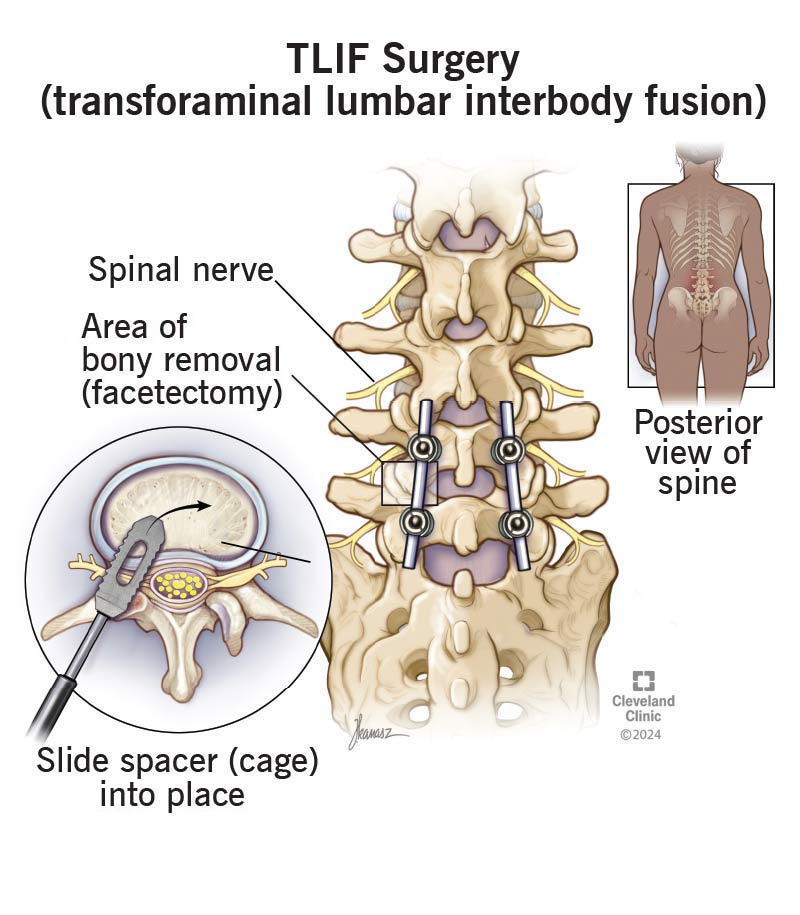
Isku-dhafka Lumbar-ka-dhaafka ah ee Lumbar - Qalliinka TLIF Qiimaha Hindiya
Ku saabsan Isku-dhafka Lumbar-ka-dhaafka ah ee Lumbar - Qalliinka TLIF
Waa maxay Qalliinka TLIF maxaase loo sameeyaa?
Transforaminal lumbar interbody fusion (TLIF) waa qalliin fiyuus laf dhabarta ah oo loo isticmaalo in lagu dejiyo laf dhabarta hoose (lumbar). Waxaa ugu horreyn lagula talinayaa bukaannada qaba xanuunka dhabarka ee daba-dheeraada, xanuunka lugaha (sciatica), ama xasillooni-darrada laf-dhabarka sababtoo ah xaaladaha sida cudurrada saxanka ee cilladaysan, spondylolisthesis, stenosis laf-dhabarka, ama herniation-ka soo noqnoqda.
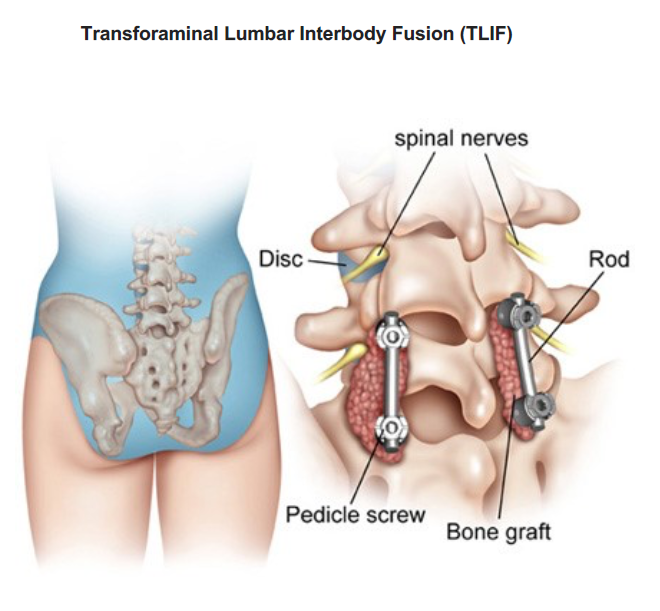
Gudaha TLIF, takhtarka qalliinka wuxuu u soo dhowaanayaa laf dhabarta dhinaca laf dhabarta (wadada transforaminal), wuxuu ka saaraa saxanka intervertebral ee dhaawacan, wuxuuna dhigayaa tallaalka lafaha ama qafis inta u dhaxaysa labada laf dhabarta. Waqti ka dib, laf dhabarta waxay isku xirtaa hal laf oo adag. Fiyuusku wuxuu baabi'iyaa dhaqdhaqaaqa xanuunka leh ee wadajirka wuxuuna soo celiyaa xasilloonida laf dhabarta.
TLIF waxaa laga doortaa hababka kale ee fiyuuska sababtoo ah:
- Way ogolanaysaagelitaanka labada dhinac ee booska saxanka iyada oo loo marayo hal la jeexay.
- Waxa ay yaraynaysaa wax-qabadka laf-dhabarta iyo neerfaha.
- Waxay bixisaasi fiican u toosin iyo kartida qaadislaf dhabarta.
- Waxaa loo samayn karaa sida ahabka furan ama ugu yar ee duulaanka ah, iyadoo ku xiran kiiska.
Hadafka TLIF waa innafiso cadaadiska neerfaha, yareeyo xanuunka, soona celi shaqada laf dhabarta adiga oo dejinaya qaybta vertebral ee ay saamaysay. Badanaa waxaa la tixgeliyaa marka daawaynta muxaafidka ah sida daawooyinka, daaweynta jireed, ama cirbadaha epidural'ka ay guuldareystaan.
Yaa U Baahan Qaliinka TLIF?
Qalliinka TLIF waxaa lagula talinayaa bukaanada la kulma xanuunka dhabarka hoose ee joogtada ah, shucaaca lugaha xanuunka, ama xasillooni la'aanta laf dhabarta oo aan ku fiicnaan daaweynta aan qaliinka ahayn. Waxay si gaar ah ugu habboon tahay shakhsiyaadka qaba dhibaatooyinka qaab-dhismeedka ee laf-dhabarka lumbar kuwaas oo ku lug leh cillad-beelka disc ama silbashada vertebral, taasoo horseedaysa cadaadiska dareemayaasha laf-dhabarka.
Qaar ka mid ah xaaladaha ugu caansan ee tilmaamaya baahida TLIF waa:
- Cudurka saxanka xumaada (DDD):Marka saxannada intervertebral-ka ay lumiyaan fuuq-baxa iyo dhererka da'da ama daal iyo jeexan awgeed, waxaa laga yaabaa inay dumaan oo ay keenaan khilaaf xanuun leh oo u dhexeeya laf dhabarta. TLIF waxay soo celisaa dhererka saxanka waxayna dejisaa qaybta.
- Spondylolisthesis:Cudurkani waxa uu yimaadaa marka mid ka mid ah vertebra uu hore uga siibto kan ka hooseeya. TLIF waxay ka hortagtaa silbasho dheeraad ah iyadoo la isku darayo qaybta aan xasilloonayn oo yaraynaysa cadaadiska neerfaha.
- Herniation Diska Lumbar (oo leh Calaamadaha Soo noqnoqda):Kiisaska ay herniation-ka saxanku sababto xanuun daran oo lugaha ah (sciatica) oo soo noqda ka dib discectomy ama habab kale, TLIF waxaa loo isticmaalaa si joogto ah loo dejiyo heerka ay saameysay.
- stenosis laf dhabarta (oo leh xasilooni darro):Marka la cidhiidhiyo kanaalka laf-dhabarka ayaa cadaadiya dareemayaasha oo ay la socdaan dhaqdhaqaaq aan degganeyn, TLIF waxay ka caawisaa inay hoos u dhigto neerfaha waxayna isku dhejisaa lafdhabarta si looga hortago waxyeello kale.
- Qalliinka Dhabarka ee Fashilmay (FBSS):Bukaan-socodka sii wata xanuunka ka dib hababka laf-dhabarka ee hore ayaa laga yaabaa inay ka faa'iidaystaan TLIF haddii sawir-qaadiddu muujiso xasillooni-darro, urur-la'aan, ama arrimaha disc ee soo noqnoqda.
- Jabka laf dhabarta ama caabuqyada:Marka la doorto xaaladaha dhaawaca dhaawaca ama caabuqa ee wax u dhimaya xasilloonida laf dhabarta, TLIF waxaa laga yaabaa in loo isticmaalo dib-u-dhiska iyo isku-dhafka lafdhabarta.
TLIF sida caadiga ah waxaa la tixgeliyaa kaliya ka dib daawaynta aan qaliinka ahayn sida nasashada, daaweynta jirka, daawooyinka ka hortagga bararka, ama cirbadaha steroids epidural waxay ku guuldareysteen 6-12 toddobaad ama ka badan. Waxay ku habboon tahay dadka waaweyn ee da'doodu kala duwan tahay, laakiin gaar ahaan caan ku ah kuwa u dhexeeya35 iyo 70 sanola kulma xanuunka dhabarka iyo lugaha ee la xidhiidha neerfaha.
Sidee Loo Sameeyaa Qalliinka TLIF?
Dhakhaatiirta qalliinka waxay sameeyaan isku-dhafka isdhexgalka lumbar ee transforaminal (TLIF) si ay u soo saaraan saxan dhaawacan ee laf dhabarta hoose oo ay ku dhejiyaan laba laf dhabarta si loo helo xasillooni joogto ah. Qalliinka oo dhan wuxuu caadi ahaan qaataa2 ilaa 4 saacadoodwaxaana hoos lagu fuliyaasuuxinta guud. Qalliinku wuxuu ku lug leeyahay dhowr tillaabo.
- Meelaynta iyo Diyaarinta:Kooxda qalliinka waxay bukaan-socodka u dhigayaan weji-hoos u-saar miis qalliin oo daboolan. Marka la suuxiyo, dhakhtarku wuxuu nadiifiyaa oo nadiifiyaa dhabarka hoose wuxuuna calaamadeeyaa meesha laga soo galo heerka vertebral ee ay saamaysay.
- Samaynta Meesha:Dhakhtarka qalliinka ayaa jeex yar ka sameeya khadka dhexe ama dhinaca dhabarka hoose. TLIF-da ugu yar ee soo galitaanka, jeexitaanku waa 2-4 cm oo keliya, halka qalliinka furan uu u baahan yahay gooyn wax yar ka weyn.
- Helitaanka Laf-dhabarta iyo Bixinta Lafaha:Si loo gaaro booska saxanka, takhtarka qalliinka ayaa si tartiib ah u soo celiya murqaha oo wuxuu soo bandhigaa laf dhabarta. Waxaa laga yaabaa inay ka saaraan qayb ka mid ah lafaha wejiga ama lamina si ay u arkaan xididdada dareemayaasha iyo saxanka si cad.
- Ka saarida saxanka iyo Dareemaha Dareemaha:Dhakhtarka qaliinka ayaa si taxadar leh u saaraya saxanka dhaawacan ee u dhexeeya labada laf dhabarta. Lafo kasta ama unugyo jilicsan oo cadaadiya dareemayaasha ayaa sidoo kale la nadiifiyaa si loo yareeyo cadaadiska dareemayaasha laf-dhabarka.
- Beerista Spacer ama Qafiska:Kadib nadiifinta booska saxanka, takhtarka qalliinka wuxuu geliyaa meel bannaan oo lafaha ka buuxo ama qafis inta u dhexeysa laf dhabarta. Waxay soo celisaa dhererka saxanka waxayna kor u qaadaa korriinka lafaha. Qafisku wuxuu ka samaysan karaa PEEK, titanium, ama fiber carbon.
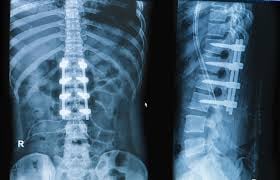
- Dhigista Boolal iyo Ulaha:Si loo xasiliyo laf dhabarta, takhtarka qalliinka waxa uu gelinayaa boolal fiiqan iyo ulo lafta dhabarka sare iyo ka hooseeya booska saxanka. Maqaar-qaadahani waxay ku hayaan lafaha meesha marka fiyuusku dhaco.
- Xiritaanka iyo Labbiska:Marka maqaar-galaha la hubsado lana xaqiijiyo toosinta, takhtarka qalliinka wuxuu xiraa meesha la jeexay lakabyo isagoo isticmaalaya tolmo. Dhakhaatiirta laf dhabarta waxay dalbadaan dhaymo nadiif ah si ay uga hortagaan caabuqa.
- Kormeerka Qalliinka Kadib:Bukaan-socodka waxaa loo wareejinayaa qolka soo kabashada waxaana lagula socdaa calaamadaha muhiimka ah iyo shaqada neerfaha. Maareynta xanuunku waxay bilaabataa isla markiiba, socodkuna waa la dhiirigeliyaa 24-48 saacadood gudahood.
Isbitaalo badan ayaa hadda bixiyaTLIF (MIS-TLIF) ee ugu yar, kaas oo yareeya dhaawaca muruqa, dhiig baxa, iyo joogitaanka isbitaalka. Doorashada u dhaxaysa furan iyo MIS waxay kuxirantahay anatomy bukaanka, ogaanshaha, iyo dookha dhakhtarka qalliinka.
Hel qorshe daaweyn oo bilaash ah
Qiyaastii Isku-dhafka Lumbar-ka-dhaafka ah ee Lumbar - Qalliinka TLIF gudaha Hindiya
What is the Cost of TLIF Surgery in India?
The cost of TLIF surgery in India typically ranges from $5,000 to $8,500, depending on the number of spinal levels involved, the type of implants used, and the hospital’s facilities. This cost is significantly lower than in the US, UK, or Australia, where the same procedure may exceed $30,000 to $60,000.
What sets India apart is not just affordability, but the comprehensive nature of TLIF surgery packages. Hospitals offer all-inclusive pricing with no hidden charges, covering every step of the treatment journey, from pre-surgery consultations to rehabilitation.
TLIF surgery cost in India generally includes:
- Pre-Operative Evaluation: It includes MRI scans, X-rays, CT scans, blood tests, ECG, and anesthesia fitness assessment required for planning and safety.
- Surgeon’s and Anesthetist’s Fees: The total cost includes professional fees for the neurosurgeon or orthopedic spine specialist, the assisting surgical team, and the anesthesiologist.
- Operation Theatre Charges and Surgical Tools: It covers sterile instruments, neuromonitoring systems, fluoroscopy, and high-precision surgical equipment needed during the procedure.
- Spinal Implants and Cage System: Premium hospitals use FDA- or CE-approved spinal implants, including pedicle screws, titanium rods, and interbody cages. The implant cost is a significant portion of the total expense.
- Hospital Stay and ICU Monitoring: Patients usually stay in the hospital for 4 to 7 days, including 1 day in the ICU (if required). It includes nursing care, room charges, and monitoring.
- Inpatient Medications and Consumables: It includes IV antibiotics, painkillers, dressings, surgical sutures, and disposables used during the hospital stay.
- Physiotherapy and Mobilization Support: Basic post-surgical rehabilitation, including walking training, mobility support, and exercise guidance, is part of the standard package.
- Post-Discharge Follow-Up: Many hospitals include one or two follow-up consultations, wound inspections, and X-rays after discharge to monitor recovery.
In short, TLIF spine surgery in India offers not only significant cost savings but also a well-structured, end-to-end treatment plan that meets global standards.
Breakdown of TLIF Surgery Cost in India
The total cost of TLIF (transforaminal lumbar interbody fusion) surgery in India is influenced by several components, each contributing to the final package. Understanding this breakdown helps international patients prepare better and ensures transparency.
- The pre-operative evaluation for TLIF in India, including MRI, X-ray, blood tests, and anesthesia fitness, typically costs $300 to $600, depending on the diagnostic complexity.
- The TLIF implant cost, which includes titanium or PEEK cages, pedicle screws, and rods, ranges from $1,800 to $3,000. Hospitals use globally approved implants from brands like Medtronic, Stryker, or Zimmer Biomet.
- Surgeon’s and anesthetist’s fees are usually between $1,000 - $1,500, depending on the surgeon’s seniority and the surgical duration.
- Operation theatre charges, including advanced equipment (fluoroscopy, neuromonitoring, C-arm), generally fall in the range of $700 to $1,000.
- The hospital stay for TLIF in India, including 1 day ICU and 4-6 days in a private room, costs around $800 to $1,200, inclusive of nursing and meals.
- Inpatient medications and surgical consumables, such as antibiotics, painkillers, drapes, and sutures, add another $300 to $500 to the bill.
- Post-operative physiotherapy and mobilization, provided during the hospital stay, may cost $100 to $200, depending on the number of sessions.
Cost Component | Estimated Cost (USD) |
| Pre-operative Investigations | $300 – $600 |
| Spinal Implants and Hardware | $1,800 – $3,000 |
| Surgeon and Anesthetist Fees | $1,000 – $1,500 |
| Operation Theatre and Equipment | $700 – $1,000 |
| Hospital Stay and Nursing Care | $800 – $1,200 |
| Medications and Surgical Supplies | $300 – $500 |
| In-Hospital Physiotherapy | $100 – $200 |
| Total Estimated Cost (Single-Level TLIF) | $5,000 – $8,500 |
Note: This pricing applies to single-level TLIF surgery. In cases where multi-level fusion or additional spinal instrumentation is required, the cost may increase proportionally due to extended operating time, extra implants, and longer hospital stay.
Cost Comparison: TLIF Surgery in India vs Other Countries
TLIF surgery in India offers exceptional value compared to the same procedure in countries like the USA, UK, Australia, or the UAE. International patients often save up to 70–80% by choosing India, while still receiving globally approved implants, expert spine surgeons, and modern hospital facilities.
Country | Average TLIF Cost (USD) | Inclusions and Remarks |
| India | $5,000 – $8,500 | All-inclusive; covers surgery, implants, stay, meds, and physiotherapy |
| United States | $35,000 – $60,000 | Excludes rehab and extended hospital stay; costs vary widely by state |
| United Kingdom | $25,000 – $45,000 (Private) | NHS wait times; private care is expensive and not always fully inclusive |
| Australia | $28,000 – $50,000 | Partial insurance coverage; extra cost for implants and rehab |
| UAE | $18,000 – $25,000 | Premium pricing for private care; limited minimally invasive options |
| Singapore | $20,000 – $35,000 | High-tech hospitals but costly; post-op physiotherapy is often billed separately |
| Thailand | $8,500 – $12,000 | Cheaper than Western countries but still 30–50% higher than India |
With skilled spine surgeons, high success rates, and all-inclusive cost transparency, India remains one of the top choices for affordable TLIF surgery worldwide.
What Factors Influence TLIF Surgery Cost in India?
Several medical, surgical, and logistical factors influence the final cost of TLIF surgery in India. These variables help determine whether the patient’s treatment falls at the lower or higher end of the cost range.
- Number of Spinal Levels Fused: Single-level TLIF is more affordable. If multiple levels (e.g., L4-L5 and L5-S1) need to be fused, the cost increases due to additional implants, longer surgical time, and extended hospital stay.
- Type and Brand of Implants Used: The choice of cage (PEEK or titanium), pedicle screws, rods, and the brand of implants significantly impacts the cost. Premium brands like Medtronic, Globus, Stryker, and Zimmer Biomet cost more but offer superior durability and compatibility.
- Surgical Technique (Open vs. Minimally Invasive): Minimally Invasive TLIF (MIS-TLIF) uses specialized tools, smaller incisions, and advanced imaging. It leads to faster recovery and less blood loss, but may raise the overall cost due to equipment and technical expertise.
- Hospital Category and Location: Hospitals in metro cities like Delhi, Mumbai, and Bangalore, especially those with JCI or NABH accreditation, may charge more than smaller-tier city hospitals due to their superior infrastructure and international services.
- Surgeon’s Experience and Specialty: Highly experienced spine surgeons with fellowship training and specialization in complex fusions or revisions may charge higher professional fees, but often result in better outcomes and fewer complications.
- Pre-Existing Medical Conditions: If the patient has comorbidities like diabetes, obesity, or heart disease, they may require additional monitoring, ICU support, or extended stay, all of which increase the total bill.
- Post-Operative Rehabilitation Needs: Extended physiotherapy, advanced mobility aids (e.g., spinal braces, walking frames), and longer rehab stays can add to the cost. Some patients may also require follow-up imaging or pain management sessions.
- Accommodation and International Patient Services: Foreign patients may require visa assistance, airport transfers, interpreters, and arrangements for attendants to stay. These services are sometimes bundled into the package or billed separately.
Why Is TLIF Surgery More Affordable in India?
India offers world-class spine surgery at a fraction of the cost seen in other developed countries, without compromising on surgical quality, implant standards, or patient outcomes. The affordability of TLIF surgery in India stems from a combination of healthcare system efficiencies, lower operational costs, and patient-centered package models.
Some of the key reasons why TLIF surgery is more cost-effective in India are:
- Lower Operational and Infrastructure Costs: Indian hospitals operate at significantly lower costs for equipment maintenance, utilities, and staffing. These savings are passed directly to patients through reduced surgical pricing.
- Affordable Surgeon and Staff Fees: Highly skilled spine surgeons in India, many of whom have trained internationally, charge significantly less than their counterparts in the US or UK. Anesthetists, nurses, and physiotherapists also receive modest salaries, which helps keep overall costs low.
- Competitive Implant Pricing: India has access to a broad range of spinal implants, including both locally manufactured and globally imported options. With reduced import taxes and bulk procurement, hospitals can offer FDA/CE-approved implants at affordable rates.
- High Patient Volume and Streamlined Processes: Spine centers in India handle a large number of TLIF and other fusion surgeries annually. It allows hospitals to optimize surgical time, reduce inventory waste, and lower per-patient costs through volume efficiency.
- Integrated In-House Services: Hospitals offer diagnostics, pharmacy, physiotherapy, and rehab services on-site, eliminating the need for third-party outsourcing. It improves care continuity and significantly reduces overhead costs.
- Transparent and All-Inclusive Packages: Unlike Western countries, where patients are billed separately for consultation, surgery, implants, stay, and rehab, Indian hospitals bundle these into fixed-cost packages, ensuring price clarity and avoiding hidden expenses.
- Favorable Currency Exchange for International Patients: Patients traveling from countries like the USA, UK, UAE, Canada, or Africa benefit from favorable exchange rates, making high-end spine treatment in India far more affordable than in their home countries.
- Government Support for Medical Tourism: India promotes medical tourism with easy visa processes, airport assistance, multilingual support, and dedicated international patient departments in major hospitals.
International Patient Services for TLIF Surgery in India
India’s top hospitals provide a complete range of international patient services tailored to make spinal treatments like TLIF surgery smooth, safe, and stress-free for patients arriving from abroad. These services are often bundled with the treatment package or offered at minimal additional cost, ensuring convenience from pre-travel planning to post-surgery recovery.
- Medical Visa Assistance: Hospitals issue official medical invitation letters required for visa applications. International patient coordinators guide patients and their companions through the process and also assist with visa extensions when necessary.
- Airport Pickup and Drop Services: Patients are received at the airport by a hospital-appointed representative and transported safely to their accommodation or directly to the hospital. Return airport transfers are also arranged post-recovery.
- Dedicated International Patient Coordinator: Each patient is assigned a case manager who handles daily scheduling, interpreter services, billing support, travel assistance, and coordination with the surgical team.
- Multilingual Interpretation Services: To eliminate language barriers, interpreters are provided for Arabic, Russian, French, Spanish, Swahili, and more. Essential documents and medical reports are translated upon request.
- Pre-Travel Online Consultation: Patients can book an online video consultation with a spine surgeon before flying. It allows the doctor to review reports, explain the TLIF procedure, and provide a personalized estimate and treatment plan.
- Affordable Accommodation and Meal Options: Hospitals assist in booking budget hotels, guesthouses, or service apartments near the hospital. Meal plans are customizable and include halal, vegetarian, and diabetic-friendly options based on patient preference.
- Rehabilitation and Physiotherapy Support: After TLIF surgery, in-house physiotherapists provide mobilization training, posture correction, and spine-strengthening exercises. Customized rehab plans are shared for continued recovery after the patient returns home.
- Post-Discharge Remote Follow-Up: Surgeons remain available for virtual follow-ups via video, email, or WhatsApp. Patients can send updates, X-rays, or queries for months after returning home, at no extra charge.
- Assistance with FRRO Registration: For extended stays in India, hospitals help international patients complete FRRO (Foreigner Regional Registration Office) formalities to remain compliant with local laws.
- Family Support and Recovery Comfort: Hospitals offer companion support, including extra bedding, visitor access, and meal services for relatives. Recovery lounges and spiritual spaces are also available for patient comfort.
What is the Success Rate and Recovery Timeline After TLIF Surgery in India?
Transforaminal lumbar interbody fusion surgery is a highly successful spinal procedure, primarily when performed by experienced surgeons using high-quality implants. It is designed to relieve chronic lower back and leg pain, restore spinal stability, and improve mobility. In India, the procedure has shown excellent clinical outcomes, even in complex or revision cases.
Success Rate of TLIF Surgery in India
- The average success rate of TLIF surgery in India is around 90% to 95% for single-level fusion, depending on patient condition, surgeon experience, and surgical technique (open vs minimally invasive).
- Most TLIF patients report a significant reduction in pain and improved quality of life within 3 to 6 months of the procedure.
- Minimally Invasive TLIF often results in faster healing, reduced post-op pain, and shorter hospital stays, contributing to better patient satisfaction.
- Complication rates are relatively low in India due to advanced intraoperative technologies such as intraoperative neuromonitoring, C-arm navigation, and modern fusion systems.
Recovery Timeline After TLIF Surgery
Recovery after TLIF is gradual and can vary based on factors like the number of spinal levels fused, patient age, comorbidities, and whether the surgery was open or minimally invasive.
- Day 1-2: Patient is monitored in the hospital (1 day in ICU if needed). Pain is managed through IV medications. Breathing and leg movement exercises begin early.
- Day 3-5: Patient is encouraged to walk with support. Light physiotherapy begins. If stable, discharge is possible by day 4 or 5.
- Week 2-3: Staples or sutures are removed. The patient continues basic home-based physiotherapy. Bending and lifting are avoided.
- Week 4-6: Patient gains more mobility. Can walk longer distances and perform light tasks. Follow-up imaging may be scheduled.
- Month 3-6: Fusion progresses. Pain reduces significantly. Return to desk work or non-strenuous job roles is often possible.
- 6-12 Months: Bone graft fully fuses with the vertebrae. The patient can resume most normal activities, including travel, long walks, or non-impact exercise. Complete recovery usually occurs within 12 months.
Post-Operative Do’s and Don’ts
- Do follow a supervised physiotherapy plan. It’s essential for regaining strength and spine mobility.
- Don’t lift heavy objects or bend forward until your surgeon gives clearance.
- Do attend all follow-up visits and get periodic imaging (X-ray/CT) to monitor fusion progress.
- Don’t ignore numbness or new leg pain, which may indicate nerve irritation.
Isku-dhafka Lumbar-ka-dhaafka ah ee Lumbar - Qalliinka TLIF Isbarbardhigga Qiimaha Dal ahaan
Isbarbar dhig bogga
| Baaddiye | Kala duwanaanshaha qiimaha (USD) | Kaydinta suurtagalka ah | Waxqabad |
|---|---|---|---|
HindiyaQul-qulQiimaha ugu fiican | $5,000 - $8,500 | — | Soo xigasho |
Xusuusin: Kharashaadka ayaa ku kala duwanaan kara iyadoo lagu saleynayo doorashada isbitaalka, nooca qolka, adeegyada dheeraadka ah, iyo baahiyaha caafimaad ee shaqsiyadeed.
Cisbitaalada hogaaminaya Isku-dhafka Lumbar-ka-dhaafka ah ee Lumbar - Qalliinka TLIF gudaha Hindiya
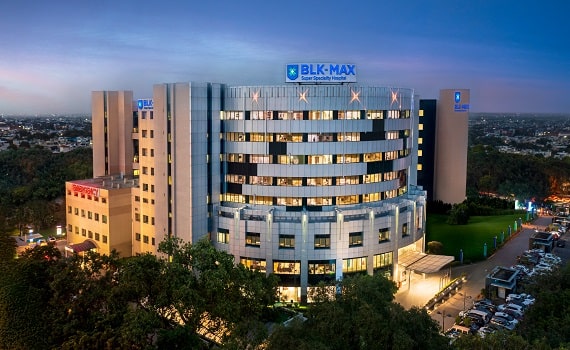
BLK-Max Super Specialty Hospital, New Delhi
BLK-Max Super Specialty Hospital ee New Delhi waa mid ka mid ah xarumaha daryeelka caafimaadka ee Hindiya, oo bixiya 650 sariirood, 22 tiyaatar qallii...
Aqoonsado


Gadawiya xarumaha
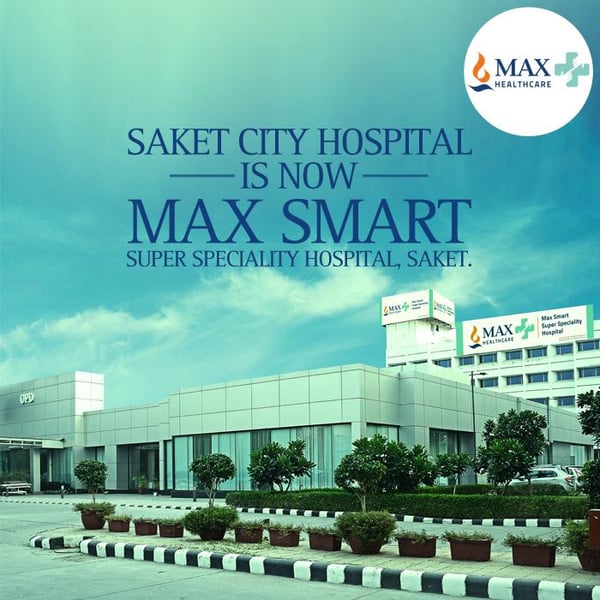
Max Smart Super Specialty Hospital, Saket, New Delhi
Max Smart Super Specialty Hospital, Saket, waa cosbitaal daryeel jaamacadeed 250 sariirood leh oo ku yaal South Delhi. Waxay bixisaa daryeel caafimaad...
Aqoonsado
Gadawiya xarumaha
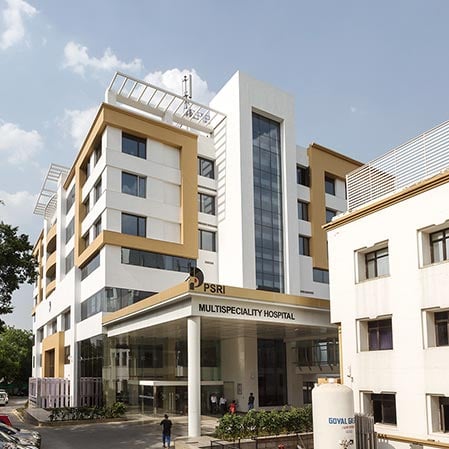
Isbitaalka PSRI, Delhi
Pushpawati Singhania Research Institute (PSRI Hospital), New Delhi, waa hormoodka ah cisbitaal daryeel jaamacadeed oo badan oo khaas ah oo ay aasaasee...
Aqoonsado
Gadawiya xarumaha
Nidaamyada la midka ah
Rug bandhig
Warqad maqas
Eeg
All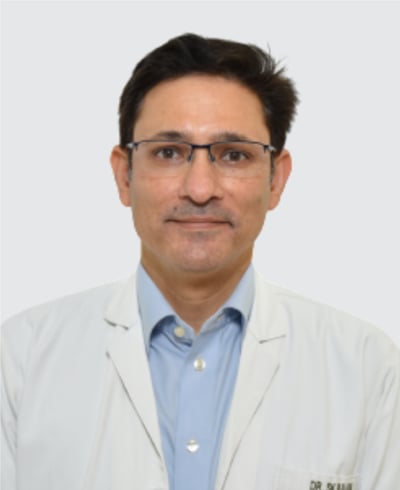
Dr. SK Rajan is an internationally trained and AO-certified Spine Surgeon with extensive expertise in managing complex spinal disorders. He has trained at leading national and global institutions, i... Akhri wax dheeraad ah

Websaydhkeenu wuxuu adeegsadaa cookies. Qaanuunka Arrimaha Khaaska ah.