
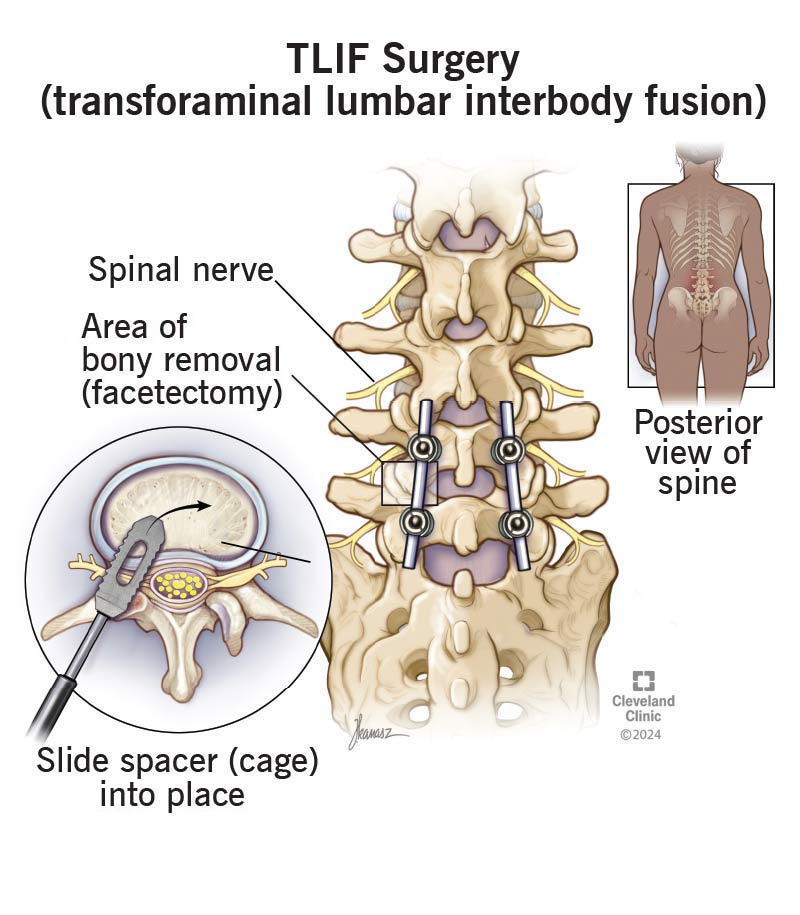
Transforaminal lomber tanalararo termoyadroviy - TLIF jarrohlik Narxi Hindiston
Haqida Transforaminal lomber tanalararo termoyadroviy - TLIF jarrohlik
TLIF jarrohligi nima va u nima uchun amalga oshiriladi?
Transforaminal lomber tanalararo termoyadroviy (TLIF) pastki (lomber) umurtqa pog'onasini barqarorlashtirish uchun ishlatiladigan o'murtqa sintez operatsiyasi. Bu, birinchi navbatda, surunkali bel og'rig'i, oyoq og'rig'i (siyatik) yoki degenerativ disk kasalligi, spondilolistez, orqa miya stenozi yoki takroriy disk churrasi kabi holatlar tufayli o'murtqa beqarorlik bilan og'rigan bemorlarga tavsiya etiladi.
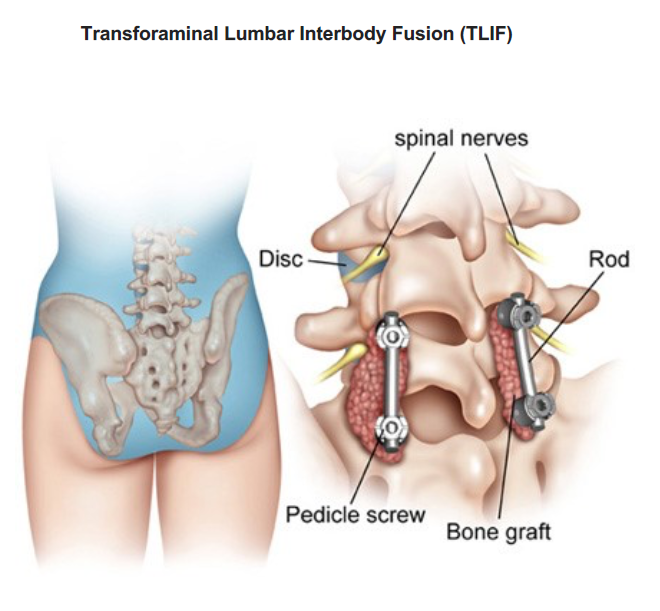
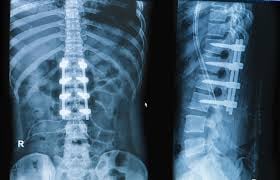
TLIFda jarroh umurtqa pog'onasiga umurtqaning yon tomoni (transforaminal yo'l) orqali yaqinlashadi, shikastlangan intervertebral diskni olib tashlaydi va ikkala umurtqa orasiga suyak grefti yoki qafas qo'yadi. Vaqt o'tishi bilan umurtqalar birlashib, bitta mustahkam suyakka aylanadi. Birlashma bo'g'imdagi og'riqli harakatni yo'q qiladi va umurtqa pog'onasi barqarorligini tiklaydi.
TLIF boshqa termoyadroviy usullarga nisbatan tanlanadi, chunki:
- Bu imkon beradibitta kesma orqali disk maydonining har ikki tomoniga kirish.
- Bu orqa miya va nervlarning manipulyatsiyasini kamaytiradi.
- Ta'minlaydiyaxshiroq hizalanish va yuk ko'tarish qobiliyatiumurtqa pog'onasi uchun.
- U sifatida bajarilishi mumkinochiq yoki minimal invaziv protsedura, holatga qarab.
TLIF maqsadiasab siqilishini bartaraf etish, og'riqni kamaytirish va ta'sirlangan vertebra segmentini barqarorlashtirish orqali umurtqa pog'onasi funktsiyasini tiklash. Dori-darmonlar, fizioterapiya yoki epidural in'ektsiya kabi konservativ davolar samarasiz bo'lganda ko'pincha ko'rib chiqiladi.
TLIF jarrohligi kimga kerak?
Doimiy bel og'rig'i, nurli oyoq og'rig'i yoki jarrohlik bo'lmagan davolanish bilan yaxshilanmaydigan orqa miya beqarorligini boshdan kechiradigan bemorlar uchun TLIF operatsiyasi tavsiya etiladi. Bu, ayniqsa, orqa miya nervlarining siqilishiga olib keladigan disk degeneratsiyasi yoki umurtqali siljish bilan bog'liq bo'lgan bel umurtqasida tizimli muammolari bo'lgan shaxslar uchun javob beradi.
TLIFga ehtiyojni ko'rsatadigan eng keng tarqalgan shartlardan ba'zilari:
- Degenerativ disk kasalligi (DDD):Intervertebral disklar qarish yoki eskirish tufayli hidratsiyani va balandligini yo'qotganda, ular qulab tushishi va umurtqalar orasidagi og'riqli ishqalanishga olib kelishi mumkin. TLIF disk balandligini tiklaydi va segmentni barqarorlashtiradi.
- Spondilolistez:Bu kasallik bitta umurtqaning ostidagi umurtqaning oldinga siljishi bilan yuzaga keladi. TLIF beqaror segmentni birlashtirish va asab siqilishini engillashtirish orqali keyingi sirpanishni oldini oladi.
- Lomber disk churrasi (takroriy simptomlar bilan):Disk churrasi kuchli oyoq og'rig'iga (siyatika) sabab bo'lgan va diskektomiya yoki boshqa protseduralardan keyin qaytib kelgan hollarda, TLIF ta'sir darajasini doimiy ravishda barqarorlashtirish uchun ishlatiladi.
- Orqa miya stenozi (beqarorlik bilan):Orqa miya kanalining torayishi nervlarni siqib chiqaradi va beqaror harakat bilan birga bo'lsa, TLIF nervlarni dekompressiyalash va umurtqa pog'onasini qo'shimcha shikastlanishning oldini olishga yordam beradi.
- Muvaffaqiyatsiz bel jarrohlik sindromi (FBSS):Oldingi o'murtqa protseduralardan keyin og'riqni davom ettiradigan bemorlar, agar tasvirlar beqarorlik, birlashmaslik yoki takrorlanadigan disk muammolarini ko'rsatsa, TLIF dan foydalanishi mumkin.
- Orqa miya sinishi yoki infektsiyalari:Orqa miya barqarorligini buzadigan travmatik shikastlanish yoki infektsiyaning ayrim holatlarida, umurtqa pog'onasini qayta tiklash va birlashtirish uchun TLIF qo'llanilishi mumkin.
TLIF odatda dam olish, jismoniy terapiya, yallig'lanishga qarshi dorilar yoki epidural steroid in'ektsiyalari kabi jarrohlik bo'lmagan muolajalar 6-12 hafta yoki undan ko'proq vaqt davomida samarasiz bo'lganidan keyin ko'rib chiqiladi. Bu turli yoshdagi kattalar uchun javob beradi, lekin ayniqsa ular orasida keng tarqalgan35 va 70 yilasab bilan bog'liq orqa va oyoq og'rig'ini boshdan kechirish.
TLIF jarrohligi qanday amalga oshiriladi?
Jarrohlar pastki umurtqa pog'onasidagi shikastlangan diskni olib tashlash va doimiy barqarorlik uchun ikkita umurtqani birlashtirish uchun transforaminal lomber tanalararo termoyadroviy (TLIF) amalga oshiradilar. To'liq operatsiya odatda davom etadi2 dan 4 soatgachava ostida amalga oshiriladiumumiy behushlik. Operatsiya bir necha bosqichlarni o'z ichiga oladi.
- Joylashtirish va tayyorlash:Jarrohlik guruhi bemorni yuzini pastga qaratib, to'ldirilgan operatsiya stoliga qo'yadi. Anesteziyadan so'ng, jarroh pastki orqa qismini tozalaydi va sterilizatsiya qiladi va ta'sirlangan vertebra darajasida kirish nuqtasini belgilaydi.
- Kesma qilish:Jarroh pastki orqa tomonning o'rta chizig'i yoki yon tomoni bo'ylab kichik kesma qiladi. Minimal invaziv TLIFda bu kesma bor-yo'g'i 2-4 sm, ochiq jarrohlikda esa biroz kattaroq kesma kerak bo'ladi.
- Orqa miyaga kirish va suyakni olib tashlash:Disk bo'shlig'iga erishish uchun jarroh mushaklarni muloyimlik bilan tortib oladi va umurtqalarni ochadi. Nerv ildizlari va diskni aniq tasavvur qilish uchun ular faset qo'shma yoki laminaning bir qismini olib tashlashi mumkin.
- Diskni olib tashlash va asab dekompressiyasi:Jarroh ikki vertebra orasidagi shikastlangan diskni ehtiyotkorlik bilan olib tashlaydi. Nervlarni siqib chiqaradigan har qanday suyak nayzalari yoki yumshoq to'qimalar ham orqa miya nervlariga bosimni bartaraf etish uchun tozalanadi.
- Spacer yoki qafasni implantatsiya qilish:Disk bo'shlig'ini tozalagandan so'ng, jarroh vertebra orasiga suyak grefti bilan to'ldirilgan oraliq yoki qafasni kiritadi. Disk balandligini tiklaydi va suyak o'sishiga yordam beradi. Qafas PEEK, titanium yoki uglerod tolasidan tayyorlanishi mumkin.
- Vintlar va novdalarni joylashtirish:Umurtqa pog'onasini barqarorlashtirish uchun jarroh disk bo'shlig'ining tepasida va ostidagi umurtqa pog'onasiga pedikula vintlari va tayoqchalarini kiritadi. Ushbu implantlar sintez sodir bo'lganda suyaklarni joyida ushlab turadi.
- Yopish va kiyinish:Implantlar mahkamlangandan va hizalanish tasdiqlangandan so'ng, jarroh tikuv yordamida qatlamlarda kesmani yopadi. Orqa miya jarrohlari infektsiyani oldini olish uchun steril kiyinishni qo'llashadi.
- Jarrohlikdan keyingi monitoring:Bemor reabilitatsiya xonasiga o'tkaziladi va hayotiy belgilar va nevrologik funktsiyani nazorat qiladi. Og'riqni boshqarish darhol boshlanadi va 24-48 soat ichida yurish tavsiya etiladi.
Hozir ko'plab shifoxonalar taklif qilmoqdaminimal invaziv TLIF (MIS-TLIF), bu mushaklarning shikastlanishini, qon yo'qotishini va kasalxonada qolishni kamaytiradi. Ochiq va MIS o'rtasidagi tanlov bemorning anatomiyasi, tashxisi va jarrohning xohishiga bog'liq.
Bepul davolash rejasini oling
Hindiston yilda Transforaminal lomber tanalararo termoyadroviy - TLIF jarrohlik haqida
What is the Cost of TLIF Surgery in India?
The cost of TLIF surgery in India typically ranges from $5,000 to $8,500, depending on the number of spinal levels involved, the type of implants used, and the hospital’s facilities. This cost is significantly lower than in the US, UK, or Australia, where the same procedure may exceed $30,000 to $60,000.
What sets India apart is not just affordability, but the comprehensive nature of TLIF surgery packages. Hospitals offer all-inclusive pricing with no hidden charges, covering every step of the treatment journey, from pre-surgery consultations to rehabilitation.
TLIF surgery cost in India generally includes:
- Pre-Operative Evaluation: It includes MRI scans, X-rays, CT scans, blood tests, ECG, and anesthesia fitness assessment required for planning and safety.
- Surgeon’s and Anesthetist’s Fees: The total cost includes professional fees for the neurosurgeon or orthopedic spine specialist, the assisting surgical team, and the anesthesiologist.
- Operation Theatre Charges and Surgical Tools: It covers sterile instruments, neuromonitoring systems, fluoroscopy, and high-precision surgical equipment needed during the procedure.
- Spinal Implants and Cage System: Premium hospitals use FDA- or CE-approved spinal implants, including pedicle screws, titanium rods, and interbody cages. The implant cost is a significant portion of the total expense.
- Hospital Stay and ICU Monitoring: Patients usually stay in the hospital for 4 to 7 days, including 1 day in the ICU (if required). It includes nursing care, room charges, and monitoring.
- Inpatient Medications and Consumables: It includes IV antibiotics, painkillers, dressings, surgical sutures, and disposables used during the hospital stay.
- Physiotherapy and Mobilization Support: Basic post-surgical rehabilitation, including walking training, mobility support, and exercise guidance, is part of the standard package.
- Post-Discharge Follow-Up: Many hospitals include one or two follow-up consultations, wound inspections, and X-rays after discharge to monitor recovery.
In short, TLIF spine surgery in India offers not only significant cost savings but also a well-structured, end-to-end treatment plan that meets global standards.
Breakdown of TLIF Surgery Cost in India
The total cost of TLIF (transforaminal lumbar interbody fusion) surgery in India is influenced by several components, each contributing to the final package. Understanding this breakdown helps international patients prepare better and ensures transparency.
- The pre-operative evaluation for TLIF in India, including MRI, X-ray, blood tests, and anesthesia fitness, typically costs $300 to $600, depending on the diagnostic complexity.
- The TLIF implant cost, which includes titanium or PEEK cages, pedicle screws, and rods, ranges from $1,800 to $3,000. Hospitals use globally approved implants from brands like Medtronic, Stryker, or Zimmer Biomet.
- Surgeon’s and anesthetist’s fees are usually between $1,000 - $1,500, depending on the surgeon’s seniority and the surgical duration.
- Operation theatre charges, including advanced equipment (fluoroscopy, neuromonitoring, C-arm), generally fall in the range of $700 to $1,000.
- The hospital stay for TLIF in India, including 1 day ICU and 4-6 days in a private room, costs around $800 to $1,200, inclusive of nursing and meals.
- Inpatient medications and surgical consumables, such as antibiotics, painkillers, drapes, and sutures, add another $300 to $500 to the bill.
- Post-operative physiotherapy and mobilization, provided during the hospital stay, may cost $100 to $200, depending on the number of sessions.
Cost Component | Estimated Cost (USD) |
| Pre-operative Investigations | $300 – $600 |
| Spinal Implants and Hardware | $1,800 – $3,000 |
| Surgeon and Anesthetist Fees | $1,000 – $1,500 |
| Operation Theatre and Equipment | $700 – $1,000 |
| Hospital Stay and Nursing Care | $800 – $1,200 |
| Medications and Surgical Supplies | $300 – $500 |
| In-Hospital Physiotherapy | $100 – $200 |
| Total Estimated Cost (Single-Level TLIF) | $5,000 – $8,500 |
Note: This pricing applies to single-level TLIF surgery. In cases where multi-level fusion or additional spinal instrumentation is required, the cost may increase proportionally due to extended operating time, extra implants, and longer hospital stay.
Cost Comparison: TLIF Surgery in India vs Other Countries
TLIF surgery in India offers exceptional value compared to the same procedure in countries like the USA, UK, Australia, or the UAE. International patients often save up to 70–80% by choosing India, while still receiving globally approved implants, expert spine surgeons, and modern hospital facilities.
Country | Average TLIF Cost (USD) | Inclusions and Remarks |
| India | $5,000 – $8,500 | All-inclusive; covers surgery, implants, stay, meds, and physiotherapy |
| United States | $35,000 – $60,000 | Excludes rehab and extended hospital stay; costs vary widely by state |
| United Kingdom | $25,000 – $45,000 (Private) | NHS wait times; private care is expensive and not always fully inclusive |
| Australia | $28,000 – $50,000 | Partial insurance coverage; extra cost for implants and rehab |
| UAE | $18,000 – $25,000 | Premium pricing for private care; limited minimally invasive options |
| Singapore | $20,000 – $35,000 | High-tech hospitals but costly; post-op physiotherapy is often billed separately |
| Thailand | $8,500 – $12,000 | Cheaper than Western countries but still 30–50% higher than India |
With skilled spine surgeons, high success rates, and all-inclusive cost transparency, India remains one of the top choices for affordable TLIF surgery worldwide.
What Factors Influence TLIF Surgery Cost in India?
Several medical, surgical, and logistical factors influence the final cost of TLIF surgery in India. These variables help determine whether the patient’s treatment falls at the lower or higher end of the cost range.
- Number of Spinal Levels Fused: Single-level TLIF is more affordable. If multiple levels (e.g., L4-L5 and L5-S1) need to be fused, the cost increases due to additional implants, longer surgical time, and extended hospital stay.
- Type and Brand of Implants Used: The choice of cage (PEEK or titanium), pedicle screws, rods, and the brand of implants significantly impacts the cost. Premium brands like Medtronic, Globus, Stryker, and Zimmer Biomet cost more but offer superior durability and compatibility.
- Surgical Technique (Open vs. Minimally Invasive): Minimally Invasive TLIF (MIS-TLIF) uses specialized tools, smaller incisions, and advanced imaging. It leads to faster recovery and less blood loss, but may raise the overall cost due to equipment and technical expertise.
- Hospital Category and Location: Hospitals in metro cities like Delhi, Mumbai, and Bangalore, especially those with JCI or NABH accreditation, may charge more than smaller-tier city hospitals due to their superior infrastructure and international services.
- Surgeon’s Experience and Specialty: Highly experienced spine surgeons with fellowship training and specialization in complex fusions or revisions may charge higher professional fees, but often result in better outcomes and fewer complications.
- Pre-Existing Medical Conditions: If the patient has comorbidities like diabetes, obesity, or heart disease, they may require additional monitoring, ICU support, or extended stay, all of which increase the total bill.
- Post-Operative Rehabilitation Needs: Extended physiotherapy, advanced mobility aids (e.g., spinal braces, walking frames), and longer rehab stays can add to the cost. Some patients may also require follow-up imaging or pain management sessions.
- Accommodation and International Patient Services: Foreign patients may require visa assistance, airport transfers, interpreters, and arrangements for attendants to stay. These services are sometimes bundled into the package or billed separately.
Why Is TLIF Surgery More Affordable in India?
India offers world-class spine surgery at a fraction of the cost seen in other developed countries, without compromising on surgical quality, implant standards, or patient outcomes. The affordability of TLIF surgery in India stems from a combination of healthcare system efficiencies, lower operational costs, and patient-centered package models.
Some of the key reasons why TLIF surgery is more cost-effective in India are:
- Lower Operational and Infrastructure Costs: Indian hospitals operate at significantly lower costs for equipment maintenance, utilities, and staffing. These savings are passed directly to patients through reduced surgical pricing.
- Affordable Surgeon and Staff Fees: Highly skilled spine surgeons in India, many of whom have trained internationally, charge significantly less than their counterparts in the US or UK. Anesthetists, nurses, and physiotherapists also receive modest salaries, which helps keep overall costs low.
- Competitive Implant Pricing: India has access to a broad range of spinal implants, including both locally manufactured and globally imported options. With reduced import taxes and bulk procurement, hospitals can offer FDA/CE-approved implants at affordable rates.
- High Patient Volume and Streamlined Processes: Spine centers in India handle a large number of TLIF and other fusion surgeries annually. It allows hospitals to optimize surgical time, reduce inventory waste, and lower per-patient costs through volume efficiency.
- Integrated In-House Services: Hospitals offer diagnostics, pharmacy, physiotherapy, and rehab services on-site, eliminating the need for third-party outsourcing. It improves care continuity and significantly reduces overhead costs.
- Transparent and All-Inclusive Packages: Unlike Western countries, where patients are billed separately for consultation, surgery, implants, stay, and rehab, Indian hospitals bundle these into fixed-cost packages, ensuring price clarity and avoiding hidden expenses.
- Favorable Currency Exchange for International Patients: Patients traveling from countries like the USA, UK, UAE, Canada, or Africa benefit from favorable exchange rates, making high-end spine treatment in India far more affordable than in their home countries.
- Government Support for Medical Tourism: India promotes medical tourism with easy visa processes, airport assistance, multilingual support, and dedicated international patient departments in major hospitals.
International Patient Services for TLIF Surgery in India
India’s top hospitals provide a complete range of international patient services tailored to make spinal treatments like TLIF surgery smooth, safe, and stress-free for patients arriving from abroad. These services are often bundled with the treatment package or offered at minimal additional cost, ensuring convenience from pre-travel planning to post-surgery recovery.
- Medical Visa Assistance: Hospitals issue official medical invitation letters required for visa applications. International patient coordinators guide patients and their companions through the process and also assist with visa extensions when necessary.
- Airport Pickup and Drop Services: Patients are received at the airport by a hospital-appointed representative and transported safely to their accommodation or directly to the hospital. Return airport transfers are also arranged post-recovery.
- Dedicated International Patient Coordinator: Each patient is assigned a case manager who handles daily scheduling, interpreter services, billing support, travel assistance, and coordination with the surgical team.
- Multilingual Interpretation Services: To eliminate language barriers, interpreters are provided for Arabic, Russian, French, Spanish, Swahili, and more. Essential documents and medical reports are translated upon request.
- Pre-Travel Online Consultation: Patients can book an online video consultation with a spine surgeon before flying. It allows the doctor to review reports, explain the TLIF procedure, and provide a personalized estimate and treatment plan.
- Affordable Accommodation and Meal Options: Hospitals assist in booking budget hotels, guesthouses, or service apartments near the hospital. Meal plans are customizable and include halal, vegetarian, and diabetic-friendly options based on patient preference.
- Rehabilitation and Physiotherapy Support: After TLIF surgery, in-house physiotherapists provide mobilization training, posture correction, and spine-strengthening exercises. Customized rehab plans are shared for continued recovery after the patient returns home.
- Post-Discharge Remote Follow-Up: Surgeons remain available for virtual follow-ups via video, email, or WhatsApp. Patients can send updates, X-rays, or queries for months after returning home, at no extra charge.
- Assistance with FRRO Registration: For extended stays in India, hospitals help international patients complete FRRO (Foreigner Regional Registration Office) formalities to remain compliant with local laws.
- Family Support and Recovery Comfort: Hospitals offer companion support, including extra bedding, visitor access, and meal services for relatives. Recovery lounges and spiritual spaces are also available for patient comfort.
What is the Success Rate and Recovery Timeline After TLIF Surgery in India?
Transforaminal lumbar interbody fusion surgery is a highly successful spinal procedure, primarily when performed by experienced surgeons using high-quality implants. It is designed to relieve chronic lower back and leg pain, restore spinal stability, and improve mobility. In India, the procedure has shown excellent clinical outcomes, even in complex or revision cases.
Success Rate of TLIF Surgery in India
- The average success rate of TLIF surgery in India is around 90% to 95% for single-level fusion, depending on patient condition, surgeon experience, and surgical technique (open vs minimally invasive).
- Most TLIF patients report a significant reduction in pain and improved quality of life within 3 to 6 months of the procedure.
- Minimally Invasive TLIF often results in faster healing, reduced post-op pain, and shorter hospital stays, contributing to better patient satisfaction.
- Complication rates are relatively low in India due to advanced intraoperative technologies such as intraoperative neuromonitoring, C-arm navigation, and modern fusion systems.
Recovery Timeline After TLIF Surgery
Recovery after TLIF is gradual and can vary based on factors like the number of spinal levels fused, patient age, comorbidities, and whether the surgery was open or minimally invasive.
- Day 1-2: Patient is monitored in the hospital (1 day in ICU if needed). Pain is managed through IV medications. Breathing and leg movement exercises begin early.
- Day 3-5: Patient is encouraged to walk with support. Light physiotherapy begins. If stable, discharge is possible by day 4 or 5.
- Week 2-3: Staples or sutures are removed. The patient continues basic home-based physiotherapy. Bending and lifting are avoided.
- Week 4-6: Patient gains more mobility. Can walk longer distances and perform light tasks. Follow-up imaging may be scheduled.
- Month 3-6: Fusion progresses. Pain reduces significantly. Return to desk work or non-strenuous job roles is often possible.
- 6-12 Months: Bone graft fully fuses with the vertebrae. The patient can resume most normal activities, including travel, long walks, or non-impact exercise. Complete recovery usually occurs within 12 months.
Post-Operative Do’s and Don’ts
- Do follow a supervised physiotherapy plan. It’s essential for regaining strength and spine mobility.
- Don’t lift heavy objects or bend forward until your surgeon gives clearance.
- Do attend all follow-up visits and get periodic imaging (X-ray/CT) to monitor fusion progress.
- Don’t ignore numbness or new leg pain, which may indicate nerve irritation.
Transforaminal lomber tanalararo termoyadroviy - TLIF jarrohlik Mamlakat bo'yicha xarajatlarni taqqoslash
Tibbiy davolanishingiz haqida asosli qaror qabul qilish uchun turli mamlakatlardagi Transforaminal lomber tanalararo termoyadroviy - TLIF jarrohlik xarajatlarni solishtiring.
| Mamlakat | Narxlar oralig'i (AQSh dollari) | Potentsial tejash | Harakat |
|---|---|---|---|
HindistonHozirgiEng yaxshi qiymat | $5,000 - $8,500 | — | Iqtibosni oling |
Eslatma: Xarajatlar kasalxonani tanlashda, xona turi, qo'shimcha xizmatlar va tibbiy talablarga asoslanishi mumkin.
Hindiston yilda Transforaminal lomber tanalararo termoyadroviy - TLIF jarrohlik uchun yetakchi kasalxonalar
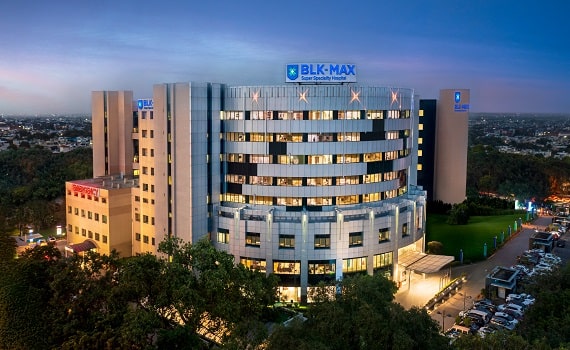
BLK-Max super ixtisoslashtirilgan kasalxonasi, Nyu-Dehli
Nyu-Dehlidagi BLK-Max Super Specialty Hospital 650 o'rinli yotoq, 22 ta ilg'or operasiya teatri va 13 ta mukammallik markazlarini taklif qiluvchi Hind...
Akkreditatsiya


Muvofiqliklar

Max Smart Super maxsus kasalxonasi, Saket, Nyu-Dehli
Max Smart Super Specialty Hospital, Saket - Janubiy Dehlidagi 250 o'rinli uchinchi darajali shifoxona. U 22 dan ortiq mutaxassisliklar, jumladan, yura...
Akkreditatsiya
Muvofiqliklar
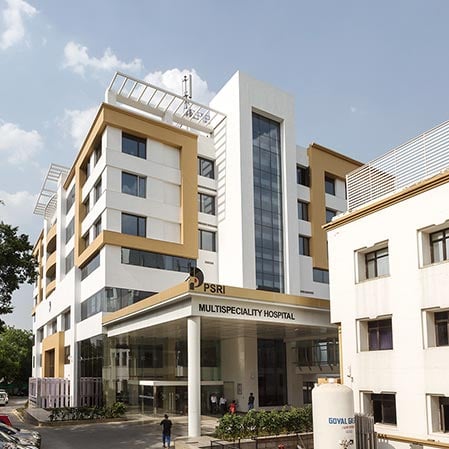
PSRI kasalxonasi, Dehli
Pushpawati Singhania tadqiqot instituti (PSRI kasalxonasi), Nyu-Dehli, 1996 yilda JK Group tomonidan tashkil etilgan etakchi ko'p ixtisoslashgan uchin...
Akkreditatsiya
Muvofiqliklar
Shunga o'xshash protseduralar
Galereya
TSS
Sharhlovchi
Hammasini ko'rish
Dr. SK Rajan is an internationally trained and AO-certified Spine Surgeon with extensive expertise in managing complex spinal disorders. He has trained at leading national and global institutions, i... Ko'proq o'qish

Bizning veb-saytimiz cookie-fayllardan foydalanadi. Maxfiylik siyosati.