
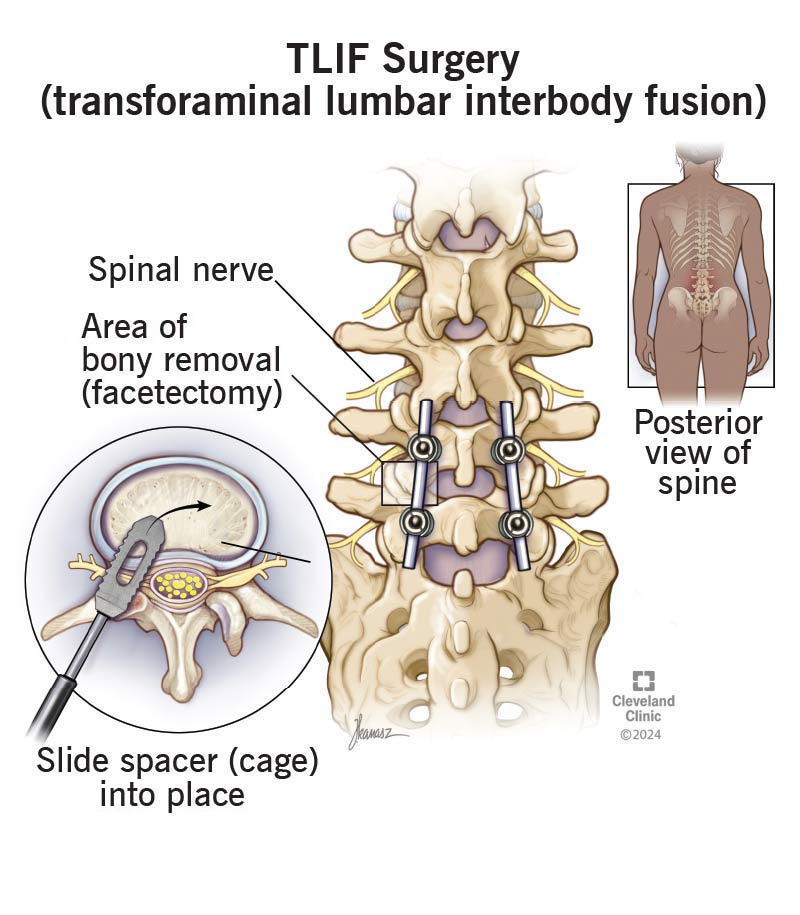
Transforaminal Lomber Interbody Fusion - TLIF hirurgiýasy Hindistan bahasy
Hakda Transforaminal Lomber Interbody Fusion - TLIF hirurgiýasy
TLIF hirurgiýasy näme we näme üçin edildi?
Transforaminal lomber interbody fusion (TLIF), aşaky (lomber) oňurgany durnuklaşdyrmak üçin ulanylýan oňurga birleşdirme operasiýasydyr. Ilki bilen dowamly arka agyrysyndan, aýak agyrysyndan (siyatikadan) ýa-da degeneratiw disk keseli, spondilolistez, oňurga stenozy ýa-da gaýtalanýan disk herniasy ýaly ýagdaýlar sebäpli oňurga durnuksyzlygyndan ejir çekýän näsaglara maslahat berilýär.
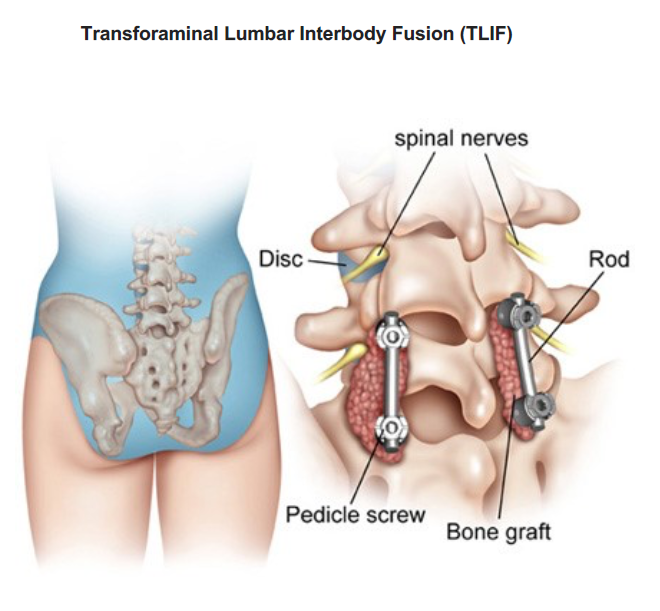
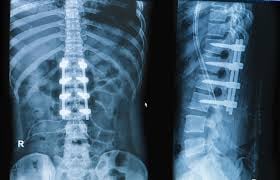
TLIF-de hirurg oňurganyň (transforaminal marşrut) üsti bilen oňurga ýakynlaşýar, zeper ýeten oňurgaly diski aýyrýar we iki oňurganyň arasynda süňk gornuşini ýa-da kapasany ýerleşdirýär. Wagtyň geçmegi bilen oňurgalar bir, gaty süňklere birleşýär. Birleşmek bogundaky agyryly hereketi ýok edýär we oňurga durnuklylygyny dikeldýär.
TLIF beýleki birleşdiriş usullaryndan saýlanýar, sebäbi:
- Rugsat berýärbir kesiş arkaly disk giňişliginiň iki tarapyna girmek.
- Oňurga ýiliginiň we nerwleriň manipulýasiýasyny azaldýar.
- Üpjün edýärhas gowy deňleşdirmek we ýük götermek ukybyoňurga üçin.
- An görnüşinde ýerine ýetirilip bilneraçyk ýa-da minimal invaziv proseduraişine baglylykda.
TLIF-iň maksadynerw gysyşyny aýyrýar, agyryny azaltmak we täsir eden oňurgaly segmenti durnuklaşdyrmak arkaly oňurga işini dikeltmek. Dermanlar, fiziki bejergi ýa-da epidural sanjymlar ýaly konserwatiw bejergiler şowsuz bolanda köplenç göz öňünde tutulýar.
TLIF hirurgiýasy kime gerek?
TLIF operasiýasy, aşaky bel agyrylaryny, şöhlelenýän aýak agyrylaryny ýa-da hirurgiki däl bejergiler bilen gowulaşmaýan oňurga durnuksyzlygyny başdan geçirýän hassalar üçin maslahat berilýär. Aýratyn-da, oňurganyň nerwleriniň gysylmagyna sebäp bolýan diski degenerasiýasyny ýa-da oňurgaly süýşmegi öz içine alýan lomber oňurgada gurluş taýdan kynçylyk çekýän adamlar üçin has amatlydyr.
TLIF zerurlygyny görkezýän iň köp ýaýran şertler:
- Degeneratiw disk keseli (DDD):Oňurgaly diskler garramak ýa-da könelmek sebäpli gidrasiýa we beýikligi ýitirende, ýykylyp, oňurganyň arasynda agyryly sürtülme döredip biler. TLIF disk beýikligini dikeldýär we segmenti durnuklaşdyrýar.
- Spondilolistez:Bu kesel, bir oňurga aşagyndaky keseliň üstünden süýşende ýüze çykýar. TLIF durnuksyz segmenti birleşdirip, nerw gysyşyny ýeňilleşdirip, hasam süýşmeginiň öňüni alýar.
- Lomber diski gyrmagy (gaýtalanýan alamatlar bilen):Disk keseliniň aýagynyň agyrmagyna (siyatika) sebäp bolýan we disektomiýadan ýa-da başga amallardan soň gaýdyp gelen ýagdaýlarda, TLIF täsir eden derejäni hemişelik durnuklaşdyrmak üçin ulanylýar.
- Oňurgara stenozy (durnuksyzlyk bilen):Oňurga kanaly daralanda nerwleri gysýar we durnuksyz hereket bilen bilelikde TLIF nerwleri gysmaga we oňurgany birleşdirmäge kömek edýär, mundan beýläk zeper ýetmeginiň öňüni alýar.
- Şowsuz arka hirurgiýa sindromy (FBSS):Öňki oňurga amallaryndan soň agyryny dowam etdirýän hassalar, şekillendiriş durnuksyzlygy, birleşmezligi ýa-da gaýtalanýan disk meselesini görkezýän bolsa, TLIF-den peýdalanyp bilerler.
- Oňurga süňkleri ýa-da ýokançlyklar:Oňurganyň durnuklylygyny bozýan trawmatiki şikes ýa-da ýokanç ýagdaýlarda, TLIF oňurgany täzeden gurmak we birleşdirmek üçin ulanylyp bilner.
TLIF, adatça, dynç alyş, fiziki bejergi, çişmä garşy dermanlar ýa-da epidural steroid sanjymlary ýaly hirurgiki däl bejergilerden 6-12 hepde ýa-da ondanam köp wagtlap şowsuz hasaplanýar. Dürli ýaşdaky ulular üçin amatly, ýöne esasanam arasynda bolýar35 we 70 ýaşnerw bilen baglanyşykly arka we aýak agyrylaryny başdan geçirýär.
TLIF hirurgiýasy nähili amala aşyrylýar?
Hirurglar aşaky oňurga zeper ýeten diski çykarmak we hemişelik durnuklylyk üçin iki oňurgany birleşdirmek üçin transforaminal lomber biri-birine birleşmegi (TLIF) ýerine ýetirýärler. Operasiýa tutuşlygyna alýar2-den 4 sagada çenliastynda amala aşyrylýarumumy anestezi. Operasiýa birnäçe ädimleri öz içine alýar.
- Positionerleşişi we taýýarlygy:Operasiýa topary hassany gaplanan operasiýa stoluna aşak goýýar. Anestezi astynda bir gezek hirurg aşaky arka arassalaýar we sterilizasiýa edýär we giriş nokadyny täsir eden oňurga derejesinden belleýär.
- Kesmek:Hirurg orta arka ýa-da aşaky arka tarapy boýunça kiçijik kesik edýär. Iň az invaziv TLIF-de bu kesiş bary-ýogy 2-4 sm, açyk operasiýa bolsa birneme ulurak kesilmegini talap edýär.
- Oňurga girmek we süňkleri aýyrmak:Disk giňişligine ýetmek üçin hirurg myşsalary ýuwaşlyk bilen yza çekýär we oňurgalary açýar. Nerw köklerini we diski aýdyň görmek üçin faset bogunynyň ýa-da laminanyň bir bölegini aýryp bilerler.
- Diski aýyrmak we nerw dekompressiýasy:Hirurg iki oňurganyň arasyndaky zeper ýeten diski seresaplylyk bilen aýyrýar. Nerwleri gysýan islendik süňk ýa-da ýumşak dokumalar hem oňurga nerwlerine edilýän basyşy ýeňletmek üçin arassalanýar.
- Spacer ýa-da Keýjiň ýerleşdirilmegi:Disk giňişligini arassalandan soň, hirurg oňurgaly süňkleriň arasyndan süňk ýa-da kapasany salýar. Diskiň beýikligini dikeldýär we süňkleriň ösmegine kömek edýär. Kafes PEEK, titanium ýa-da uglerod süýüminden ýasalyp bilner.
- Nurbatlary we çybyklary ýerleşdirmek:Oňurgany durnuklaşdyrmak üçin hirurg, disk giňişliginiň ýokarsynda we aşagynda oňurganyň içine pedikle nurbatlaryny we çybyklaryny salýar. Bu implantlar, birleşme ýüze çykanda süňkleri ýerinde saklaýar.
- Osapylmak we geýinmek:Implantlar berkidilenden we deňleşdirilenden soň, hirurg tikişleri ulanyp, gatlaklary kesýär. Oňurgaly hirurglar ýokançlygyň öňüni almak üçin önelgesiz geýim ulanýarlar.
- Operasiýadan soňky gözegçilik:Näsag sagaldyş otagyna geçirilýär we möhüm alamatlar we newrologiki funksiýa gözegçilik edilýär. Agyry bejermek derrew başlaýar we 24-48 sagadyň dowamynda ýöremek höweslendirilýär.
Indi hassahanalaryň köpüsi hödürleýärminimal invaziv TLIF (MIS-TLIF), myşsalaryň zeperlenmegini, gan ýitirilmegini we hassahanada bolmagyny azaldýar. Açyk we MIS-iň arasyndaky saýlaw, näsagyň anatomiýasyna, diagnozyna we hirurgyň islegine baglydyr.
Mugt bejeriş meýilnamasyny alyň
Transforaminal Lomber Interbody Fusion - TLIF hirurgiýasy hakda Hindistan
What is the Cost of TLIF Surgery in India?
The cost of TLIF surgery in India typically ranges from $5,000 to $8,500, depending on the number of spinal levels involved, the type of implants used, and the hospital’s facilities. This cost is significantly lower than in the US, UK, or Australia, where the same procedure may exceed $30,000 to $60,000.
What sets India apart is not just affordability, but the comprehensive nature of TLIF surgery packages. Hospitals offer all-inclusive pricing with no hidden charges, covering every step of the treatment journey, from pre-surgery consultations to rehabilitation.
TLIF surgery cost in India generally includes:
- Pre-Operative Evaluation: It includes MRI scans, X-rays, CT scans, blood tests, ECG, and anesthesia fitness assessment required for planning and safety.
- Surgeon’s and Anesthetist’s Fees: The total cost includes professional fees for the neurosurgeon or orthopedic spine specialist, the assisting surgical team, and the anesthesiologist.
- Operation Theatre Charges and Surgical Tools: It covers sterile instruments, neuromonitoring systems, fluoroscopy, and high-precision surgical equipment needed during the procedure.
- Spinal Implants and Cage System: Premium hospitals use FDA- or CE-approved spinal implants, including pedicle screws, titanium rods, and interbody cages. The implant cost is a significant portion of the total expense.
- Hospital Stay and ICU Monitoring: Patients usually stay in the hospital for 4 to 7 days, including 1 day in the ICU (if required). It includes nursing care, room charges, and monitoring.
- Inpatient Medications and Consumables: It includes IV antibiotics, painkillers, dressings, surgical sutures, and disposables used during the hospital stay.
- Physiotherapy and Mobilization Support: Basic post-surgical rehabilitation, including walking training, mobility support, and exercise guidance, is part of the standard package.
- Post-Discharge Follow-Up: Many hospitals include one or two follow-up consultations, wound inspections, and X-rays after discharge to monitor recovery.
In short, TLIF spine surgery in India offers not only significant cost savings but also a well-structured, end-to-end treatment plan that meets global standards.
Breakdown of TLIF Surgery Cost in India
The total cost of TLIF (transforaminal lumbar interbody fusion) surgery in India is influenced by several components, each contributing to the final package. Understanding this breakdown helps international patients prepare better and ensures transparency.
- The pre-operative evaluation for TLIF in India, including MRI, X-ray, blood tests, and anesthesia fitness, typically costs $300 to $600, depending on the diagnostic complexity.
- The TLIF implant cost, which includes titanium or PEEK cages, pedicle screws, and rods, ranges from $1,800 to $3,000. Hospitals use globally approved implants from brands like Medtronic, Stryker, or Zimmer Biomet.
- Surgeon’s and anesthetist’s fees are usually between $1,000 - $1,500, depending on the surgeon’s seniority and the surgical duration.
- Operation theatre charges, including advanced equipment (fluoroscopy, neuromonitoring, C-arm), generally fall in the range of $700 to $1,000.
- The hospital stay for TLIF in India, including 1 day ICU and 4-6 days in a private room, costs around $800 to $1,200, inclusive of nursing and meals.
- Inpatient medications and surgical consumables, such as antibiotics, painkillers, drapes, and sutures, add another $300 to $500 to the bill.
- Post-operative physiotherapy and mobilization, provided during the hospital stay, may cost $100 to $200, depending on the number of sessions.
Cost Component | Estimated Cost (USD) |
| Pre-operative Investigations | $300 – $600 |
| Spinal Implants and Hardware | $1,800 – $3,000 |
| Surgeon and Anesthetist Fees | $1,000 – $1,500 |
| Operation Theatre and Equipment | $700 – $1,000 |
| Hospital Stay and Nursing Care | $800 – $1,200 |
| Medications and Surgical Supplies | $300 – $500 |
| In-Hospital Physiotherapy | $100 – $200 |
| Total Estimated Cost (Single-Level TLIF) | $5,000 – $8,500 |
Note: This pricing applies to single-level TLIF surgery. In cases where multi-level fusion or additional spinal instrumentation is required, the cost may increase proportionally due to extended operating time, extra implants, and longer hospital stay.
Cost Comparison: TLIF Surgery in India vs Other Countries
TLIF surgery in India offers exceptional value compared to the same procedure in countries like the USA, UK, Australia, or the UAE. International patients often save up to 70–80% by choosing India, while still receiving globally approved implants, expert spine surgeons, and modern hospital facilities.
Country | Average TLIF Cost (USD) | Inclusions and Remarks |
| India | $5,000 – $8,500 | All-inclusive; covers surgery, implants, stay, meds, and physiotherapy |
| United States | $35,000 – $60,000 | Excludes rehab and extended hospital stay; costs vary widely by state |
| United Kingdom | $25,000 – $45,000 (Private) | NHS wait times; private care is expensive and not always fully inclusive |
| Australia | $28,000 – $50,000 | Partial insurance coverage; extra cost for implants and rehab |
| UAE | $18,000 – $25,000 | Premium pricing for private care; limited minimally invasive options |
| Singapore | $20,000 – $35,000 | High-tech hospitals but costly; post-op physiotherapy is often billed separately |
| Thailand | $8,500 – $12,000 | Cheaper than Western countries but still 30–50% higher than India |
With skilled spine surgeons, high success rates, and all-inclusive cost transparency, India remains one of the top choices for affordable TLIF surgery worldwide.
What Factors Influence TLIF Surgery Cost in India?
Several medical, surgical, and logistical factors influence the final cost of TLIF surgery in India. These variables help determine whether the patient’s treatment falls at the lower or higher end of the cost range.
- Number of Spinal Levels Fused: Single-level TLIF is more affordable. If multiple levels (e.g., L4-L5 and L5-S1) need to be fused, the cost increases due to additional implants, longer surgical time, and extended hospital stay.
- Type and Brand of Implants Used: The choice of cage (PEEK or titanium), pedicle screws, rods, and the brand of implants significantly impacts the cost. Premium brands like Medtronic, Globus, Stryker, and Zimmer Biomet cost more but offer superior durability and compatibility.
- Surgical Technique (Open vs. Minimally Invasive): Minimally Invasive TLIF (MIS-TLIF) uses specialized tools, smaller incisions, and advanced imaging. It leads to faster recovery and less blood loss, but may raise the overall cost due to equipment and technical expertise.
- Hospital Category and Location: Hospitals in metro cities like Delhi, Mumbai, and Bangalore, especially those with JCI or NABH accreditation, may charge more than smaller-tier city hospitals due to their superior infrastructure and international services.
- Surgeon’s Experience and Specialty: Highly experienced spine surgeons with fellowship training and specialization in complex fusions or revisions may charge higher professional fees, but often result in better outcomes and fewer complications.
- Pre-Existing Medical Conditions: If the patient has comorbidities like diabetes, obesity, or heart disease, they may require additional monitoring, ICU support, or extended stay, all of which increase the total bill.
- Post-Operative Rehabilitation Needs: Extended physiotherapy, advanced mobility aids (e.g., spinal braces, walking frames), and longer rehab stays can add to the cost. Some patients may also require follow-up imaging or pain management sessions.
- Accommodation and International Patient Services: Foreign patients may require visa assistance, airport transfers, interpreters, and arrangements for attendants to stay. These services are sometimes bundled into the package or billed separately.
Why Is TLIF Surgery More Affordable in India?
India offers world-class spine surgery at a fraction of the cost seen in other developed countries, without compromising on surgical quality, implant standards, or patient outcomes. The affordability of TLIF surgery in India stems from a combination of healthcare system efficiencies, lower operational costs, and patient-centered package models.
Some of the key reasons why TLIF surgery is more cost-effective in India are:
- Lower Operational and Infrastructure Costs: Indian hospitals operate at significantly lower costs for equipment maintenance, utilities, and staffing. These savings are passed directly to patients through reduced surgical pricing.
- Affordable Surgeon and Staff Fees: Highly skilled spine surgeons in India, many of whom have trained internationally, charge significantly less than their counterparts in the US or UK. Anesthetists, nurses, and physiotherapists also receive modest salaries, which helps keep overall costs low.
- Competitive Implant Pricing: India has access to a broad range of spinal implants, including both locally manufactured and globally imported options. With reduced import taxes and bulk procurement, hospitals can offer FDA/CE-approved implants at affordable rates.
- High Patient Volume and Streamlined Processes: Spine centers in India handle a large number of TLIF and other fusion surgeries annually. It allows hospitals to optimize surgical time, reduce inventory waste, and lower per-patient costs through volume efficiency.
- Integrated In-House Services: Hospitals offer diagnostics, pharmacy, physiotherapy, and rehab services on-site, eliminating the need for third-party outsourcing. It improves care continuity and significantly reduces overhead costs.
- Transparent and All-Inclusive Packages: Unlike Western countries, where patients are billed separately for consultation, surgery, implants, stay, and rehab, Indian hospitals bundle these into fixed-cost packages, ensuring price clarity and avoiding hidden expenses.
- Favorable Currency Exchange for International Patients: Patients traveling from countries like the USA, UK, UAE, Canada, or Africa benefit from favorable exchange rates, making high-end spine treatment in India far more affordable than in their home countries.
- Government Support for Medical Tourism: India promotes medical tourism with easy visa processes, airport assistance, multilingual support, and dedicated international patient departments in major hospitals.
International Patient Services for TLIF Surgery in India
India’s top hospitals provide a complete range of international patient services tailored to make spinal treatments like TLIF surgery smooth, safe, and stress-free for patients arriving from abroad. These services are often bundled with the treatment package or offered at minimal additional cost, ensuring convenience from pre-travel planning to post-surgery recovery.
- Medical Visa Assistance: Hospitals issue official medical invitation letters required for visa applications. International patient coordinators guide patients and their companions through the process and also assist with visa extensions when necessary.
- Airport Pickup and Drop Services: Patients are received at the airport by a hospital-appointed representative and transported safely to their accommodation or directly to the hospital. Return airport transfers are also arranged post-recovery.
- Dedicated International Patient Coordinator: Each patient is assigned a case manager who handles daily scheduling, interpreter services, billing support, travel assistance, and coordination with the surgical team.
- Multilingual Interpretation Services: To eliminate language barriers, interpreters are provided for Arabic, Russian, French, Spanish, Swahili, and more. Essential documents and medical reports are translated upon request.
- Pre-Travel Online Consultation: Patients can book an online video consultation with a spine surgeon before flying. It allows the doctor to review reports, explain the TLIF procedure, and provide a personalized estimate and treatment plan.
- Affordable Accommodation and Meal Options: Hospitals assist in booking budget hotels, guesthouses, or service apartments near the hospital. Meal plans are customizable and include halal, vegetarian, and diabetic-friendly options based on patient preference.
- Rehabilitation and Physiotherapy Support: After TLIF surgery, in-house physiotherapists provide mobilization training, posture correction, and spine-strengthening exercises. Customized rehab plans are shared for continued recovery after the patient returns home.
- Post-Discharge Remote Follow-Up: Surgeons remain available for virtual follow-ups via video, email, or WhatsApp. Patients can send updates, X-rays, or queries for months after returning home, at no extra charge.
- Assistance with FRRO Registration: For extended stays in India, hospitals help international patients complete FRRO (Foreigner Regional Registration Office) formalities to remain compliant with local laws.
- Family Support and Recovery Comfort: Hospitals offer companion support, including extra bedding, visitor access, and meal services for relatives. Recovery lounges and spiritual spaces are also available for patient comfort.
What is the Success Rate and Recovery Timeline After TLIF Surgery in India?
Transforaminal lumbar interbody fusion surgery is a highly successful spinal procedure, primarily when performed by experienced surgeons using high-quality implants. It is designed to relieve chronic lower back and leg pain, restore spinal stability, and improve mobility. In India, the procedure has shown excellent clinical outcomes, even in complex or revision cases.
Success Rate of TLIF Surgery in India
- The average success rate of TLIF surgery in India is around 90% to 95% for single-level fusion, depending on patient condition, surgeon experience, and surgical technique (open vs minimally invasive).
- Most TLIF patients report a significant reduction in pain and improved quality of life within 3 to 6 months of the procedure.
- Minimally Invasive TLIF often results in faster healing, reduced post-op pain, and shorter hospital stays, contributing to better patient satisfaction.
- Complication rates are relatively low in India due to advanced intraoperative technologies such as intraoperative neuromonitoring, C-arm navigation, and modern fusion systems.
Recovery Timeline After TLIF Surgery
Recovery after TLIF is gradual and can vary based on factors like the number of spinal levels fused, patient age, comorbidities, and whether the surgery was open or minimally invasive.
- Day 1-2: Patient is monitored in the hospital (1 day in ICU if needed). Pain is managed through IV medications. Breathing and leg movement exercises begin early.
- Day 3-5: Patient is encouraged to walk with support. Light physiotherapy begins. If stable, discharge is possible by day 4 or 5.
- Week 2-3: Staples or sutures are removed. The patient continues basic home-based physiotherapy. Bending and lifting are avoided.
- Week 4-6: Patient gains more mobility. Can walk longer distances and perform light tasks. Follow-up imaging may be scheduled.
- Month 3-6: Fusion progresses. Pain reduces significantly. Return to desk work or non-strenuous job roles is often possible.
- 6-12 Months: Bone graft fully fuses with the vertebrae. The patient can resume most normal activities, including travel, long walks, or non-impact exercise. Complete recovery usually occurs within 12 months.
Post-Operative Do’s and Don’ts
- Do follow a supervised physiotherapy plan. It’s essential for regaining strength and spine mobility.
- Don’t lift heavy objects or bend forward until your surgeon gives clearance.
- Do attend all follow-up visits and get periodic imaging (X-ray/CT) to monitor fusion progress.
- Don’t ignore numbness or new leg pain, which may indicate nerve irritation.
Transforaminal Lomber Interbody Fusion - TLIF hirurgiýasy Costurt boýunça çykdajylary deňeşdirmek
Lukmançylyk bejergiňiz barada habarly karar bermek üçin dürli ýurtlardaky Transforaminal Lomber Interbody Fusion - TLIF hirurgiýasy çykdajylaryny deňeşdiriň.
| Countryurt | Çykdajy aralyk (USD) | Potensial tygşytlamak | Hereket |
|---|---|---|---|
HindistanTokIň gowy baha | $5,000 - $8,500 | — | Sitata alyň |
Bellik: Çykdajylar hassahan saýlamaga, otag görnüşi, goşmaça hyzmatlara we aýratyn lukmançylyk talaplaryna esaslanyp üýtgäp biler.
Transforaminal Lomber Interbody Fusion - TLIF hirurgiýasy üçin Transforaminal Lomber Interbody Fusion - TLIF hirurgiýasy üçin öňdebaryjy hassahanalar
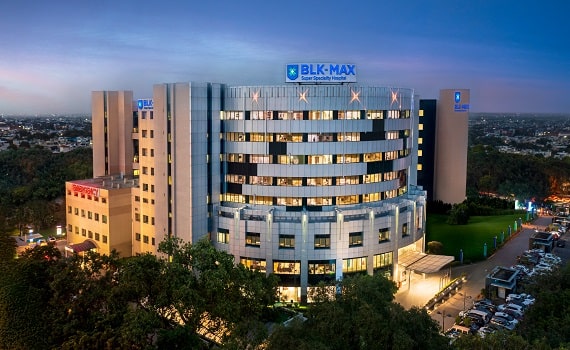
“BLK-Max” ýörite hünär hassahanasy, Nýu-Deli
Nýu-Delidäki “BLK-Max Super” ýörite hassahanasy 650 krowat, 22 sany öňdebaryjy operasiýa teatry we 13 sany ajaýyp merkez hödürleýän Hindistanda iň esa...
Akkreditasiýa


Desgalar

Maks Smart Super ýöriteleşdirilen hassahana, Saket, Nýu-Deli
Maks Smart Super ýöriteleşdirilen hassahana, Saket, Günorta Delidäki 250 orunlyk üçünji derejeli hassahanadyr. Cardürek ylymlary, onkologiýa, ortopedi...
Akkreditasiýa
Desgalar
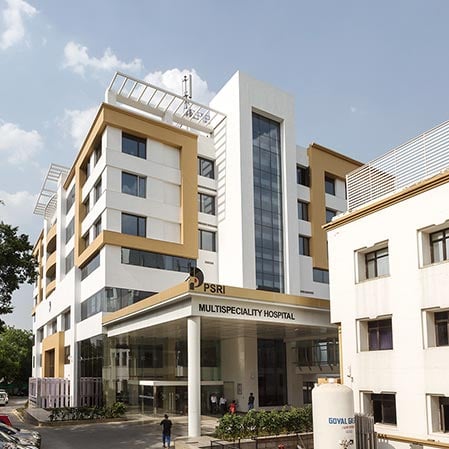
PSRI hassahanasy, Deli
Nýu-Delidäki Puşpawati Singhania gözleg instituty (PSRI hassahanasy), JK topary tarapyndan 1996-njy ýylda döredilen köp ugurly ýokary derejeli hassaha...
Akkreditasiýa
Desgalar
Şuňa meňzeş proseduralar
Galereýa
Faktura
Synçy
Hemmesini gormek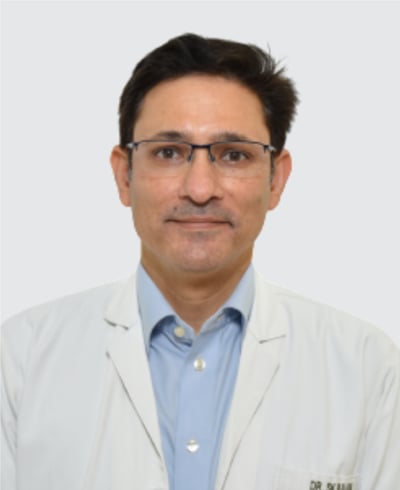
Dr. SK Rajan is an internationally trained and AO-certified Spine Surgeon with extensive expertise in managing complex spinal disorders. He has trained at leading national and global institutions, i... Dowamyny okaň

Sahypamyz gutapjyk ulanýar. Gizlinlik syýasaty.