
IVF-Behandlung Kosten in Indien
Um IVF-Behandlung
Was ist Unfruchtbarkeit?
Unfruchtbarkeit ist eine Krankheit, bei der ein Paar nach einer Schwangerschaft nicht mehr in der Lage ist12 Monate regelmäßiger, ungeschützter Geschlechtsverkehrdrohen Bei Frauen über 35 Jahren wird diese Zeit auf6 Monate, da die Fruchtbarkeit mit zunehmendem Alter abnimmt. Die Erkrankung kann sowohl Männer als auch Frauen betreffen, und in vielen Situationen ist sie das Ergebnis von Faktoren beider Partner.
Bei Frauen kann Unfruchtbarkeit durch blockierte Eileiter, Endometriose, Gebärmutteranomalien, Eisprungstörungen oder verminderte Eierstockreserven verursacht werden. Bei Männern kann es mit einer geringen Spermienzahl, einer verringerten Spermienmotilität, einer abnormalen Spermienform, hormonellen Ungleichgewichten oder genetischen Faktoren in Verbindung gebracht werden.
Eine frühzeitige Diagnose ist unerlässlich, da die rechtzeitige Behandlung die Erfolgschancen verbessert. Mit den Fortschritten in der Reproduktionsmedizin, einschließlich IVF (In-vitro-Fertilisation), IUI (intrauterine Insemination) und genetischem Screening, können viele Paare nun trotz komplexer Herausforderungen ihren Traum von Elternschaft verwirklichen.
Nach den Berichten der Weltgesundheitsorganisation (WHO) ungefähr1 von 6 ErwachsenenWeltweit sind von Unfruchtbarkeit betroffen, was es nicht nur zu einem persönlichen Thema macht, sondern auch zu einem globalen Gesundheitsproblem, das Sensibilisierung und Zugang zu wirksamen Behandlungsoptionen erfordert.
Was ist IVF?
In-vitro-Fertilisation (IVF) ist eine der am weitesten verbreiteten und erfolgreichsten Fruchtbarkeitsbehandlungen in der modernen Medizin. Es geht darum, eine extrahierte Eizelle außerhalb des Körpers in einem Labor zu befruchten und dann den resultierenden Embryo in die Gebärmutter zu übertragen, um eine Schwangerschaft zu erreichen.
Weltweit hat IVF die Landschaft der Unfruchtbarkeitsversorgung verändert. Ab 2024 schätzt die medizinische Forschung das zwischen13 und 17 Millionen Babyswurden durch IVF geboren, mit Erfolgsraten im Durchschnitt50–60% für Frauen unter 35drohen Diese Raten sinken mit dem Alter, verbessern sich jedoch durch Innovationen wie die Bildgebung im Zeitraffer-Embryon, die Präimplantations-Gen-Tests (PGT) und die verfeinerten Kryokonservierungstechniken.
Wer braucht IVF?
IVF wird für Einzelpersonen und Paare empfohlen, die mit Fruchtbarkeitsproblemen konfrontiert sind, die mit einfacheren Behandlungen nicht gelöst werden können. Es ist auch eine Option für diejenigen, die ihre Fruchtbarkeit für die Zukunft erhalten möchten.
Paare können empfohlen werden, IVF zu prüfen, wenn:
- Eileiter sind blockiert oder beschädigt, verhindert natürliche Düngung.
- Männliche Unfruchtbarkeitsfaktoren, wie niedrige Spermienzahl, schlechte Motilität oder abnormale Spermienform, begrenzen die natürliche Empfängnis.
- EisprungstörungenReduzieren Sie die Anzahl oder Qualität der jeden Monat freigesetzten Eier.
- EndometrioseBeeinflusst die Fortpflanzungsanatomie oder die Eiqualität.
- Unerklärte UnfruchtbarkeitBeharrt trotz normaler Testergebnisse und Versuche mit anderen Behandlungen wie IUI.
- Fortgeschrittenes mütterliches AlterVerringert natürlich die Chance auf Schwangerschaft.
IVF spielt auch eine Rolle in:
- Fertilitätserhaltung für Personen, die sich einer Behandlung wie Chemotherapie unterziehen, die Fortpflanzungszellen schädigen kann.
- Alleinerziehende und gleichgeschlechtliche Paare, die Spendereier, Spendersamen oder Leihmutterschaft benötigen.
- Genetische Prävention durch Präimplantationsgenetik (PGT) zur Vermeidung von Erbkrankheiten.
Wie wird die IVF-Behandlung durchgeführt?
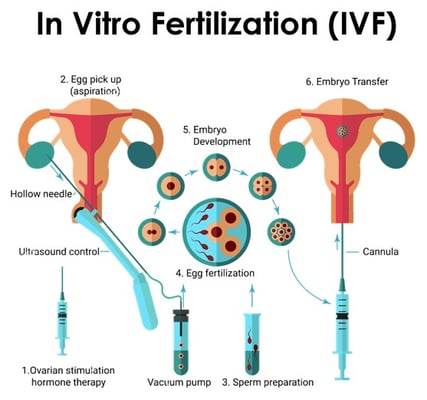
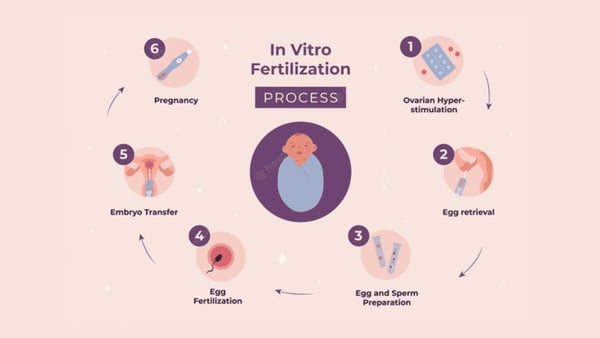
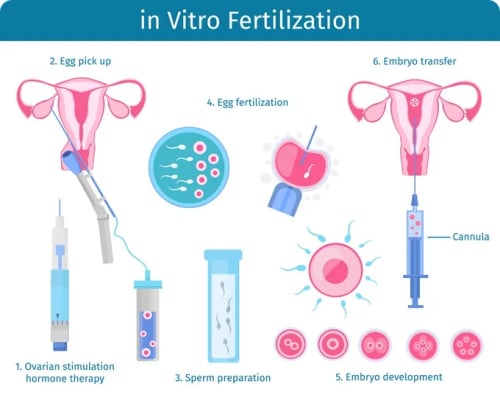
IVF ist ein Schritt-für-Schritt-Prozess, der dazu beiträgt, eine Vielzahl von Fruchtbarkeitsproblemen zu bewältigen. Das Ziel ist einfach: Im Labor einen gesunden Embryo erstellen und zur Implantation in die Gebärmutter überführen.
- Der Prozess beginnt mit aPersonalisierte Fruchtbarkeitsbewertungdrohen Ärzte überprüfen die Krankengeschichte, führen hormonelle Blutuntersuchungen durch und überprüfen die Fortpflanzungsorgane mit Ultraschall oder anderen Bildgebung. Die Fruchtbarkeitsbewertung hilft dabei, alle Probleme zu identifizieren, die sich auf die Behandlungsergebnisse auswirken können.
- Nach Abschluss der Bewertung beginnt die Eierstimulation. Der Patient nimmt Hormoninjektionen, um die Eierstöcke zu aktivieren, um in einem einzigen Zyklus viele reife Eier zu produzieren. Die Überwachung durch Blutuntersuchungen und Scans stellt sicher, dass die Eientwicklung wie geplant voranschreitet.
- Wenn die Eier fertig sind, wird ein kleiner Eingriff genanntEierholungwird unter Sedierung durchgeführt. Am selben Tag werden die Samen vom Partner oder Spender gesammelt. Im Labor werden die Eier und Spermien entweder durch Standardbesamung oder durch fortschrittliche Techniken wie ICSI (intracytoplasmatische Spermieninjektion) verschmolzen, um die Befruchtung zu fördern.
- Die resultierenden Embryonen werden mehrere Tage lang eng überwacht. Embryologen wählen die gesündesten Embryonen für die Übertragung in die Gebärmutter aus, um die Chancen der Implantation zu maximieren. Verbleibende lebensfähige Embryonen (falls vorhanden) können für zukünftige Versuche eingefroren werden.
Der Prozess endet mit einem Schwangerschaftstest etwa zwei Wochen nach dem Transfer. Bei Erfolg setzt der Patient die frühe Schwangerschaftsversorgung fort, um einen reibungslosen Übergang zur regelmäßigen vorgeburtlichen Nachsorge zu gewährleisten.
Welche IVF-Verfahren gibt es?
Moderne IVF ist keine Einheitsbehandlung. Spezialisten passen den Ansatz an den Gesundheitszustand, die Fruchtbarkeitsziele und die verfügbaren Ressourcen des Patienten an. Hier sind die wichtigsten Variationen:
- Standard-IVF:Dies ist der häufigste Ansatz, bei dem Eier und Spermien in einer Petrischale kombiniert und auf natürliche Weise befruchtet werden. Es funktioniert am besten, wenn die Spermienqualität angemessen ist und keine schwerwiegende Unfruchtbarkeit des männlichen Faktors vorliegt.
- IVF mit ICSI (intracytoplasmatische Spermieninjektion):Bei dieser Methode injiziert ein Embryologe ein einzelnes gesundes Sperma direkt in jedes reife Ei. ICSI wird bei niedrigen Spermien, schlechter Beweglichkeit oder früheren Befruchtungsfehlern empfohlen.
- IVF mit Spendereier:Wird verwendet, wenn die eigenen Eier einer Frau aufgrund des Alters, der schlechten Eierstöcke oder der genetischen Bedenken nicht gesund sind. Eier eines gescreenten Spenders werden mit dem Spendersamen des Partners befruchtet und in die Gebärmutter der beabsichtigten Mutter gegeben.
- IVF mit Spendersamen:ausgewählt, wenn männliche Unfruchtbarkeit schwerwiegend ist oder wenn eine alleinstehende Frau oder ein gleichgeschlechtliches weibliches Paar empfangen möchte. Spendersamen wird von zertifizierten Samenbänken bezogen und zur Befruchtung verwendet.
- IVF mit Leihmutterschaft:Umfasst Embryonen in die Gebärmutter eines Schwangerschaftsträgers, der die Schwangerschaft im Namen der ursprünglichen Eltern erfüllt. Es wird häufig verwendet, wenn die Erkrankung die beabsichtigte Mutter daran hindert, ein Baby zu tragen.
- Gefrorener Embryotransfer (FET):In einem früheren IVF-Zyklus erstellte Embryonen werden eingefroren und später zum Transfer aufgetaut. FET kann für einen späteren Termin geplant werden, der Flexibilität bietet und häufig die körperliche und emotionale Belastung von Back-to-Back-Zyklen verringert.
- IVF mit PGT/PGS (Preimplantation Gentest/Screening):Diese fortschrittliche Technik untersucht Embryonen vor dem Transfer auf genetische Anomalien, erhöht die Wahrscheinlichkeit einer gesunden Schwangerschaft und verringert die Wahrscheinlichkeit von Erbkrankheiten.
IVF-Prozedur-Zeitleiste
Ein IVF-Zyklus folgt einer strukturierten Sequenz, die sich typischerweise überspannt4–6 WochenVom Start bis zum Embryotransfer. Die genaue Dauer des gesamten Zyklus kann je nach individuellen Behandlungsplänen variieren.
- Schritt 1: Vorbehandlungsbewertung (Tage 1–7):Fertilitätsspezialisten führen hormonelle Blutuntersuchungen, Beckenultraschalluntersuchungen und Samenanalyse durch. Ziel ist es, alle Hürden für die Konzeption zu identifizieren und einen maßgeschneiderten Stimulationsplan zu erstellen.
- Schritt 2: Ovarialstimulation (Tage 8–14):Der Patient beginnt mit täglichen Hormoninjektionen, um die Eierstöcke zu ermutigen, mehrere reife Eier zu produzieren. Regelmäßige Überwachung durch Ultraschall und Blutuntersuchung sorgt für optimales Follikelwachstum.
- Schritt 3: Eierholung (Tag 15):Wenn die Follikel die richtige Größe erreichen, wird ein kleiner chirurgischer Eingriff durchgeführt, um die Eier zu sammeln. Es dauert normalerweise 20 bis 30 Minuten und erfordert nur eine kurze Erholungsphase.
- Schritt 4: Befruchtung und Embryokultur (Tage 15–20):Eier werden mit Sperma befruchtet, indem sie Standard-IVF oder ICSI verwenden. Embryologen überwachen die Embryonen 3–5 Tage lang, bewerten ihre Entwicklung und wählen die gesündesten für den Transfer aus.
- Schritt 5: Embryotransfer (Tage 18–22):Ein oder mehrere Embryonen werden durch ein schmerzloses Verfahren in die Gebärmutter eingebracht. Gesunde und lebensfähige Embryonen können für die spätere Verwendung eingefroren werden.
- Schritt 6: Schwangerschaftstest (um 35. Tag):Ein Bluttest wird etwa zwei Wochen nach dem Embryotransfer durchgeführt, um die Schwangerschaft zu bestätigen. Wenn positiv, beginnt der Patient vor der Geburt und der Überwachung.
Holen Sie sich einen kostenlosen Behandlungsplan
Über IVF-Behandlung in Indien
Wie hoch sind die Kosten einer IVF-Behandlung in Indien?
DerKosten einer IVF-Behandlung in Indienliegt im Allgemeinen zwischen1.600 $ und 3.700 $pro Zyklus. Die Abweichung hängt vom Fachwissen der Klinik, der verwendeten Technologie, den verschriebenen Medikamenten und der Komplexität des Patientenfalls ab. Im Vergleich zu anderen Ländern sind diese Kosten deutlich niedriger, ohne dass die Qualität der Pflege darunter leidet.
Bei der Bewertung des Preises ist es wichtig zu wissen, was im Preis enthalten ist und wo möglicherweise eine zusätzliche Zahlung erforderlich ist. Es hilft Patienten, ihre Finanzen genauer zu planen und unerwartete Ausgaben zu vermeiden.
Einschlüsse
Die angegebenen IVF-Kosten umfassen in der Regel:
- Erste fachärztliche Konsultationen und Nachuntersuchungen während des Behandlungszyklus.
- Hormonelle Medikamente zur Stimulation der Eierstöcke innerhalb der Standarddosierungsgrenzen.
- Ultraschalluntersuchungen und Blutuntersuchungen zur Überwachung der Eizellenentwicklung.
- Verfahren zur Eizellentnahme unter Sedierung.
- Laborbefruchtung (Standard-IVF oder ICSI, sofern im Paket enthalten).
- Embryonenkultur und -auswahl.
- Einzelner frischer Embryotransfer.
- Grundlegende Krankenhaus- und Pflegekosten während der Eingriffe.
Ausschlüsse
Es können zusätzliche Kosten anfallen für:
- Beschaffung von Spendereizellen oder Spendersamen.
- Gebühren für das Einfrieren und Lagern von Embryonen.
- Genetischer Präimplantationstest (PGT) oder genetisches Präimplantationsscreening (PGS).
- Leihmutterschaftsvereinbarungen und damit verbundene juristische Dienstleistungen.
- Hochdosierte oder über die Standardpackung hinausgehende hormonelle Medikamente.
- Reise-, Unterbringungs- und persönliche Ausgaben für ambulante oder internationale Patienten.
IVF-Kostenaufschlüsselung
Die Kosten für einen Standard-IVF-Zyklus in Indien liegen im Allgemeinen zwischen₹1,30.000 und ₹3,00.000(etwa1.600 – 3.700 $). Der Preis beinhaltet in der Regel Fachberatung, Medikamente zur Stimulation der Eierstöcke, Überwachungsscans und Tests, Eizellentnahme, Laborbefruchtung, Embryonenkultur und Embryotransfer. Die Kosten für Medikamente fallen in der Regel an35–40 %der Gesamtkosten, während Verfahren und Laborarbeiten den Rest ausmachen. Für optionale Dienstleistungen wie ICSI, Spendereizellen/-sperma, Gentests und das Einfrieren von Embryonen fallen zusätzliche Kosten an.
Aufwandskomponente | Durchschnittliche Kosten (INR) | Durchschnittliche Kosten (USD) |
| Erstberatung und Nachuntersuchungen | 8.000 – 15.000 | 100 – 180 |
| Medikamente zur Stimulation der Eierstöcke | 45.000 – 90.000 | 550 – 1.100 |
| Ultraschall- und Blutüberwachung | 15.000 – 30.000 | 180 – 360 |
| Verfahren zur Eizellentnahme | 25.000 – 50.000 | 300 – 620 |
| Laborbefruchtung (IVF) | 20.000 – 40.000 | 250 – 500 |
| Embryonenkultur und -auswahl | 10.000 – 25.000 | 125 – 310 |
| Transfer frischer Embryonen | 7.000 – 15.000 | 90 – 180 |
| Geschätzte Gesamtkosten (pro Zyklus) | 1,30.000 – 3,00.000 | 1.600 – 3.700 |
Zusatzkosten (falls zutreffend):
- Spendereizellen oder Spendersamen:+INR 80.000 – 1,60.000 (USD 1.000 – 2.000)
- ICSI-Verfahren (falls nicht inbegriffen):+INR 40.000 – 80.000 (USD 500 – 1.000)
- Gentests vor der Implantation (PGT/PGS):+INR 1.20.000 – 2.00.000 (USD 1.500 – 2.500)
- Einfrieren und jährliche Lagerung von Embryonen:+INR 40.000 – 64.000 (USD 500 – 800)
IVF-Kostenvergleich mit anderen Ländern
Die IVF-Behandlung ist in Indien deutlich günstiger als in vielen entwickelten Ländern, bei vergleichbaren Erfolgsraten und medizinischen Standards. Die durchschnittlichen Kosten in Indien liegen zwischen₹1.30.000 bis ₹3.00.000(1.600 – 3.700 USD) pro Zyklus, was oft weniger als ein Drittel des Preises in den Vereinigten Staaten, im Vereinigten Königreich oder in Australien ist. Niedrigere Betriebskosten, eine wettbewerbsfähige medizinische Infrastruktur und erfahrene Fruchtbarkeitsspezialisten tragen zu geringeren Kosten bei, ohne dass die Qualität darunter leidet.
Land | Durchschnittliche Kosten pro Zyklus (lokale Währung) | Ca. Kosten in USD |
| Indien | 1,30.000 – 3,00.000 INR | 1.600 – 3.700 |
| Vereinigte Staaten | 12.000 – 15.000 USD | 12.000 – 15.000 |
| Vereinigtes Königreich | 6.000 – 8.000 £ | 7.500 – 10.000 |
| Australien | 8.000 – 10.000 AUD | 5.200 – 6.500 |
| Vereinigte Arabische Emirate | 25.000 – 35.000 AED | 6.800 – 9.500 |
Dieser erhebliche Kostenunterschied ist einer der Hauptgründe, warum Indien zu einem bevorzugten Ziel für internationale Patienten geworden ist, die eine IVF-Behandlung suchen.
Welche Faktoren beeinflussen die IVF-Kosten in Indien?
Die Kosten einer IVF-Behandlung variieren je nach Patient aufgrund medizinischer, verfahrenstechnischer und logistischer Faktoren. Das Wissen um diese Einflüsse hilft Paaren, ihr Budget genauer festzulegen und Kliniken fair zu vergleichen.
- Art des IVF-Verfahrens:Ein Standard-IVF-Zyklus ist kostengünstiger als fortgeschrittene Varianten wie ICSI, IVF mit Spendergameten oder IVF mit PGT/PGS. Jeder zusätzliche Schritt erfordert mehr spezialisierte Laborarbeit und Fachwissen, was die Gesamtkosten erhöht.
- Anzahl der erforderlichen Zyklen:Einige Partner werden im ersten Versuch schwanger, während andere möglicherweise mehr als einen Zyklus benötigen, um schwanger zu werden. Jeder weitere Zyklus erhöht die Gesamtkosten.
- Alter und Fruchtbarkeitsgesundheit:Jüngere Frauen, insbesondere solche unter 35 Jahren, reagieren im Allgemeinen besser auf die Stimulation der Eierstöcke und haben höhere Erfolgsraten, wodurch die Wahrscheinlichkeit wiederholter Zyklen verringert wird. Eine altersbedingte Verschlechterung der Eizellenqualität kann den Medikamentenbedarf erhöhen und die Erfolgsquote verringern, was indirekt zu höheren Kosten führt.
- Dosierung und Dauer der Medikamente:Die Menge und Art der benötigten Fruchtbarkeitsmedikamente variieren je nach Eierstockreserve, Hormonspiegel und Ansprechen auf die Behandlung. Höhere Dosen oder längere Stimulationsdauern erhöhen die Kosten.
- Verwendung von gespendeten Eizellen, Spermien oder Embryonen:Durch die Beschaffung von Spendermaterial kommen Beschaffungs-, Screening- und Rechtskosten zum Behandlungspaket hinzu.
- Labortechnik und Qualität:Kliniken mit fortschrittlichen Einrichtungen (z. B. Zeitraffer-Embryoüberwachung, hochwertige Inkubatoren und fortschrittliche Kulturmedien) verlangen aufgrund besserer Technologie und höherer Betriebskosten oft mehr.
- Zusätzliche Dienstleistungen:Für Präimplantations-Gentests, das Einfrieren von Embryonen, Leihmutterschaftsvereinbarungen und Rechtsdienstleistungen fallen gesonderte Gebühren an, die die Endrechnung erheblich erhöhen können.
- Kategorie Krankenhaus/Klinik:Premium-Fruchtbarkeitszentren in Großstädten verlangen aufgrund der Gemeinkosten, der Ausstattungsstandards und des Rufs der Marke in der Regel mehr als kleinere Kliniken in weniger städtischen Gebieten.
Warum Indien für IVF wählen?
Du bekommsterfahrene Fruchtbarkeitsspezialisten, viele davon mit internationaler Ausbildung und hohem Verfahrensumfang, der sich in verfeinerten Protokollen und konsistenten Ergebnissen niederschlägt. Kliniken verwendenmoderne Embryologielaboremit HEPA-gefilterten Reinräumen, Zeitraffer-Inkubatoren und validierten Kulturmedien zum Schutz der Embryonenqualität.
Zentren bietenumfassende Betreuung unter einem Dach(Diagnose, Stimulation, Entnahme, Embryologie, Gentests (PGT), Einfrieren und Beratung), sodass Sie jeden Schritt ohne Verzögerungen durchlaufen. Die Teams folgenglobale Standardszur Laborvalidierung, Qualitätskontrolle und Infektionsprävention und teilen Sie geprüfte Erfolgsdaten, um fundierte Entscheidungen zu unterstützen.
Patienten profitieren davonpersonalisierte Stimulationspläne, Embryonenbewertung durch erfahrene Embryologen, Übertragung einzelner Embryonen, sofern angemessen, und evidenzbasierte Zusatzleistungen nur, wenn dies angezeigt ist. Für komplexe Fälle sorgen KlinikenICSI, chirurgische Samenentnahme, Spenderprogramme und Leihmutterschaftswegeim Einklang mit den aktuellen Vorschriften.
Internationale Patienten findenoptimierte Koordination: Unterstützung bei medizinischen Visa, Sprachunterstützung, transparente Angebote und flexible Terminplanung für berufstätige Paare. Nach der Behandlung halten die Kliniken die Nachsorge mit Telekonsultationen, Medikamentenberatung und Frühschwangerschaftsüberwachung aufrecht, um die Kontinuität der Versorgung sicherzustellen.
Wie hoch ist die Erfolgsquote der IVF in Indien?
Die IVF-Erfolgsraten in Indien haben sich im letzten Jahrzehnt aufgrund von Fortschritten in der Reproduktionstechnologie, besseren Techniken zur Embryonenkultur und einer personalisierten Behandlungsplanung stetig verbessert. Das Ergebnis jedes Zyklus hängt von mehreren Faktoren ab, darunter dem Alter der Frau, der Ursache der Unfruchtbarkeit und der Expertise der Klinik.
Für Frauenunter 35liegt die durchschnittliche Lebendgeburtenrate pro IVF-Zyklus in Indien bei etwa50–60 %. Die Erfolgsquote sinkt auf35–40 %für Frauen im Alter von 35–37 Jahren,25–30 %für Personen im Alter von 38 bis 40 Jahren und10–15 %für Frauen über 40. Auch männliche Fruchtbarkeitsfaktoren, die Qualität des Embryos und der allgemeine Gesundheitszustand beeinflussen diese Prozentsätze.
Techniken wieICSI,Zeitraffer-Überwachung von Embryonen, UndGenetischer Präimplantationstest (PGT)haben die Ergebnisse insbesondere in komplexen Fällen weiter verbessert. Darüber hinaus kann der Einsatz von gespendeten Eizellen bei älteren Patienten die Erfolgsraten auf ein mit jüngeren Altersgruppen vergleichbares Niveau steigern.
Es ist wichtig zu verstehen, dass IVF zwar hohe Erfolgsaussichten bietet, keine Behandlung jedoch eine Schwangerschaft garantieren kann. Die Erfolgsaussichten verbessern sich, wenn Patienten dem medizinischen Rat ihres Spezialisten folgen, einen gesunden Lebensstil pflegen und eine Klinik mit nachgewiesenen Ergebnissen und modernen Einrichtungen wählen.
IVF-Behandlung Kostenvergleich nach Ländern
Vergleichen Sie die Kosten von IVF-Behandlung in verschiedenen Ländern, um eine fundierte Entscheidung über Ihre medizinische Behandlung zu treffen.
| Land | Kostenspanne (USD) | Mögliche Einsparungen | Aktion |
|---|---|---|---|
IndienAktuellBestes Preis-Leistungs-Verhältnis | $1,600 - $3,700 | — | Holen Sie sich ein Angebot |
Notiz: Die Kosten können je nach Krankenhauswahl, Zimmertyp, Zusatzleistungen und individuellen medizinischen Anforderungen variieren.
Führende Krankenhäuser für IVF-Behandlung in Indien

BLK-Max Super Specialty Hospital, Neu-Delhi
BLK-Max Super Speciality Hospital in New Delhi is one of India's premier healthcare institutions, offering 650 beds, 22 advanced operation theatres, a...
Akkreditierungen


Einrichtungen

Max Smart Super Speciality Hospital, Saket, Neu-Delhi
Das Max Smart Super Specialty Hospital, Saket, ist ein Tertiärkrankenhaus mit 250 Betten in Süd-Delhi. Es bietet fortschrittliche medizinische und chi...
Akkreditierungen
Einrichtungen

PSRI-Krankenhaus, Delhi
Das Pushpawati Singhania Research Institute (PSRI Hospital) in Neu-Delhi ist ein führendes, multispezialisiertes Krankenhaus der Tertiärversorgung, da...
Akkreditierungen
Einrichtungen
Ähnliche Verfahren
Galerie
FAQ
Rezensent
Alle anzeigen
Direktor - IVF & Unfruchtbarkeit
Dr. Sowjanya Aggarwal ist eine sehr erfahrene und renommierte Geburtshelferin, Gynäkologin und Unfruchtbarkeitsspezialistin. Sie ist spezialisiert auf IVF, Laparoskopie und Roboterchirurgie mit einer ... Mehr lesen

Unsere Website verwendet Cookies. Datenschutzrichtlinie.