
Traitement du cancer colorectal Cost in India
À propos Traitement du cancer colorectal
Colorectal cancer is one of the most common cancers worldwide. Yet, also one of the most preventable and highly treatable when detected early. According to the World Health Organization (WHO), it ranks among the top three cancers globally, with over 1.9 million new cases reported each year. Despite these numbers, survival rates continue to improve thanks to advances in early screening, minimally invasive surgery, and personalized therapies.
This disease often starts quietly, with few or no symptoms in its early stages. Over time, it can interfere with digestion, nutrition, and overall health. Today, cutting-edge medical care focuses not only on removing tumors but also on preserving normal bowel function, preventing recurrence, and ensuring the patient's quality of life during and after treatment.
What Is Colorectal Cancer and Its Types?
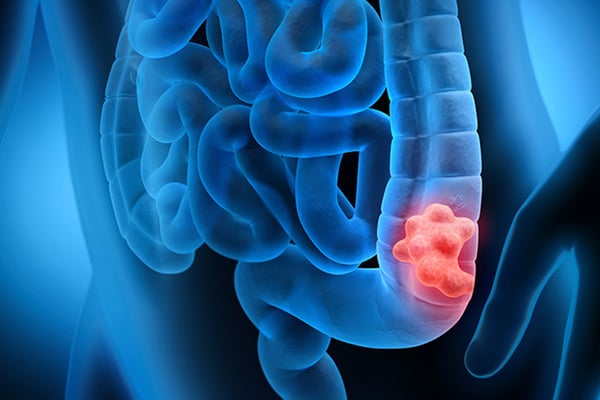
Colorectal cancer begins in the lining of the large intestine, which includes the colon and rectum. The colon absorbs water and nutrients from the ingested food, while the rectum stores waste before elimination. Cancer develops when cells grow uncontrollably in these areas, forming tumors that can spread to nearby tissues or distant organs.
Most colon cancer starts as tiny growths called polyps. These polyps are initially benign, but over time, certain types may become cancerous. Detecting and removing them early, often through a routine colonoscopy, can prevent the disease altogether.
Doctors classify colorectal cancer into several main types, based on where it starts and how the cells behave:
- Adenocarcinoma: This is the most common type, accounting for nearly 95% of all colorectal cancers. It starts from the glandular cells lining the colon and rectum, which produce mucus.
- Mucinous Adenocarcinoma: This subtype produces excessive mucus, which can make the colon cancer more aggressive and harder to detect. It represents about 10–15% of all colorectal tumors.
- Signet Ring Cell Carcinoma: A rare but aggressive form, it spreads quickly and often affects younger individuals. It accounts for less than 1% of all cases but requires specialized management.
- Squamous Cell Carcinoma and Other Rare Forms: These cancers develop from the flat surface cells of the rectum or from other rare tissue types. Though uncommon, they may require combined treatment approaches, including radiation and chemotherapy.
Colon cancer can affect anyone, but the risk increases after age 50, particularly in people with a family history, inflammatory bowel disease, or diets high in red and processed meat. Regular screening remains the most effective tool for prevention and early detection.
What Are the Symptoms of Colorectal Cancer?
Colon cancer often develops silently. In its early stages, it may cause few or no symptoms, which is why many people are diagnosed only after a routine screening. As the colorectal cancer progresses, symptoms become more noticeable and may affect digestion, bowel habits, and overall energy levels.
Common Symptoms Include:
- Changes in bowel habits, such as constant diarrhea, constipation, or alternating between the two.
- Blood in the stool or dark, tarry stools indicate bleeding in the colon or rectum.
- Abdominal discomfort, bloating, or cramping that does not go away.
- A feeling of incomplete bowel emptying, even after passing stool.
- Unexplained weight loss or loss of appetite over a short period.
- Persistent fatigue or weakness, often due to internal blood loss and anemia.
Less Common but Concerning Signs
- Narrow or ribbon-shaped stools
- Unexplained nausea or vomiting
- Pain in the lower back or pelvic region
- Jaundice, if cancer spreads to the liver
These symptoms do not always indicate cancer. Conditions such as hemorrhoids, infections, or irritable bowel syndrome can cause similar problems. However, when these issues persist beyond a few weeks, it is essential to consult a gastroenterologist or oncologist for evaluation.
How Is Colon Cancer Diagnosed?
Early and accurate diagnosis is the foundation of successful colon cancer treatment. Oncologists use a combination of physical examinations, imaging tests, and laboratory investigations to detect the disease, determine its stage, and plan the most effective treatment strategy.
Medical History and Physical Examination
The doctor begins by discussing your symptoms, lifestyle habits, and family history of cancer. A detailed physical examination helps identify visible or palpable abnormalities, especially if tumors are located in the rectal area.
Screening and Diagnostic Tests
- Colonoscopy: A colonoscopy remains the standard for detecting colorectal cancer. During this test, the doctor uses a flexible tube with a camera to examine the colon and rectum. Suspicious growths or polyps can be removed or biopsied during the same procedure.
- Sigmoidoscopy: This test focuses on the lower part of the colon and rectum. It is often used when symptoms are localized or when a complete colonoscopy is not required.
- Stool-Based Tests: These tests detect hidden blood or abnormal DNA in stool samples. Options include the Fecal Occult Blood Test (FOBT), Fecal Immunochemical Test (FIT), and stool DNA tests such as Cologuard®.
- Imaging Tests: CT scans, MRI, and PET-CT help doctors visualize the tumor, assess whether it has spread to other organs, and plan surgery or radiation accurately. CT Colonography (Virtual Colonoscopy) offers a non-invasive alternative for patients unable to undergo traditional colonoscopy.
- Biopsy: A biopsy provides the most definitive diagnosis. The pathologist examines a small tissue sample under a microscope and confirms whether the cells are cancerous.
Blood Tests and Genetic Analysis
Doctors may order tests to check for tumor markers, such as CEA (Carcinoembryonic Antigen), which help monitor disease progression. Genetic and molecular tests identify specific mutations (such as KRAS or BRAF) that guide targeted therapy decisions.
What Are the Treatment Options for Colon Cancer?
Colon cancer treatment depends on the cancer stage, the tumor location, and the patient's overall health. The main goal is to destroy cancer cells, prevent recurrence, and restore normal bowel function.
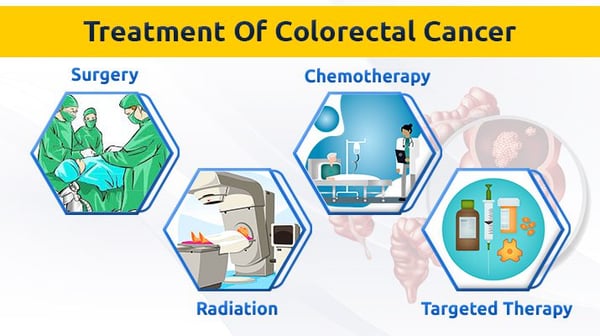
Surgery
Surgery remains the cornerstone of colorectal cancer treatment. It offers the highest chance of cure, especially when cancer is detected early. The oncosurgeon removes the tumor along with a margin of healthy colon tissue and nearby lymph nodes to reduce the risk of recurrence.
Types of Surgery:
- Polypectomy and Local Excision: Used for very early cancers confined to small polyps. The surgeon removes them during a colonoscopy without major incisions.
- Colectomy: The procedure involves removing part or all of the colon that contains the tumor. Surgeons may perform it through traditional open surgery or minimally invasive laparoscopic or robotic-assisted techniques, which allow faster recovery.
- Colostomy or Ileostomy: In a few cases, a temporary opening is created in the abdomen to allow waste to pass if the bowel needs rest after surgery.
- Transanal Surgery: For early-stage rectal cancers, surgeons can remove tumors directly through the anus without abdominal incisions.
Advances in surgical techniques now allow for nerve-sparing and sphincter-preserving procedures, helping patients maintain normal bowel control and quality of life after recovery.
Chemotherapy
Chemotherapy uses drugs that destroy rapidly dividing cancer cells. Chemo can be given before surgery (neoadjuvant therapy) to shrink the tumor, or after surgery (adjuvant therapy) to eliminate any remaining cancer cells.
Commonly Used Drugs:
- 5-Fluorouracil (5-FU)
- Oxaliplatin
- Irinotecan
- Capecitabine (Xeloda)
Combination regimens such as FOLFOX or FOLFIRI are standard treatments for advanced or metastatic disease. Modern chemotherapy protocols are far more tolerable today, with effective medications to control side effects like nausea or fatigue.
Radiation Therapy
Radiotherapy uses high-energy beams to kill cancer cells or stop them from multiplying. It is most commonly used for rectal cancer to shrink the tumor before surgery or to reduce recurrence after surgery.
Advanced technologies like Intensity-Modulated Radiation Therapy (IMRT) and Image-Guided Radiation Therapy (IGRT) deliver radiation precisely to the tumor while sparing healthy tissues.
Targeted Therapy
Targeted drugs attack specific molecules that help cancer cells grow. These therapies do not harm normal cells, making them more precise than standard chemotherapy.
Common Targeted Drugs Include:
- Bevacizumab (Avastin): Blocks the formation of blood vessels that feed tumors.
- Cetuximab (Erbitux) and Panitumumab (Vectibix): Block EGFR receptors on cancer cells.
Targeted therapy is beneficial for metastatic colorectal cancer and is often combined with chemotherapy for better control.
Immunotherapy
Immunotherapy helps the body's immune system recognize and attack cancer cells. It is mainly used for patients with microsatellite instability-high (MSI-H) or mismatch repair-deficient (dMMR) colorectal cancers.
Drugs such as Pembrolizumab (Keytruda) and Nivolumab (Opdivo) have shown promising results, especially in advanced or recurrent cases.
Palliative and Supportive Care
For advanced stages, doctors focus on improving quality of life through symptom relief, pain management, and nutritional support. Palliative care works alongside medical treatment to maintain comfort, dignity, and emotional well-being.
Obtenez un plan de traitement gratuit
About Traitement du cancer colorectal in India
Quel est le coût du traitement du cancer du côlon en Inde ?
Les coûts du traitement du cancer du côlon en Inde varient en fonction du stade de la maladie, du type de traitement requis et de l'hôpital ou du centre d'oncologie choisi. En moyenne, le coût varie entre2,50 000 ₹ et 9,00 000 ₹ (environ 3 000 $ à 10 800 $)pour un traitement complet, comprenant la chirurgie, la chimiothérapie et la radiothérapie.
Coût moyen du traitement du cancer colorectal en Inde
Type de traitement | Coût moyen (INR) | Coût moyen (USD) |
| Tests de diagnostic et biopsie | 15 000 – 40 000 ₹ | 180 $ – 480 $ |
| Chirurgie (colectomie / résection rectale) | 2,50 000 ₹ – 5 000 000 ₹ | 3 000 $ – 6 000 $ |
| Chimiothérapie (par cycle) | 35 000 – 80 000 ₹ | 420 $ – 960 $ |
| Cours complet de chimiothérapie (6 à 12 cycles) | 2 00 000 ₹ – 6 00 000 ₹ | 2 400 $ – 7 200 $ |
| Radiothérapie (IMRT / IGRT) | 1 50 000 ₹ – 3 00 000 ₹ | 1 800 $ – 3 600 $ |
| Thérapie ciblée | 1 80 000 – 4 00 000 ₹ | 2 150 $ – 4 800 $ |
| Immunothérapie (par dose) | 2,50 000 – 4,50 000 ₹ | 3 000 $ – 5 400 $ |
| Traitement complet total (estimé) | 2,50 000 ₹ – 9,00 000 ₹+ | 3 000 $ – 10 800 $+ |
- Cancers à un stade précocenécessitant uniquement une intervention chirurgicale ou une chimiothérapie limitée sont moins coûteux.
- Cancers avancés ou métastatiquesqui impliquent plusieurs modalités de traitement, telles que l’immunothérapie ciblée, peuvent augmenter les coûts.
- Chirurgies mini-invasives ou robotiquespeut avoir un coût initial plus élevé, mais permettre une récupération plus rapide et moins de jours d’hospitalisation.
Même dans la gamme supérieure,traitement du cancer colorectal en Indecoûte beaucoup moins cher que dans la plupart des pays occidentaux, tout en conservant les mêmes normes médicales, technologies et taux de réussite.
Les hôpitaux et les centres de cancérologie proposent généralement des plans de traitement tout compris couvrant les services médicaux, chirurgicaux et hospitaliers. Cependant, certains coûts peuvent varier en fonction des besoins individuels et de la durée du traitement.
Inclusions:
Un programme complet de traitement du cancer colorectal couvre généralement les éléments suivants :
- Frais de consultation d'oncologue et de chirurgien
- Évaluation et investigations préopératoires (prises de sang, imagerie, coloscopie, biopsie)
- Frais d’hospitalisation et de bloc opératoire
- Frais d'anesthésie et de chirurgie
- Séances de chimiothérapie ou de radiothérapie telles que prescrites au plan de traitement
- Médicaments postopératoires et soins infirmiers en milieu hospitalier
- Visites de suivi de routine pendant la période de traitement
- Services de soutien aux patients, y compris la planification diététique et la physiothérapie, si nécessaire
Ces inclusions garantissent que les aspects médicaux du diagnostic, du traitement et du rétablissement immédiat sont couverts de manière transparente et sans coûts cachés.
Exclusions :
Certaines dépenses peuvent sortir du forfait standard et sont facturées séparément, telles que :
- Les médicaments ciblés ou d’immunothérapie coûteux ne sont pas inclus dans les forfaits de base
- Une hospitalisation supplémentaire au-delà de la durée recommandée
- Tests moléculaires ou génétiques avancés pour des décisions thérapeutiques personnalisées
- Médicaments après le congé et fournitures de soins à domicile
- Voyage, visa et hébergement pour les patients et accompagnateurs internationaux
- Prise en charge des problèmes médicaux non liés identifiés pendant le traitement
Les hôpitaux offrent généralement unestimation détaillée des coûts avant de commencer le traitement, décrivant toutes les inclusions et exclusions potentielles.
Coût du traitement du cancer colorectal par ville en Inde
Le coût du traitement du cancer colorectal varie selon les grandes villes indiennes en fonction de l'infrastructure hospitalière, de la technologie, de l'expertise des oncologues et du coût global de la vie. Même si les hôpitaux de premier plan des villes métropolitaines peuvent facturer un peu plus, le niveau d'expertise, l'équipement de pointe et les soins complets justifient l'investissement.
Ville | Coût moyen du traitement (INR) | Coût moyen du traitement (USD) |
| RCN de Delhi | 3 00 000 ₹ – 9 00 000 ₹ | 3 600 $ – 10 800 $ |
| Bombay | 3,50 000 – 9,50 000 ₹ | 4 200 $ – 11 400 $ |
| Bangalore | 2,80 000 – 8,50 000 ₹ | 3 350 $ – 10 200 $ |
| Chennai | 2 70 000 ₹ – 8 00 000 ₹ | 3 250 $ – 9 600 $ |
| Hyderâbâd | 2,50 000 – 7,50 000 ₹ | 3 000 $ – 9 000 $ |
| Puné | 2 60 000 – 7 80 000 ₹ | 3 100 $ – 9 350 $ |
| Calcutta | 2 40 000 ₹ – 7 00 000 ₹ | 2 900 $ – 8 400 $ |
Comment le coût en Inde se compare-t-il à celui d’autres pays ?
Le traitement du cancer colorectal en Inde offre le même niveau d’expertise médicale, de technologie de pointe et de précision chirurgicale que les principaux centres mondiaux de lutte contre le cancer, mais à un coût bien inférieur. La principale différence ne réside pas dans la qualité des soins, mais dans les dépenses moindres en matière d’infrastructure, de fonctionnement et de médicaments, qui rendent le traitement en Inde nettement plus abordable pour les patients internationaux.
Pays | Coût total moyen (USD) | Coût approximatif (INR) |
| Inde | 3 000 $ – 10 800 $ | 2 50 000 ₹ – 9 00 000 ₹ |
| États-Unis | 40 000 $ – 80 000 $ | 33 00 000 ₹ – 66 00 000 ₹ |
| Royaume-Uni | 30 000 $ – 60 000 $ | 24 00 000 ₹ – 49 50 000 ₹ |
| Singapour | 25 000 $ – 50 000 $ | 20,50 000 ₹ – 41 000 000 ₹ |
| Thaïlande | 15 000 $ – 25 000 $ | 12 00 000 ₹ – 20 50 000 ₹ |
| EAU / Dubaï | 20 000 $ – 40 000 $ | 16,50 000 ₹ – 33 000 000 ₹ |
Quels facteurs affectent le coût du traitement du cancer colorectal en Inde ?
Les coûts du traitement du cancer colorectal peuvent différer d’un patient à l’autre. La dépense totale dépend de plusieurs facteurs personnels et médicaux, notamment le stade du cancer, le type de traitement nécessaire et l'hôpital où le traitement est dispensé.
Voici les principaux facteurs qui influencent le coût global :
- Stade du cancer :Le cancer à un stade précoce nécessite généralement une intervention chirurgicale et un traitement limité, ce qui le rend moins coûteux. Les stades avancés nécessitent plusieurs traitements, tels que la chimiothérapie, la radiothérapie ou l'immunothérapie, ce qui augmente le coût total.
- Type de traitement :La combinaison de thérapies joue un rôle important. La chirurgie, la chimiothérapie, la radiothérapie, la thérapie ciblée et l’immunothérapie ajoutent chacune différemment au coût global en fonction de ce que recommande votre médecin.
- Hôpital et installations :Les hôpitaux dotés d’une technologie moderne, de systèmes de chirurgie robotisée et d’unités avancées de soins contre le cancer facturent des frais plus élevés que les petits centres. La qualité des infrastructures et le confort des patients influent également sur le prix.
- Expérience du médecin :Les oncologues et chirurgiens expérimentés ayant une formation spécialisée peuvent facturer plus, mais leur expérience améliore la précision, la sécurité et les taux de réussite.
- Tests de diagnostic et d'imagerie :Des tests tels que la coloscopie, la biopsie, la tomodensitométrie, l'IRM ou la TEP-TDM sont essentiels au diagnostic et au suivi. Chaque test ajoute une petite partie au coût total.
- Durée du séjour à l’hôpital :La plupart des patients restent à l’hôpital environ 5 à 10 jours après l’intervention chirurgicale. Les séjours prolongés, notamment pour les cas complexes ou avancés, peuvent augmenter la facture finale.
- Médicaments utilisés :Les médicaments de chimiothérapie standards sont relativement abordables. Cependant, les traitements plus récents, comme les médicaments ciblés ou l’immunothérapie, sont plus chers en raison de leur technologie avancée et de leurs coûts d’importation.
Quel est le temps de récupération et le taux de réussite après un traitement contre le cancer colorectal ?
La guérison après un traitement contre le cancer colorectal dépend du type de chirurgie, du stade de la maladie et de l’état de santé général du patient. Grâce aux techniques chirurgicales modernes et aux soins postopératoires améliorés, la récupération est plus rapide et les résultats à long terme sont excellents.
Chronologie de récupération
- Séjour à l'hôpital :La plupart des patients atteints d’un cancer du côlon restent à l’hôpital pendant 5 à 10 jours après l’intervention chirurgicale.
- Phase de récupération initiale :Les deux premières semaines se concentrent sur le soin des plaies, le contrôle de la douleur et la récupération de la fonction intestinale.
- Retour à la routine :L'activité légère reprend dans les 4 à 6 semaines, tandis que la récupération complète prend généralement environ 2 à 3 mois.
- Récupération par thérapie combinée :Les patients qui reçoivent une chimiothérapie ou une radiothérapie peuvent ressentir une fatigue temporaire, qui s'améliore progressivement grâce à des soins de soutien.
- Régime alimentaire et mode de vie :Les médecins recommandent une alimentation légère et nutritive et une activité physique douce pour favoriser la santé intestinale et la force globale.
Taux de réussite
Le cancer colorectal présente l’un des taux de survie les plus élevés parmi les cancers majeurs lorsqu’il est traité tôt.
- Stade précoce (stade I à II)spectacle de cancers90 à 95 % de survie à long termeaprès une intervention chirurgicale et un traitement adjuvant.
- Stade IIIles cas ont unTaux de réussite de 70 à 80 %avec traitement combiné.
- Mêmecancers avancés ou métastatiquesbénéficier de médicaments ciblés et d’immunothérapie, améliorant la survie et maintenant une bonne qualité de vie.
Aujourd’hui, grâce à une précision chirurgicale avancée, à des thérapies médicamenteuses efficaces et à des soins post-traitement complets, de nombreux patients se rétablissent complètement et reprennent une vie normale et active après un traitement contre le cancer colorectal.
Pourquoi choisir l’Inde pour le traitement du cancer du côlon ?
L'Inde est devenue une destination de premier plan pour les soins avancés contre le cancer, offrant une rare combinaison d'expertise médicale de classe mondiale, d'infrastructures modernes et de prix abordables.
- Oncologues expérimentés :L’Inde abrite des cancérologues hautement qualifiés formés dans des institutions mondiales de premier plan. De nombreux oncologues se spécialisent spécifiquement dans les cancers colorectaux et gastro-intestinaux.
- Technologie avancée :Les hôpitaux utilisent les outils les plus récents, notamment la chirurgie assistée par robot, la radiothérapie IMRT/IGRT, l'imagerie TEP-CT et des protocoles d'immunothérapie ciblée qui répondent aux normes internationales.
- Centres complets de lutte contre le cancer :Les grands hôpitaux proposent une approche multidisciplinaire, combinant la chirurgie, la médecine et la radio-oncologie sous un même toit pour des soins complets.
- Coûts abordables :Le traitement en Inde coûte jusqu'à 70 % moins cher que dans les pays occidentaux, même si la même technologie et les mêmes protocoles avancés sont utilisés.
- Taux de réussite élevés :Les centres indiens font état d'excellents résultats de survie, en particulier pour les cancers à un stade précoce, soutenus par de solides programmes de suivi et de réadaptation.
Soutien complet aux patients internationaux
Les hôpitaux indiens fournissent des services dédiés pour rendre les voyages médicaux fluides et sans stress pour les patients internationaux.
- Assistance avant l'arrivée :Les coordinateurs médicaux examinent les détails du cas, organisent des consultations avec un médecin et partagent des estimations transparentes des coûts de traitement avant le voyage.
- Aide pour les voyages et les visas :Les hôpitaux délivrent des lettres d'invitation pour un visa et aident à la planification du voyage et de l'hébergement.
- Coordination de l'arrivée :La prise en charge à l'aéroport, les transferts à l'hôpital et les agents dédiés aux relations avec les patients garantissent une expérience fluide de l'arrivée à la sortie.
- Soutien linguistique et culturel :Le personnel multilingue et les traducteurs aident les patients à communiquer facilement avec les médecins et les infirmières.
- Suivi post-traitement :Une fois rentrés chez eux, les patients continuent de recevoir des consultations en ligne et des conseils médicaux pour suivre leur rétablissement et leur santé à long terme.
Comparaison des Coûts de Traitement du cancer colorectal par Pays
Comparez les coûts de Traitement du cancer colorectal dans différents pays pour prendre une décision éclairée concernant votre traitement médical.
| Pays | Fourchette de Coût (USD) | Économies Potentielles | Action |
|---|---|---|---|
INIndiaActuelMeilleure Valeur | $3,000 - $10,800 | — | Obtenir un Devis |
Note : Les coûts peuvent varier selon le choix de l'hôpital, le type de chambre, les services supplémentaires et les exigences médicales individuelles. Contactez-nous pour un devis personnalisé.
Hôpitaux Leaders pour Traitement du cancer colorectal en India
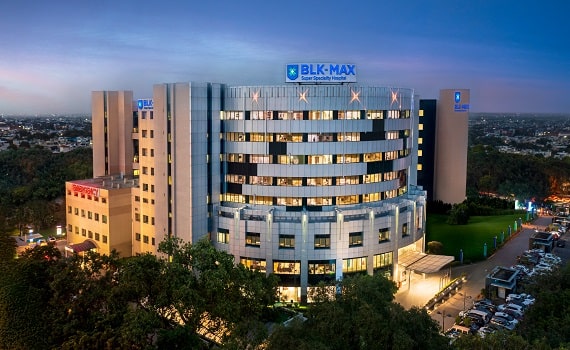
BLK-Max Super Speciality Hospital, New Delhi
BLK-Max Super Speciality Hospital in New Delhi is one of India's premier healthcare institutions, offering 650 beds, 22 advanced operation theatres, a...
Accréditations


Installations

Fortis Memorial Research Institute (FMRI), Gurgaon
Fortis Memorial Research Institute (FMRI), Gurgaon, is a world-class multi-specialty hospital established in 2013. The hospital offers 330 beds, 15 op...
Accréditations
Installations
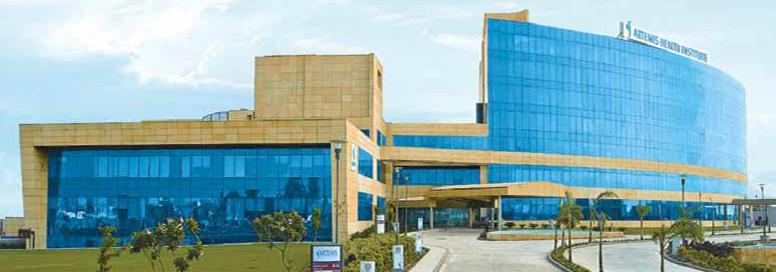
Artemis Hospital, Gurgaon
Artemis Hospital, Gurgaon, is a JCI accredited multispecialty hospital that was established in 2007. It offers 750+ beds and world -class infrastructu...
Accréditations

Installations

Kokilaben Dhirubhai Ambani Hospital, Mumbai
Kokilaben Dhirubhai Ambani Hospital, Mumbai, is a JCI, NABH, NABL, and CAP-accredited quaternary care hospital established in 2009. With 750 beds, 180...
Accréditations
Installations
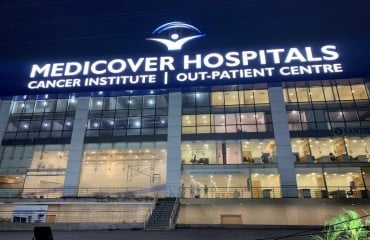
Medicover Hospitals, Hitech City, Hyderabad
Medicover Hospitals, Hitech City, Hyderabad, is a 400-bed NABH-accredited super-specialty hospital established in 2011. It is part of Medicover, a glo...
Accréditations
Installations

SP Medifort Hospital
SP Medifort, Thiruvananthapuram, is a JCI-accredited, 475-bed multi-super-specialty hospital spread across 500,000 sq. ft. The hospital houses 10 modu...
Accréditations
Installations

Gleneagles Global Health City, Chennai
Gleneagles Global Health City, Chennai, is a 200-bed quaternary-care hospital and part of the IHH Healthcare network, one of the world’s largest priva...
Accréditations
Installations

MIOT International, Chennai
MIOT International, Chennai, is a 1,000-bed NABH- and NABL-accredited multispecialty hospital serving patients from more than 130 countries. Establish...
Accréditations
Installations
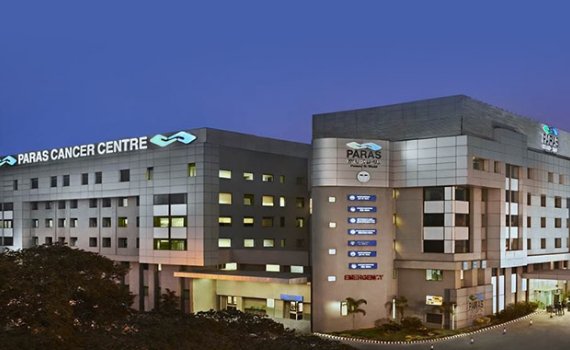
Paras Hospital, Gurgaon
Paras Hospital, Gurgaon, established in 2006, is a 300-bed NABH- and NABL-accredited tertiary care hospital offering over 36 super specialties. The ho...
Accréditations
Installations
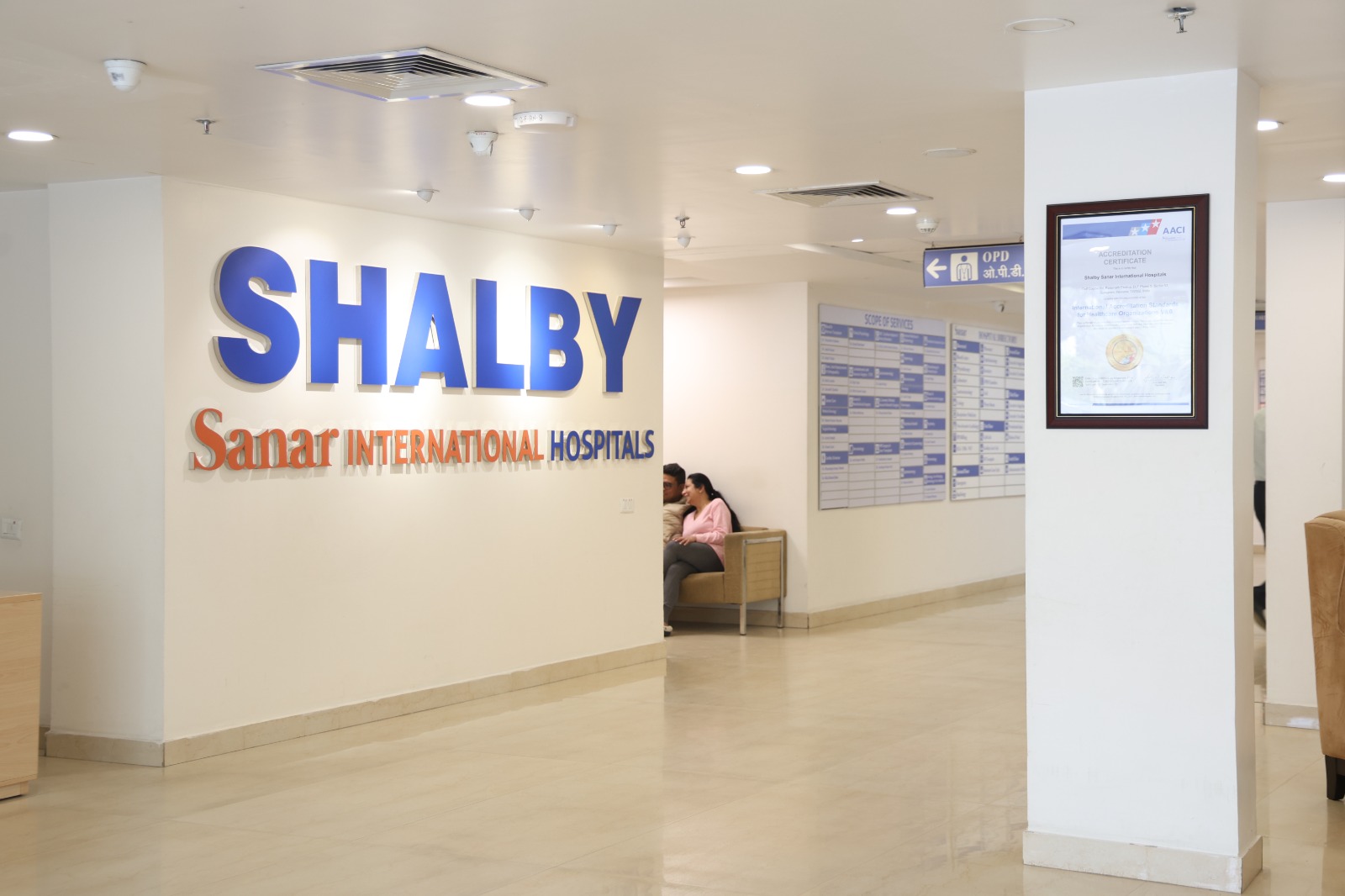
Shalby Sanar International Hospital, Gurgaon
Shalby Sanar International Hospital, Gurgaon, is a 150-bed NABH-accredited multispecialty hospital offering advanced care in oncology, cardiology, org...
Accréditations

Installations
Procédures Similaires
Galerie
FAQ
Critique
Afficher tous
Dr. Priya Tiwari is a renowned medical oncologist trained at the prestigious All India Institute of Medical Sciences (AIIMS). She specializes in comprehensive cancer care and is committed to deliver... En savoir plus

Notre site Web utilise des cookies. politique de confidentialité.