
Traitement du cancer du larynx Coût en Inde
À propos Traitement du cancer du larynx
Partout dans le monde, le cancer du larynx touche des milliers de personnes chaque année. plus de183 000 nouveaux cassont diagnostiqués chaque année et la condition est plus fréquente chez les personnes qui fument, boivent de l'alcool régulièrement ou sont exposées à long terme à des produits chimiques nocifs. Des études récentes montrent également un lien croissant entre le cancer du larynx et certaines souches de VPH.
Un diagnostic précoce est essentiel car les symptômes commencent souvent subtilement, comme un enrouement léger, et peuvent être négligés.
Les progrès de l'oncologie moderne (chirurgie au laser, radiothérapie préservant les organes, traitement ciblé et immunothérapie) ont considérablement amélioré les résultats. De nombreux patients bénéficient de traitements qui préservent la voix ou rétablissent la parole grâce à la réadaptation. Avec des soins médicaux opportuns, le cancer du larynx peut être géré efficacement, aidant les patients à retrouver le confort, la fonction et la confiance.
Qu'est-ce que le cancer du larynx ?
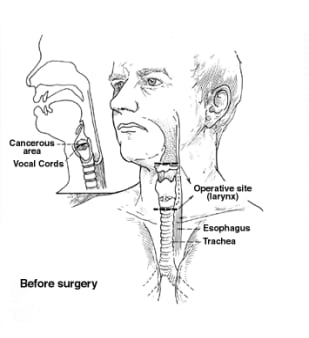
Le cancer du larynx est une maladie dans laquelle les cellules anormales se développent dans la boîte vocale, une structure située dans la gorge qui aide à produire le son, à contrôler le flux d'air et à protéger la trachée pendant la déglutition. La plupart des cas commencent dans lecellules squameusesqui s'alignent à l'intérieur du larynx.
Le larynx a trois régions principales et le cancer peut commencer dans l'une d'entre elles :
- Région supraglottique :Il s'agit de la partie supérieure du larynx, située au-dessus des cordes vocales. Les tumeurs ici peuvent se propager tôt aux ganglions lymphatiques à proximité.
- Région glottique :Cette zone comprend les cordes vocales. Le cancer de la glottique est souvent détecté tôt car même les petites tumeurs peuvent provoquer un enrouement.
- Région sous-glottique :C'est la partie inférieure du larynx, juste en dessous des cordes vocales. Les tumeurs ici sont moins fréquentes et peuvent se développer silencieusement plus longtemps.
Le cancer du larynx peut se propager aux ganglions lymphatiques voisins, aux tissus de la gorge plus profonds ou aux organes distants s'ils ne sont pas traités. Le diagnostic précoce joue un rôle clé dans la préservation de la voix et l'amélioration des résultats à long terme.
Quels sont les symptômes du cancer du larynx ?
Le cancer du larynx commence souvent par de subtils changements de voix ou une gêne de la gorge. Parce que ces symptômes peuvent ressembler à des infections courantes de la gorge, de nombreuses personnes les ignorent au stade précoce. La reconnaissance des signes avant-coureurs permet d'assurer un diagnostic rapide et de meilleurs résultats de traitement.
Premiers symptômes
- Enrouement persistant pendant plus de deux semaines
- Changements de voix tels que la rugosité, la faiblesse ou la modification de la hauteur
- un mal de gorge constant ou une sensation d'irritation
- Toux sèche qui ne se décompose pas
- Difficulté à projeter la voix
Symptômes avancé
- Douleur ou difficulté lors de la déglutition
- une grosseur ou un gonflement dans le cou
- Douleur à l'oreille d'un côté
- Difficulté respiratoire ou respiration bruyante
- Perte de poids inexpliquée
- Épisodes d'étouffement fréquents
- salive teintée de sang ou crachant de petites quantités de sang
Quand consulter un médecin
Une personne doit consulter un spécialiste si l'enrouement ou l'inconfort de la gorge ne s'améliore pas avec un traitement de routine, en particulier chez les fumeurs ou les personnes exposées à l'alcool ou aux irritants. La détection précoce améliore les chances de préserver la voix et d'obtenir de meilleurs résultats.
Comment diagnostique-t-on le cancer du larynx ?
Les médecins utilisent plusieurs tests pour confirmer le cancer du larynx, évaluer l'emplacement de la tumeur et déterminer jusqu'où il s'est propagé. Un diagnostic précis permet de créer un plan de traitement personnalisé qui vise à préserver la fonction et à améliorer les résultats à long terme.
- Laryngoscopie :Un tube mince et flexible avec une caméra est envoyé par le nez ou la bouche pour examiner les cordes vocales et les structures environnantes. C'est souvent le premier et le plus crucial test.
- Biopsie :Pendant la laryngoscopie, le médecin peut retirer un petit échantillon de tissu pour une analyse en laboratoire. Une biopsie confirme la présence de cellules cancéreuses.
- scanner ou IRM :Ces tests d'imagerie montrent la taille de la tumeur et s'il a envahi les tissus, le cartilage ou les ganglions lymphatiques à proximité.
- scanner PET-CT :Le PET-CT aide à identifier les cellules cancéreuses actives dans tout le corps et détecte la propagation aux organes distants.
- Échographie du cou :Ce test évalue les ganglions lymphatiques et aide à déterminer s'ils nécessitent une biopsie ou une ablation chirurgicale.
- Radiographie pulmonaire :Les médecins peuvent l'utiliser pour vérifier si le cancer/tumeur s'est propagé aux poumons.
Évaluation de mise en scène
Après tous les tests, le médecin attribue un stade de I à IV en fonction de la taille de la tumeur, de l'atteinte des ganglions lymphatiques et de la propagation à distance. La mise en scène guide le choix de la chirurgie, de la radiothérapie, de la chimiothérapie ou des traitements combinés.
Un diagnostic précis garantit que les patients atteints de cancer du larynx reçoivent le traitement le plus efficace avec les meilleures chances de préserver la fonction vocale et respiratoire.
Quelles sont les dernières options de traitement du cancer du larynx ?
Les médecins traitent le cancer du larynx en utilisant une combinaison de chirurgie, de radiothérapie, de chimiothérapie et de thérapies ciblées modernes. Le plan de traitement dépend du stade du cancer, de son emplacement et de la possibilité de préserver la voix. Les cancers à un stade précoce réagissent souvent bien au traitement à une modalité unique, tandis que les cas avancés peuvent nécessiter une approche combinée.
- Chirurgie au laserLa chirurgie au laser aide à éliminer les petites tumeurs à un stade précoce avec un minimum de dommages aux tissus environnants. Il est souvent utilisé pour les cancers de la glottique et peut préserver la qualité normale de la voix.
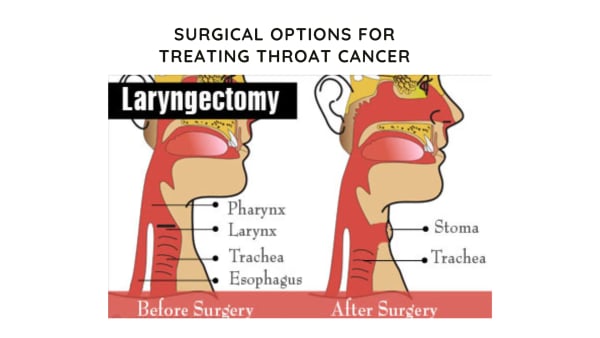
- Laryngectomie partielle :Dans cette procédure, les médecins ne retirent que la partie affectée du larynx. Il aide à préserver les fonctions de la parole et de la déglutition tout en enlevant les tissus cancéreux.
- Laryngectomie totale :Lorsque le cancer est avancé ou implique plusieurs régions, les chirurgiens peuvent retirer le larynx entier. Les patients respirent par une ouverture permanente du cou (stomie) et apprennent plus tard des techniques de réadaptation vocale.
- Radiothérapie :Le rayonnement utilise des faisceaux à haute énergie pour détruire les cellules cancéreuses. Il fonctionne efficacement dans les cancers à un stade précoce et est souvent associé à une chimiothérapie pour des tumeurs plus avancées. Des techniques telles que l'IMRT et l'IGRT aident à cibler précisément le cancer.
- Chimiothérapie :Les médecins utilisent la chimiothérapie pour réduire les tumeurs, améliorer l'effet de la radiothérapie ou traiter le cancer qui s'est propagé. Il est généralement combiné avec la radiothérapie lorsque la chirurgie n'est pas le premier choix.
- Chimiodiation :Ce traitement combiné préserve le larynx dans de nombreux cas en réduisant suffisamment la tumeur pour éviter la nécessité d'une intervention chirurgicale.
- Thérapie ciblée :Des médicaments comme le Cetuximab bloquent des protéines spécifiques qui aident les cellules cancéreuses à se développer. Ils peuvent être utilisés avec la radiothérapie ou la chimiothérapie.
- Immunothérapie :Les médicaments tels que le pembrolizumab ou le nivolumab aident le système immunitaire à reconnaître et à détruire les cellules cancéreuses. Ils sont utiles dans le cancer du larynx récurrent ou métastatique.
- Réhabilitation vocaleAprès la chirurgie, en particulier la laryngectomie totale, les orthophonistes enseignent aux patients des méthodes de prise de parole alternatives, notamment la prothèse vocale ou la parole œsophagienne.
Les plans de traitement visent à éliminer le cancer, à préserver les fonctions essentielles et à améliorer la qualité de vie à long terme.
Obtenez un plan de traitement gratuit
À propos de Traitement du cancer du larynx en Inde
Quel est le coût du traitement du cancer du larynx en Inde ?
Le coût du traitement du cancer du larynx en Inde varie généralement de3 000 $ à 15 000 $(environ2,5 lakh ₹ à 12,5 lakh ₹). Le prix final dépend du stade du cancer, du plan de traitement, du type d’intervention chirurgicale, de la technologie utilisée pour la radiothérapie et de la nécessité d’une thérapie ciblée ou d’une immunothérapie.
L'Inde est privilégiée pour le traitement du cancer du larynx car elle propose des soins avancés en oncologie de la tête et du cou à des prix bien plus abordables que de nombreux pays occidentaux.
Vous trouverez ci-dessous une répartition claire et détaillée des coûts de traitement.
Type de traitement | Coût moyen (USD) | Env. Coût (INR) |
| Chirurgie au Laser | 2 000 $ – 4 000 $ | 1,6 ₹ – 3,3 millions ₹ |
| Laryngectomie partielle | 3 500 $ – 6 000 $ | 2,9 ₹ – 5 millions ₹ |
| Laryngectomie totale | 4 500 $ – 7 500 $ | 3,7 ₹ – 6,2 millions ₹ |
| Radiothérapie (IMRT/IGRT) | 2 500 $ – 5 000 $ | 2 ₹ – 4,1 ₹ lakh |
| Chimiothérapie (par cycle) | 250 $ – 450 $ | 20 000 – 36 000 ₹ |
| 6 à 7 cycles de chimiothérapie | 1 500 $ – 3 000 $ | 1,2 ₹ – 2,5 millions ₹ |
| Thérapie ciblée (Cetuximab, etc.) | 1 000 $ à 2 500 $ par mois | 80 000 ₹ – 2 lakh ₹ |
| Immunothérapie (Nivolumab, Pembrolizumab) | 1 500 $ à 4 000 $ par dose | 1,2 ₹ – 3,3 millions ₹ |
| Prothèse vocale (si nécessaire) | 300 $ – 800 $ | 25 000 – 65 000 ₹ |
- La maladie à un stade précoce coûte moins cher car le traitement peut impliquer uniquement une thérapie au laser ou une radiothérapie.
- Une maladie à un stade avancé peut nécessiter une thérapie combinée, ce qui augmente le coût global.
- Les médicaments ciblés et les médicaments d’immunothérapie augmentent considérablement les dépenses totales.
Ce que comprend le coût
- Honoraires du chirurgien pour laryngectomie partielle ou totale
- Frais de bloc opératoire et d'anesthésie
- Séjour à l'hôpital pendant le nombre de jours recommandé
- Tests sanguins de routine avant une intervention chirurgicale ou une radiothérapie
- Médicaments standards pendant l'hospitalisation
- Séances de radiothérapie (si partie d'un forfait)
- Frais d'administration de chimiothérapie
- Surveillance et soins postopératoires
- Une visite de suivi après la sortie
- Soins infirmiers et soutien diététique
Ces composants constituent la partie essentielle de la plupart des programmes de traitement du cancer.
Ce que le coût exclut
- TEP-CT et imagerie avancée
- Médicaments thérapeutiques ciblés (tels que le cétuximab)
- Médicaments d'immunothérapie (comme le pembrolizumab ou le nivolumab)
- Prothèses vocales et outils de rééducation de la parole
- Séjour hospitalier supplémentaire au-delà du forfait
- Tests de biomarqueurs (statut HPV, test PD-L1, profilage génétique)
- Gestion des complications ou des conditions médicales préexistantes
- Tests de suivi à long terme
- Hébergement et déplacements des patients internationaux
Les coûts peuvent varier légèrement d'un hôpital à l'autre, c'est pourquoi les patients demandent souvent un devis détaillé avant de commencer le traitement.
Quel est le coût du traitement du cancer du larynx dans différentes villes indiennes ?
Les coûts du traitement du cancer du larynx varient selon les villes indiennes en raison des différences dans les infrastructures hospitalières, l'expertise des oncologues, les installations de diagnostic et l'accès à la technologie de radiothérapie avancée. Les villes métropolitaines ont généralement des coûts de traitement plus élevés, tandis que les villes de niveau 2 offrent des soins plus économiques mais plus fiables.
Le tableau ci-dessous donne une comparaison claire pour aider les patients à planifier leur traitement en fonction du lieu et du budget.
Ville | Coût moyen du traitement (USD) | Env. Coût (INR) |
| New Delhi | 4 000 $ – 12 000 $ | 3,3 ₹ – 10 millions ₹ |
| Bombay | 4 500 $ – 14 000 $ | 3,7 ₹ – 11,6 millions ₹ |
| Bangalore | 3 800 $ – 11 000 $ | 3,1 ₹ – 9 millions ₹ |
| Chennai | 3 500 $ – 10 000 $ | 2,9 ₹ – 8,3 millions ₹ |
| Hyderâbâd | 3 800 $ – 11 000 $ | 3,1 ₹ – 9 millions ₹ |
- Delhi et Bombayproposer des unités avancées d'oncologie de la tête et du cou équipées de technologies de radiothérapie de pointe, notamment l'IMRT et l'IGRT.
- Bangalore et Hyderabadfournir des soins modernes contre le cancer à des prix compétitifs avec des oncologues chirurgicaux et médicaux expérimentés.
- Chennaiest connu pour sa solide expertise en oncologie ORL et ses offres de traitement rentables.
Quels facteurs affectent le coût du traitement du cancer du larynx en Inde ?
Plusieurs facteurs médicaux et non médicaux influencent le coût total du traitement du cancer du larynx en Inde. Chaque patient a besoin d'un plan de traitement personnalisé basé sur le stade, l'emplacement de la tumeur et l'état de santé général, ce qui entraîne des variations de prix.
- Stade du cancer :Les cancers à un stade précoce peuvent nécessiter une chirurgie au laser ou une radiothérapie seule, tandis que les cancers avancés nécessitent souvent une intervention chirurgicale associée à une radiothérapie et une chimiothérapie, ce qui augmente le coût global.
- Type de chirurgie :La microchirurgie au laser coûte moins cher. La laryngectomie partielle est à un prix modéré. La laryngectomie totale est plus coûteuse en raison de sa complexité, de sa durée d'hospitalisation et des soins postopératoires.
- Technologie de rayonnement utilisée :IMRT, IGRT et VMAT fournissent un traitement précis mais coûtent plus cher que les techniques de radiothérapie standard.
- Nécessité d'une thérapie combinée :La chimioradiothérapie ou la chirurgie suivie d'une radiothérapie augmente la durée totale du traitement et le coût global.
- Thérapie ciblée et immunothérapie :Les médicaments tels que le cétuximab, le pembrolizumab et le nivolumab augmentent considérablement les coûts de traitement en raison de leurs coûts élevés par cycle ou par dose.
- Prothèse vocale et rééducation :Les patients qui subissent une laryngectomie totale peuvent avoir besoin d’une prothèse vocale et d’une orthophonie, ce qui peut augmenter les coûts.
- Catégorie d'hôpital :Les hôpitaux haut de gamme dotés de services d'oncologie avancés facturent des frais plus élevés que les centres de milieu de gamme.
- Expertise d'oncologue et de chirurgien :Les oncologues très expérimentés de la tête et du cou facturent peut-être plus, mais leur expertise améliore les résultats chirurgicaux et réduit les complications.
- Durée du séjour à l’hôpital :Une hospitalisation plus longue en raison du type de chirurgie ou d’un problème médical augmente les coûts totaux.
Comment le coût en Inde se compare-t-il à celui d’autres pays ?
Le traitement du cancer du larynx en Inde est nettement plus abordable que dans de nombreux pays occidentaux et asiatiques, tout en offrant des soins oncologiques avancés, des techniques chirurgicales modernes et des spécialistes formés à l'étranger. Cet avantage en termes de coût fait de l’Inde une destination privilégiée pour les patients recherchant un traitement de haute qualité à un prix raisonnable.
Vous trouverez ci-dessous une comparaison des coûts moyens de traitement dans les destinations de soins de santé dans le monde :
Pays | Coût moyen (USD) |
| États-Unis | 30 000 $ – 80 000 $ |
| Royaume-Uni | 25 000 $ – 60 000 $ |
| Singapour | 20 000 $ – 45 000 $ |
| Émirats arabes unis | 18 000 $ – 40 000 $ |
| Thaïlande | 12 000 $ – 25 000 $ |
| Inde | 3 000 $ – 15 000 $ |
Les patients économisent60% à 80%en choisissant l’Inde tout en bénéficiant d’un traitement avancé contre le cancer, d’un accès à une technologie de radiothérapie moderne et de soins chirurgicaux experts. Les prix basés sur la valeur et les excellents résultats cliniques de l'Inde en font l'un des choix les plus fiables au monde pour le traitement du cancer du larynx.
À quoi ressemble la récupération après un traitement contre le cancer du larynx ?
La guérison du traitement du cancer du larynx dépend du stade du diagnostic, du type de traitement reçu et de l'état de santé général du patient. Grâce aux techniques chirurgicales modernes, à la radiothérapie ciblée et à une rééducation efficace, la plupart des patients bénéficient d'un confort amélioré, d'un meilleur fonctionnement et d'une bonne qualité de vie après le traitement.
Récupération après une chirurgie
- Chirurgie au Laser :Les patients se rétablissent généralement rapidement. La voix peut s'améliorer en quelques jours, voire semaines, selon l'étendue de l'ablation des tissus.
- Laryngectomie partielle :Les patients conservent leur voix naturelle, même si elle peut paraître différente. La déglutition s’améliore régulièrement en quelques semaines.
- Laryngectomie totale :La récupération comprend l’apprentissage de nouvelles façons de parler grâce à une prothèse vocale ou à l’orthophonie. La respiration s'effectue par une ouverture dans le cou et les patients s'adaptent bien s'ils sont correctement guidés.
Récupération après radiothérapie
- La fatigue, la sécheresse et l'inconfort de la gorge sont courants mais temporaires.
- La plupart des patients reprennent leur alimentation et leurs activités quotidiennes normales quelques semaines après la fin du traitement.
- La voix s’améliore généralement lorsque la radiothérapie est utilisée pour les cancers glottiques à un stade précoce.
Récupération pendant la chimiothérapie et la chimioradiation
- Les effets secondaires peuvent inclure des nausées, de la fatigue et un léger inconfort de déglutition.
- Les médicaments de soutien aident les patients à bien tolérer le traitement.
- La thérapie combinée évite souvent la nécessité d'une laryngectomie totale dans des cas sélectionnés.
Quel est le taux de réussite du traitement du cancer du larynx ?
Le succès dépend du stade du cancer :
- Stade précoce (stade I à II) :Des taux de guérison élevés, souvent supérieurs80 à 90 %, en particulier lorsqu'il est traité par chirurgie au laser ou par radiothérapie.
- Localement avancé (stade III) :La thérapie combinée (chimioradiothérapie ou chirurgie partielle) permet d'obtenir un contrôle raisonnable chez de nombreux patients.
- Stade avancé (stade IV) :Le traitement se concentre sur le contrôle, le soulagement des symptômes et la prolongation de la survie grâce à la chirurgie, la chimiothérapie, l’immunothérapie ou une thérapie ciblée.
Avec un traitement et une rééducation appropriés, de nombreux patients reprennent une routine quotidienne significative et retrouvent confiance dans leur voix et leur communication.
Pourquoi devriez-vous choisir l’Inde pour le traitement du cancer du larynx ?
L'Inde est devenue une destination majeure pour le traitement du cancer du larynx car elle offre des soins médicaux de classe mondiale, une technologie oncologique avancée et des spécialistes hautement expérimentés pour une fraction des coûts mondiaux. Les patients bénéficient de soins fiables et de résultats cliniques solides sans longues périodes d’attente.
- Oncologues expérimentés de la tête et du cou :L'Inde dispose de chirurgiens ORL, d'oncologues de la tête et du cou et de radiologues qualifiés qui traitent un grand nombre de cas de cancer du larynx. Leur expertise soutient un diagnostic précis, des chirurgies préservant la voix et de meilleurs résultats de survie.
- Technologie de rayonnement avancée :Les hôpitaux utilisent des technologies modernes telles que l'IMRT, l'IGRT, le VMAT et des accélérateurs linéaires pour cibler avec précision les tumeurs tout en protégeant les tissus sains. Ces méthodes aident à préserver les fonctions de déglutition et d’élocution autant que possible.
- Fort soutien à la rééducation de la voix et de la parole :Des orthophonistes spécialisés aident les patients à retrouver leur voix après une laryngectomie partielle ou totale. Des options de prothèses vocales sont également disponibles pour une restauration de la parole à long terme.
- Soins intégrés contre le cancer sous un même toit :Les services d'imagerie diagnostique, d'unités chirurgicales, d'oncologie médicale, de réadaptation et de soins de soutien fonctionnent ensemble dans un seul centre, garantissant une coordination transparente tout au long du processus de traitement.
- Courtes périodes d’attente :Les patients peuvent commencer le traitement rapidement, un avantage clé pour les cancers qui progressent rapidement ou provoquent des problèmes respiratoires et vocaux.
- Assistance internationale aux patients :Les hôpitaux fournissent une assistance médicale en matière de visa, des transferts aéroportuaires, des interprètes linguistiques, une planification de l'hébergement et un suivi fluide, rendant le traitement sans stress pour les patients internationaux.
Comparaison des Coûts de Traitement du cancer du larynx par Pays
Comparez les coûts de Traitement du cancer du larynx dans différents pays pour prendre une décision éclairée concernant votre traitement médical.
| Pays | Fourchette de Coût (USD) | Économies Potentielles | Action |
|---|---|---|---|
IndeActuelMeilleure Valeur | $3,000 - $15,000 | — | Obtenir un Devis |
Note : Les coûts peuvent varier selon le choix de l'hôpital, le type de chambre, les services supplémentaires et les exigences médicales individuelles. Contactez-nous pour un devis personnalisé.
Hôpitaux Leaders pour Traitement du cancer du larynx en Inde
Hôpital de Bahcelievler
L'hôpital Medical Park Bahcelievler est un hôpital accrédité JCI de 242 lits à Istanbul, créé en 2007. Répartie sur 33 000 mètres carrés et 19 étages,...
Accréditations

Installations

Hôpital Intercontinental de Hisar, Istanbul
L'hôpital Intercontinental de Hisar à Istanbul est un hôpital multispécialiste accrédité JCI de 212 lits, s'étendant sur 35 000 mètres carrés et compr...
Accréditations
Installations

Hôpital Medipol Bahçelievler
L'hôpital Medipol Bahçelievler est un hôpital privé de 441 lits situé à Istanbul qui a commencé ses activités en mai 2022. Couvrant 60 000 mètres carr...
Accréditations
Installations
Procédures Similaires
Galerie
FAQ
Critique
Afficher tous
Dr. Priya Tiwari is a renowned medical oncologist trained at the prestigious All India Institute of Medical Sciences (AIIMS). She specializes in comprehensive cancer care and is committed to deliver... En savoir plus

Notre site Web utilise des cookies. politique de confidentialité.