
Nephrectomy Gharama katika India
Kuhusu Nephrectomy
Nephrectomy ni nini?
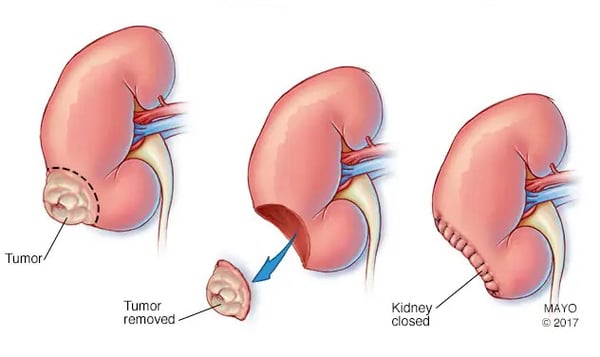
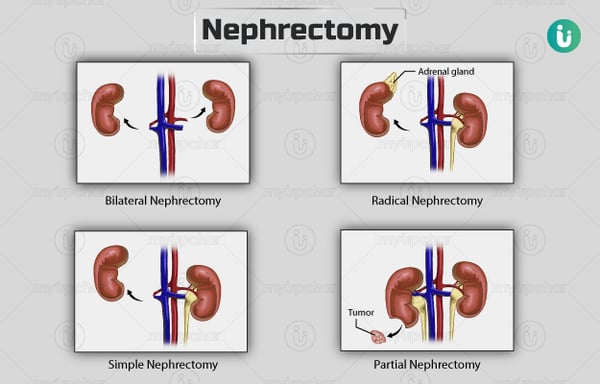
Anephrectomyni upasuaji unaoondoa figo yote au sehemu yake. Madaktari hufanya utaratibu huu wakati figo inapoacha kufanya kazi ipasavyo au kupata ugonjwa mbaya kama vile uvimbe, maambukizi au jeraha kali.
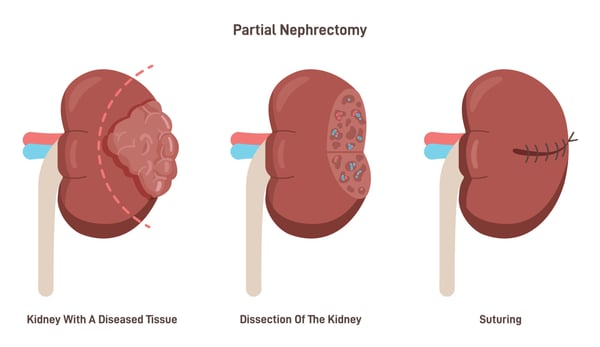
Wakati wa operesheni, daktari wa upasuaji huondoa figo iliyoharibiwa au ya saratani ili kulinda iliyobaki na kudumisha utendaji mzuri wa mwili. Wakati sehemu tu ya figo ina ugonjwa, madaktari wa upasuaji hufanya anephrectomy ya sehemuna kuhifadhi sehemu iliyobaki ya chombo.
Hospitali za kisasa nchini India zinatumiambinu za laparoscopic na robotickwa nephrectomy, kuruhusu upasuaji kufanywa kwa njia ya kupunguzwa kidogo badala ya chale moja kubwa. Njia hii husaidia wagonjwa kupona haraka, kupata maumivu kidogo, na kurudi kwenye maisha ya kila siku haraka zaidi.
Katika hali nyingi, watu huishi maisha yenye afya, hai na figo moja baada ya upasuaji, kwani figo iliyobaki hubadilika kwa kawaida na kufanya kazi zote muhimu kwa ufanisi.
Ni Masharti Gani Yanayohitaji Nephrectomy?
Madaktari wanapendekeza upasuaji wa nephrectomy wakati figo moja inapoharibika sana au inapopata hali ambayo haiwezi kutibiwa kwa dawa au taratibu ndogo. Upasuaji huo husaidia kulinda afya ya figo kwa ujumla kwa kuondoa kiungo kilicho na ugonjwa na kuzuia matatizo zaidi.
- Saratani ya Figo:Hii ndiyo sababu ya kawaida ya nephrectomy. Uvimbe unapokua kwenye figo, madaktari huondoa figo iliyoathiriwa ili kuzuia saratani kuenea. Katika baadhi ya matukio, sehemu ya kansa tu ya figo huondolewa kwa njia ya nephrectomy ya sehemu ili kuhifadhi utendaji.
- Figo Isiyofanya kazi:Figo ambayo inapoteza uwezo wake wa kuchuja damu vizuri inaweza kusababisha maambukizi ya mara kwa mara au shinikizo la damu. Kuondoa figo isiyofanya kazi husaidia kupunguza mkazo kwa ile yenye afya na kuboresha usawa wa jumla wa mwili.
- Maambukizi makali ya figo au uharibifu:Maambukizi ya muda mrefu, mawe kwenye figo, au majeraha yanaweza kusababisha uharibifu usioweza kurekebishwa kwa tishu za figo. Nephrectomy huondoa chombo kilichoharibiwa na kuzuia sumu au maambukizo kuathiri viungo vingine.
- Kasoro za kuzaliwa au za kimuundo:Watu wengine huzaliwa na matatizo ya figo ambayo huzuia mtiririko wa mkojo au kuharibu tishu kwa muda. Katika hali hiyo, upasuaji hurekebisha tatizo au huondoa figo ili kuzuia matatizo ya muda mrefu.
- Utoaji wa Figo:Katika matukio machache, mtu mwenye afya hutoa moja ya figo zao kwa ajili ya kupandikiza. Utaratibu huu, unaoitwa nephrectomy ya wafadhili, hufanywa kupitia upasuaji wa uvamizi mdogo ili kuhakikisha ahueni ya haraka na salama kwa wafadhili.
Je, Nephrectomy Inafanywaje?
Madaktari wa upasuaji hufanya nephrectomy chini ya anesthesia ya jumla, ambayo ina maana mgonjwa hukaa usingizi na bila maumivu wakati wa utaratibu mzima. Upasuaji unaweza kufanywa kwa njia kuu tatu (wazi, laparoscopy, au usaidizi wa roboti), kulingana na hali ya mgonjwa na mapendekezo ya daktari wa upasuaji.
Hatua ya 1: Maandalizi ya Kabla ya Upasuaji
Kabla ya upasuaji, madaktari hufanya tathmini ya kina, ikiwa ni pamoja na vipimo vya damu, vipimo vya picha, na uchunguzi wa moyo, ili kuthibitisha kwamba mgonjwa anaweza kufanyiwa upasuaji kwa usalama. Mgonjwa huacha kula au kunywa saa chache kabla ya upasuaji na hupokea anesthesia katika chumba cha upasuaji.
Hatua ya 2: Kufanya Upasuaji
- Fungua Nephrectomy:Katika nephrectomy iliyo wazi, daktari wa upasuaji hufanya chale kubwa zaidi kwenye ubavu au tumbo. Figo iliyoathiriwa hutenganishwa kwa upole na miundo inayozunguka na mishipa ya damu kabla ya kuondolewa, ama kwa sehemu au kabisa. Njia hii hutumiwa mara nyingi kwa tumors kubwa au kesi ngumu.
- Nephrectomy ya Laparoscopic:Katika upasuaji wa laparoscopic, daktari wa upasuaji hufanya chale kadhaa ndogo badala ya moja kubwa. Kamera nyembamba inayoitwa laparoscope inaongoza daktari wa upasuaji, ambaye anatumia vyombo vyema kuondoa figo. Mbinu hii hupunguza maumivu, makovu, na wakati wa kupona.
- Nephrectomy inayosaidiwa na Roboti:Teknolojia ya roboti huwapa madaktari wa upasuaji udhibiti sahihi na mtazamo wazi wa 3D wa uwanja wa upasuaji. Huruhusu usogeo sahihi sana, na kuifanya kuwa bora kwa nephroktomia dhaifu au sehemu ambapo tishu za figo zinahitaji kuhifadhiwa.
Hatua ya 3: Kuondoa na Kufunga
Baada ya figo au sehemu iliyoathiriwa kuondolewa, daktari wa upasuaji hufunga chale kwa kutumia sutures zinazoweza kufyonzwa. Mgonjwa huhamia kwenye chumba cha kupona kwa ufuatiliaji wakati anesthesia inaisha.
Upasuaji mwingi wa nephrectomy hudumuSaa 2 hadi 4, kulingana na mbinu iliyotumiwa na utata wa kesi hiyo. Wagonjwa wanaofanyiwa upasuaji wa laparoscopic au roboti kwa ujumla hupona haraka kuliko wale walio na taratibu zilizo wazi.
Pata mpango wa matibabu ya bure
Kuhusu Nephrectomy katika India
What Is the Cost of a Nephrectomy in India?
The average cost of a nephrectomy in India ranges from USD 3,000 to USD 6,000, depending on the type of surgery, hospital facilities, and the patient's overall condition. This cost includes preoperative tests, surgeon's fees, anesthesia, hospital stay, and standard medicines during recovery.
Even at the higher end, nephrectomy in India remains far more affordable than in Western countries, where similar surgeries can cost up to USD 25,000.
Average Cost Breakdown
Component | Estimated Cost (USD) |
| Pre-surgery consultation and tests | 300 – 500 |
| Surgeon and anesthesia charges | 1,000 – 1,500 |
| Operation theatre and equipment use | 800 – 1,000 |
| Hospital stay (3–5 days) | 600 – 1,200 |
| Post-surgery medications and care | 300 – 500 |
| Total Estimated Cost | 3,000 – 6,000 |
Cost Variation by Surgical Type
- Open Nephrectomy: USD 3,000 – 4,000
- Laparoscopic Nephrectomy: USD 4,000 – 5,000
- Robotic Nephrectomy: USD 5,000 – 6,000
The cost depends mainly on the technology used and the patient's recovery needs. Minimally invasive methods cost slightly more but reduce pain, scarring, and hospital stay.
What Does the Cost of Nephrectomy in India Include and Exclude?
Understanding what is included in the nephrectomy package helps patients plan their medical trip more effectively. Indian hospitals maintain transparent, structured pricing so patients know exactly what they are paying for before treatment begins.
Inclusions:
The standard nephrectomy cost in India usually includes:
- Preoperative investigations such as blood tests, X-rays, and imaging scans.
- Surgeon's and anesthesia team fees for the entire procedure.
- Operation theatre charges and surgical instruments used during the surgery.
- Hospital stay for 3–5 days in a standard room with nursing and monitoring.
- ICU care, if required after surgery.
- Medications and pain management during hospitalization.
- Post-surgery monitoring and discharge consultation, including follow-up guidance.
These inclusions cover all core medical costs from admission to discharge.
Exclusions:
Certain expenses fall outside the base package and vary based on individual requirements.
- International and domestic travel costs.
- Accommodation and meals outside the hospital for patients and companions.
- Visa fees for foreign patients.
- An additional hospital stay beyond the standard package, if recovery takes longer.
- Special diagnostic tests, such as PET-CT or biopsy, are not included in the basic plan.
- Post-discharge medicines for home recovery.
What Factors Affect the Cost of Nephrectomy in India?
The cost of nephrectomy in India varies from patient to patient because each case differs in terms of medical complexity and recovery needs. Several clinical and logistical factors influence the final cost, and understanding them helps patients plan their treatment more accurately.
- Type of Surgery Performed: The cost depends on whether the surgery is open, laparoscopic, or robotic-assisted. Minimally invasive techniques involve advanced technology, which slightly increases the price but shortens recovery time.
- Condition of the Kidney: A kidney affected by cancer, infection, or trauma may require a longer and more complex surgery than a non-functioning or donor nephrectomy. Complicated cases often involve extended operation time and postoperative monitoring, which adds to the total cost.
- Duration of Hospital Stay: Most patients stay in the hospital for three to five days. If recovery takes longer or the patient needs additional ICU observation, the total cost increases proportionally.
- Preoperative and Diagnostic Tests: Imaging scans, blood work, and renal function tests are essential before surgery. Patients with chronic kidney or heart conditions may require additional tests, which slightly raise the total cost.
- Patient's Age and General Health: Older patients or those with diabetes, hypertension, or obesity need closer medical supervision. Extra monitoring, medications, or specialist consultations can increase the overall cost.
- Technology and Hospital Infrastructure: Hospitals that use robotic surgery systems, modern ICUs, and high-end recovery suites may have higher charges.
- Postoperative Care and Rehabilitation: After nephrectomy, some patients need physiotherapy, dietary counseling, or long-term medication. These follow-up services can affect the total cost depending on individual recovery progress.
How Does the Cost of Nephrectomy in India Compare with Other Countries?
India provides world-class kidney surgery at a much lower cost compared to most Western and Asian countries. The quality of treatment, technology, and surgical outcomes remains equivalent to international standards, while the total expense is only a fraction of global prices.
Country | Average Cost (USD) | Savings Compared to India |
| India | 3,000 – 6,000 | — |
| United States | 18,000 – 25,000 | 75–85% |
| United Kingdom | 15,000 – 22,000 | 70–80% |
| Thailand | 6,000 – 8,000 | 30–40% |
| Singapore | 9,000 – 12,000 | 45–55% |
| UAE | 10,000 – 14,000 | 50–65% |
Key Insight
Even after adding travel and accommodation expenses, nephrectomy in India remains one of the most cost-effective options globally. Patients save up to 80% while receiving personalized, safe, and technologically advanced care. This balance of affordability and quality makes India a leading choice for kidney surgeries worldwide.
What Is the Recovery and Hospital Stay Like After Nephrectomy?
Recovery after nephrectomy is generally smooth and predictable, especially with minimally invasive techniques. Patients regain strength gradually as the body adjusts to functioning with one healthy kidney. With proper care, most individuals return to normal life within a few weeks.
Hospital Stay
Patients usually stay in the hospital for three to five days after surgery. Doctors monitor kidney function, urine output, and overall recovery during this time. If the patient had a laparoscopic or robotic surgery, discharge may happen even earlier. Before leaving the hospital, doctors provide clear instructions about diet, medication, and physical activity.
Immediate Post-Surgery Care
During the first 24–48 hours, patients receive fluids and pain medication through an IV line. The medical team encourages light movement and deep breathing exercises to prevent stiffness and promote healing. A urinary catheter is used temporarily to ensure proper drainage of urine and is usually removed before discharge.
At-Home Recovery
At home, patients should:
- Eat light, balanced meals and stay hydrated.
- Avoid lifting heavy objects for 4 weeks.
- Avoid doing strenuous work for 6 weeks.
- Take prescribed medicines on time.
- Keep the incision area clean and dry.
- Attend all scheduled follow-up appointments.
The remaining kidney gradually compensates for the one removed and maintains full filtration capacity.
Return to Normal Activities
Most people resume regular routines and light work within four to six weeks. Doctors usually allow driving, travel, or desk work once energy levels return to normal. Patients who undergo laparoscopic or robotic nephrectomy often recover even sooner.
Long-Term Adjustment
The body easily adapts to living with one kidney. Doctors recommend maintaining a healthy diet, avoiding unnecessary painkillers, and staying hydrated to support long-term kidney health. With these simple precautions, patients enjoy normal, active lives after surgery.
What Is the Success Rate of Nephrectomy in India?
The success rate of nephrectomy in India remains consistently high, ranging between 95% and 98% across major hospitals. These outcomes reflect advanced surgical methods, accurate diagnosis, and attentive postoperative care, ensuring a smooth recovery and long-term health.
Most patients live healthy, active lives with one kidney after surgery. The remaining kidney expands its capacity and maintains normal filtration levels within a few weeks. With routine monitoring and a balanced lifestyle, long-term survival rates remain very high.
Factors That Support Success
- Early diagnosis and timely surgery prevent cancer or infection from spreading.
- Minimally invasive techniques reduce trauma and improve healing.
- Experienced surgical teams perform large volumes of kidney surgeries with precision.
- Comprehensive postoperative care ensures quick recovery and minimal complications.
- Patient compliance with diet, hydration, and follow-up schedules is essential for maintaining long-term kidney function.
Why Should You Choose India for Nephrectomy?
India has become a leading destination for nephrectomy because it combines surgical excellence, modern infrastructure, and patient-first care at a cost that remains highly affordable. International patients choose India for its blend of advanced medical technology, expert surgeons, and supportive recovery environments.
- Expert Surgical Skill: Indian surgeons perform thousands of kidney surgeries every year. Their extensive experience in open, laparoscopic, and robotic nephrectomy ensures precision, minimal complications, and faster healing.
- Modern Surgical Technology: Hospitals in India use the latest laparoscopic and robotic systems, enabling surgeons to operate with exceptional accuracy. These advanced tools minimize pain, reduce scarring, and speed up recovery while maintaining safety and precision.
- Affordable and Transparent Cost: India offers the same level of medical quality as Western countries at a fraction of the cost. Hospitals provide precise cost estimates, comprehensive packages, and no hidden charges, allowing patients to plan confidently.
- International Patient Services: Every leading hospital in India maintains a dedicated international patient department. The support team helps with medical visa documentation, travel planning, language interpretation, and post-surgery arrangements.
- Short Waiting Times: Patients can schedule surgery within a few days of sharing medical reports. Immediate scheduling and quick recovery help patients save both time and money compared to long waiting lists abroad.
- Comfortable Recovery and Cultural Ease: India welcomes patients from more than 70 countries every year. English-speaking medical teams, culturally sensitive care, and personalized recovery plans ensure comfort at every stage of treatment.
- Global Trust and Outcomes: India's combination of medical expertise, affordability, and compassionate care attracts patients from the Middle East, Africa, Europe, and Asia.
Nephrectomy kulinganisha gharama na nchi
Linganisha Nephrectomy gharama katika nchi tofauti kufanya uamuzi sahihi juu ya matibabu yako.
| Nchi | Anuwai ya gharama (USD) | Akiba inayowezekana | Hatua |
|---|---|---|---|
IndiaSasaThamani bora | $3,000 - $6,000 | — | Pata nukuu |
Kumbuka: Gharama zinaweza kutofautiana kulingana na uchaguzi wa hospitali, aina ya chumba, huduma za ziada, na mahitaji ya matibabu ya mtu binafsi.
Hospitali zinazoongoza kwa Nephrectomy katika India

BLK-Max Super Specialty Hospital, New Delhi
BLK-Max Super Specialty Hospital huko New Delhi ni mojawapo ya taasisi kuu za afya ya India, inayotoa vitanda 650, kumbi 22 za upasuaji za hali ya juu...
Vibali


Vifaa

Hospitali ya Maalum ya Max Smart Super, Saket, New Delhi
Max Smart Super Specialty Hospital, Saket, ni hospitali ya huduma ya juu ya vitanda 250 huko Delhi Kusini. Inatoa huduma ya juu ya matibabu na upasuaj...
Vibali
Vifaa
Hospitali ya PSRI, Delhi
Taasisi ya Utafiti ya Pushpawati Singhania (Hospitali ya PSRI), New Delhi, ni hospitali inayoongoza ya huduma ya juu ya elimu ya juu iliyoanzishwa mwa...
Vibali
Vifaa
Taratibu zinazofanana
Matunzio
Maswali
Mhakiki
Tazama Zote
Dr. Anant Kumar is one of India’s leading urologists with extensive expertise in Urology, Kidney Transplantation, Robotic Surgery, and Uro-Oncology. He is widely recognized as one of the best robotic... Soma zaidi

Tovuti yetu hutumia kuki. Sera ya faragha.