Laser Lithotripsy in India: Procedure, Technology, Cost and Recovery

20/6/2026, 8:36:11 AM 8 min read Medical Tourism
Laser Lithotripsy in India: Procedure, Technology, Cost and Recovery
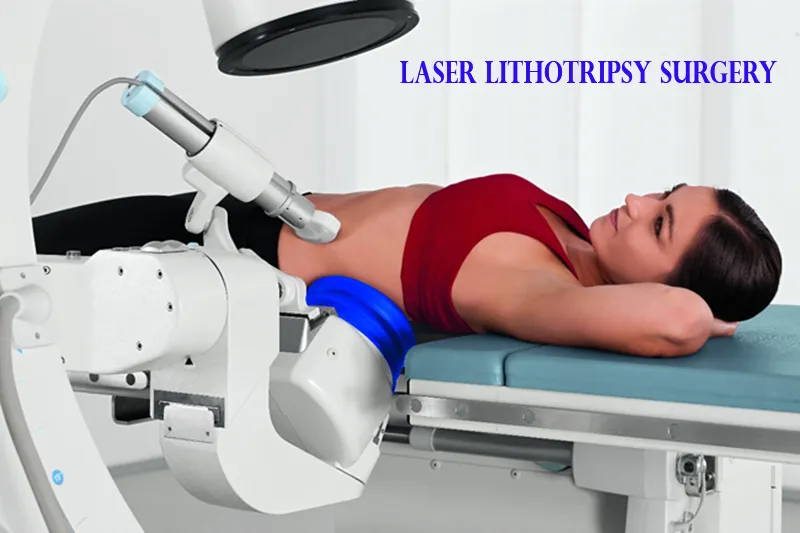
Kidney stones rarely announce themselves gradually. Most patients describe the pain as arriving suddenly, often at night, radiating from the back to the groin in waves that make sitting still impossible. For the roughly 12 percent of the global population who will experience a kidney stone at some point, that first episode is usually the moment treatment options become an urgent question rather than a hypothetical one.


Laser lithotripsy has become the preferred approach for stones that will not pass on their own, particularly those that are too large, too hard, or positioned in a way that makes shockwave treatment less effective. India performs an estimated 300,000 stone procedures annually, and its leading urology centres use the same holmium and thulium fibre laser platforms as top hospitals in Europe and North America, at a fraction of the cost.


What Is Laser Lithotripsy and How Does It Work?

Laser lithotripsy is a minimally invasive procedure that uses laser energy delivered through a thin fibre to break kidney stones into fragments small enough to pass naturally or be removed.


How the Procedure Is Performed

  • flexible or rigid ureteroscope, a thin telescope with a camera, is passed through the urethra and bladder into the ureter or kidney. No external incisions are made.
  • Once the stone is visualised, a laser fibre (typically 150 to 400 microns in diameter) is advanced through the scope's working channel.
  • The laser fires pulses of energy that fragment or vaporise the stone into dust or small pieces.
  • Smaller fragments pass naturally in urine. Larger pieces may be retrieved using a basket device.
  • temporary stent may be placed in the ureter to keep it open while healing occurs, and it is typically removed after one to two weeks.

The entire procedure is usually performed under spinal or general anaesthesia and takes 30 minutes to two hours depending on stone size, number, and location.


Why the Laser Works Without Damaging Surrounding Tissue

Both holmium and thulium lasers operate at wavelengths that are strongly absorbed by water. Kidney stones and the fluid surrounding them have a high water content, while the ureteral wall tissue does not absorb this wavelength as efficiently. This means the laser energy concentrates on fragmenting the stone while sparing the surrounding tissue from significant thermal damage.


Holmium vs Thulium Fibre Laser: Which Is Better for Kidney Stone Treatment?

Modern laser lithotripsy primarily uses two technologies: Holmium (Ho) laser and Thulium Fibre Laser (TFL). Both are effective for breaking kidney stones, but they differ in how they deliver energy and fragment stones.


Holmium:YAG Laser: The Established Standard

The Holmium:YAG laser has been the gold standard in urology for over two decades. It is effective against all stone compositions, including calcium oxalate, uric acid, cystine, and struvite stones. Newer Holmium systems with Moses technology improve energy delivery to the stone, reduce stone migration during fragmentation, and limit collateral tissue effects compared to earlier-generation Holmium lasers.


Thulium Fibre Laser (TFL): The Newer Alternative

The thulium fibre laser represents the most significant advance in lithotripsy technology in recent years. Compared to Holmium:YAG, TFL offers:


  • four-fold higher absorption coefficient in water, meaning more efficient energy transfer to the stone.
  • Smaller fibre diameters (50 to 150 microns versus 200 microns and above for Holmium), allowing easier scope deflection and better irrigation flow.
  • Higher pulse repetition rates (up to 2,000 Hz), enabling faster stone dusting.
  • In vitro studies suggest 1.5 to 4 times faster stone ablation compared to Holmium at equivalent settings.


Holmium vs TFL: Key Differences

Two laser technologies dominate modern lithotripsy, and the difference between them is now a genuine consideration for patients researching their options.

Feature

Holmium Laser

Thulium Fibre Laser (TFL)

Clinical historyMore than 20 yearsNewer technology
Stone types treatedAll major stone typesAll major stone types
Fibre sizeTypically 200 microns or larger50–150 microns
Pulse frequencyLowerUp to 2,000 Hz
Stone dusting efficiencyExcellentPotentially faster
Clinical evidenceExtensive long-term dataGrowing evidence base

Which Laser Is Better for Lithotripsy?

Current European urology guidelines indicate that both Holmium and Thulium Fibre Laser provide effective treatment for kidney stones.


While TFL offers several technical advantages and may improve stone-dusting efficiency, ongoing multicentre studies continue to compare long-term outcomes, such as stone-free rates, retreatment rates, and recurrence rates.


For most patients, the most important factor is not necessarily the type of laser used, but:


  • The surgeon's experience
  • The complexity of the stone
  • The location and size of the stone
  • The overall expertise of the treatment centre


Laser Lithotripsy vs Other Stone Treatments: How Does It Compare?

Patients are often offered a choice between several stone treatment approaches, and understanding where laser lithotripsy fits helps clarify why a urologist recommends one over another.


The Three Main Approaches

Approach

Best For

Invasiveness

Stone-Free Rate

ESWL (shockwave lithotripsy)Small stones under 10mm in the upper kidneyNon-invasive, externalLower for hard or large stones
RIRS / URSL with laserStones up to 2cm in the ureter or kidneyMinimally invasive, no incisionHigh, especially with thulium or Moses Holmium
PCNL (percutaneous nephrolithotomy)Large or staghorn stones over 20mmMinimally invasive, small 1cm incisionHigh for large stone burden

ESWL remains useful and is generally the least expensive option, but its effectiveness declines significantly for harder stone compositions (such as calcium oxalate monohydrate) and for stones located in the lower pole of the kidney, where gravity works against fragment clearance. 


Laser-based RIRS has become the preferred option for stones that ESWL is unlikely to clear effectively, because the surgeon directly visualises and fragments the stone rather than relying on externally focused shockwaves.


For very large or staghorn stones, PCNL remains the most effective single-session option, sometimes performed alongside laser lithotripsy as a combined procedure for complex stone burdens.


What Does Laser Lithotripsy Cost in India?

Laser lithotripsy in India costs between ₹50,000 and ₹1,60,000 (approximately USD 600 to USD 1,900) depending on the procedure type, stone size, hospital, and city.


Cost by Procedure Type

Procedure

India Cost (INR)

India Cost (USD approx.)

URSL with Holmium Laser (ureteral stones)50,000 to 1,00,000600 to 1,200
RIRS (flexible ureteroscopy for kidney stones)60,000 to 1,60,000720 to 1,920
ESWL (for comparison)25,000 to 60,000300 to 720
PCNL (for large/staghorn stones)80,000 to 2,00,000960 to 2,400

What the Package Typically Includes

  • Urologist's fee and anaesthesia
  • Operating theatre and laser equipment usage
  • One day-care stay or one-night hospital admission
  • DJ stent placement (if required)
  • Initial post-operative medications


What Is Often Billed Separately

  • Pre-operative imaging (CT scan or ultrasound, if not already done): ₹2,000 to ₹3,000
  • Stent removal visit, if performed at a later date: ₹2,000 to ₹5,000
  • Stone composition analysis: ₹1,500 to ₹3,000
  • Repeat session, if a single sitting does not fully clear a large stone burden

For comparison, the same procedures cost USD 10,000 to USD 15,000 for basic lithotripsy and USD 30,000 to USD 50,000 for PCNL in the United States. Many corporate hospitals in India offer transparent, itemised packages, and patients should request a full breakdown covering pre-tests, anaesthesia, stent removal, and follow-up imaging before confirming, as these add-ons are where unexpected costs typically arise.


What Does Recovery Look Like After Laser Lithotripsy?

Recovery from laser lithotripsy (URSL or RIRS) is significantly faster than from open or even PCNL surgery, since no incision is made.


The First Few Days

  • Day 0: Most patients walk within six hours of the procedure. Mild burning during urination and pink-tinged urine are normal and expected.
  • Day 1: Discharge from hospital in most uncomplicated cases. Some blood in the urine remains normal.
  • Days 2 to 3: Light office work can typically resume. A mild twinge in the back during urination may occur if a stent is in place.
  • Week 1 to 2: If a DJ stent was placed, it is removed at a follow-up visit. Stent removal is a brief outpatient procedure.


What to Watch For

A fever developing after the procedure is not normal and should prompt immediate contact with the treating urologist, as it may indicate a urinary tract infection requiring prompt treatment.


Preventing Kidney Stone Recurrence: What Happens After Laser Lithotripsy? 

Removing the stone addresses the immediate problem. It does not address why the stone formed in the first place, and the numbers on recurrence make this a genuinely important part of aftercare.


How Common Is Kidney Stone Recurrence? 

Lifetime recurrence risk for kidney stones is reported to be as high as 50 percent, with roughly half of patients developing another stone within five years if no preventive changes are made.


How Can Kidney Stone Recurrence Be Prevented? 

The most effective prevention strategy depends on the type of stone and the patient's underlying risk factors. 


  • Hydration: Increasing fluid intake to produce at least two litres of urine daily is the single most evidence-supported preventive measure for most stone types
  • Stone composition analysis: Fragments retrieved during the procedure can be analysed to determine the stone type, which directs specific dietary and medical prevention strategies
  • 24-hour urine collection: Recommended for patients who form stones repeatedly, to identify the underlying metabolic abnormality driving stone formation
  • Targeted medication: Depending on stone type, options include potassium citrate (for uric acid stones, by making urine less acidic) and thiazide diuretics (for calcium stones, by reducing urinary calcium excretion)


Why Is Follow-Up Care So Important?

According to experienced stone specialists, preventing recurrence often has a greater impact on long-term outcomes than the procedure itself.


As Dr. Arvind Ganpule, Senior Urologist at Muljibhai Patel Urological Hospital in Nadiad, explains: "Clearing the stone is usually straightforward with modern laser technology. What determines whether a patient is back in the operating room within 2 years is almost always what happens after discharge: hydration habits, dietary changes, and whether a metabolic workup was done for patients who form stones repeatedly. We see this pattern again and again."


What Should International Patients Confirm Before Choosing a Centre?

India's stone treatment centres vary in the laser technology available and the surgeon's experience with specific stone types and sizes.


Questions Worth Asking

  • Which laser platform does the centre use: a holmium laser with Moses technology or a thulium fibre laser?
  • How many RIRS or URSL procedures does the treating urologist perform annually?
  • Is stone composition analysis included, and will the results be explained with dietary guidance?
  • For larger stones, does the centre offer PCNL as an alternative or combination approach if laser alone is insufficient?
  • What is the centre's protocol for stent placement: when and how is it removed, and is this included in the quoted package?


Conclusion

Laser lithotripsy has become one of the most refined procedures in urology, combining a day-care recovery timeline with stone clearance rates exceeding 95% at high-volume centres. The choice between Holmium and thulium fibre laser, while technically interesting, matters less than the surgeon's familiarity with whichever platform is available.


What matters considerably more, and what gets discussed far less often, is what happens after the stone is gone. A patient who leaves the hospital without addressing hydration, diet, and underlying metabolic factors has a meaningful chance of returning within a few years for the same procedure.


India's combination of advanced laser technology, high-volume specialist centres, and costs that remain a fraction of Western prices makes this one of the more accessible procedures for international patients, provided the aftercare conversation happens before discharge, not after the next stone forms.

Related Hospitals

Discover hospitals and medical centers related to this topic for quality healthcare services.
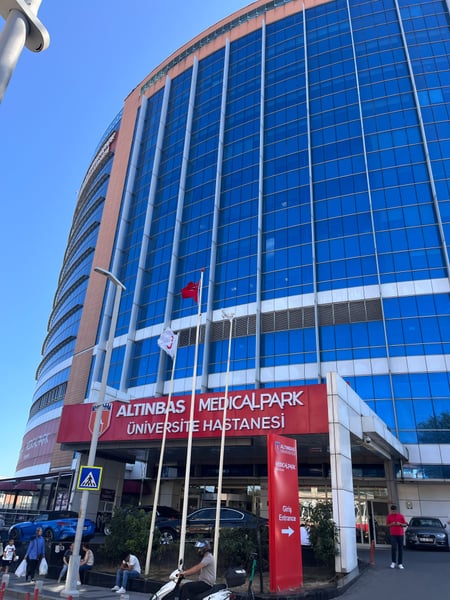
Medical Park Bahcelievler Hospital
Platinum
View Details

Medical Park Bahcelievler Hospital

Istanbul, Turkey

Medical Park Bahcelievler Hospital is a 242-bed JCI-accredited hospital in Istanbul, established in 2007. Spread across 33,000 square meters and 19 fl...

Multi-specialty
Established 2007
242 beds
Accreditations
Joint Commission International (JCI)
Facilities
+13
BLK-Max Super Speciality Hospital, New Delhi
Platinum
View Details

BLK-Max Super Speciality Hospital, New Delhi

New Delhi, India

BLK-Max Super Speciality Hospital in New Delhi is one of India's premier healthcare institutions, offering 650 beds, 22 advanced operation theatres, a...

Multi-specialty
Established 1959
650 beds
Accreditations
Joint Commission International (JCI)
National Accreditation Board for Hospitals & Healthcare Providers (NABH)
Facilities
+13
Fortis Memorial Research Institute (FMRI), Gurgaon
Platinum
View Details

Fortis Memorial Research Institute (FMRI), Gurgaon

Gurgaon, India

Fortis Memorial Research Institute (FMRI), Gurgaon, is a world-class multi-specialty hospital established in 2013. The hospital offers 330 beds, 15 op...

Multi-specialty
Established 2013
330 beds
Accreditations
Joint Commission International (JCI)
National Accreditation Board for Hospitals & Healthcare Providers (NABH)
Facilities
+13
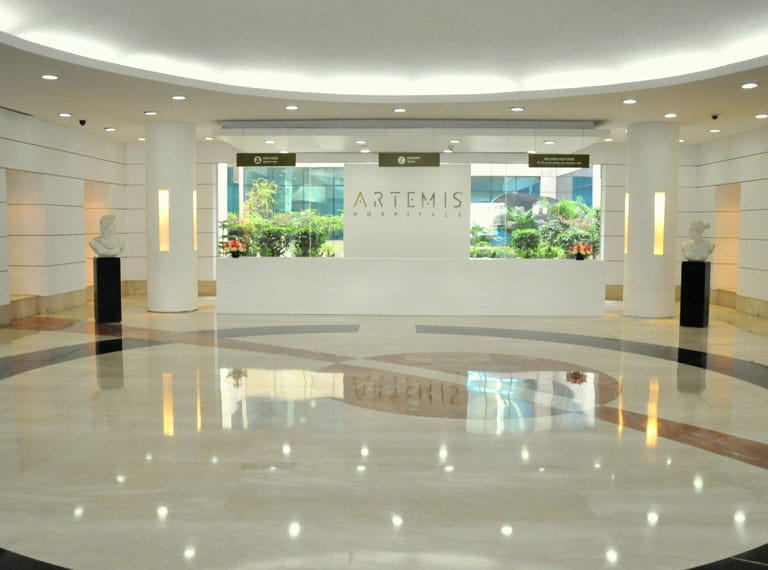
Artemis Hospital, Gurgaon
Platinum
View Details

Artemis Hospital, Gurgaon

Gurgaon, India

Artemis Hospital, Gurgaon, is a JCI accredited multispecialty hospital that was established in 2007. It offers 750+ beds and world -class infrastructu...

Multi-specialty
Established 2007
750 beds
Accreditations
Joint Commission International (JCI)
National Accreditation Board for Hospitals & Healthcare Providers (NABH)
International Organization for Standardization (ISO)
Facilities
+13
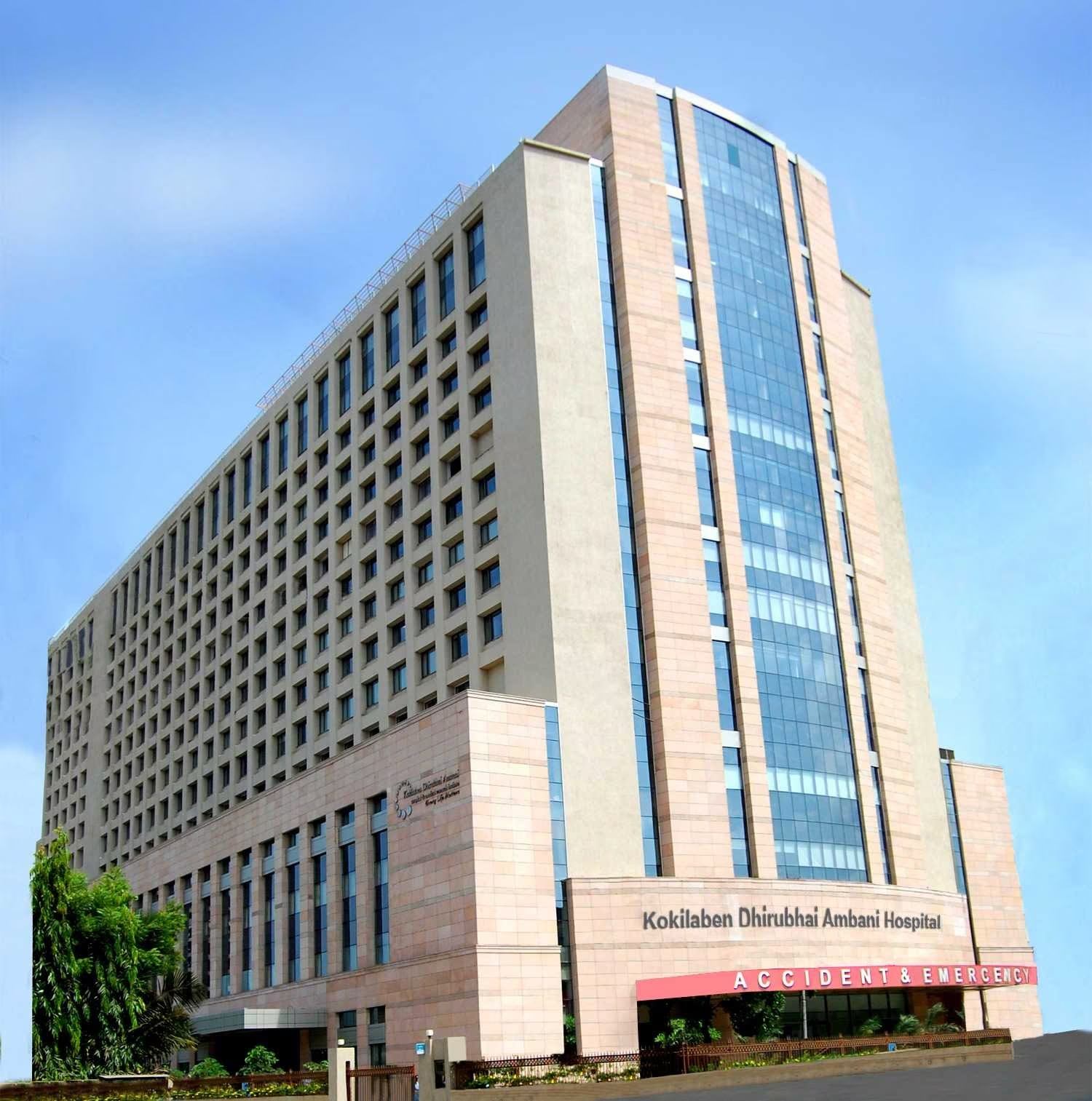
Kokilaben Dhirubhai Ambani Hospital, Mumbai
Platinum
View Details

Kokilaben Dhirubhai Ambani Hospital, Mumbai

Mumbai, India

Kokilaben Dhirubhai Ambani Hospital, Mumbai, is a JCI, NABH, NABL, and CAP-accredited quaternary care hospital established in 2009. With 750 beds, 180...

Multi-specialty
Established 2009
750 beds
Accreditations
Joint Commission International (JCI)
National Accreditation Board for Hospitals & Healthcare Providers (NABH)
International Organization for Standardization (ISO)
Facilities
+13
Medicover Hospitals, Hitech City, Hyderabad
Platinum
View Details

Medicover Hospitals, Hitech City, Hyderabad

Hyderabad, India

Medicover Hospitals, Hitech City, Hyderabad, is a 400-bed NABH-accredited super-specialty hospital established in 2011. It is part of Medicover, a glo...

Multi-specialty
Established 2011
400 beds
Accreditations
National Accreditation Board for Hospitals & Healthcare Providers (NABH)
Joint Commission International (JCI)
Facilities
+13

Related Doctors

Connect with experienced doctors and medical specialists in this field.
Dr. Bibhas Ranjan Kundu

Dr. Bibhas Ranjan Kundu

Senior Consultant
40 years of experience
View Details
 Dr. Revathi R

Dr. Revathi R

Consultant

22 years of experience
View Details
 Dr. Prasad Raju Kalidindi

Dr. Prasad Raju Kalidindi

Senior Consultant
25 years of experience
View Details
Dr. Shakir Tabrez

Dr. Shakir Tabrez

Additional Director
17 years of experience
View Details
Dr. Wichean Kamolpornvijit

Dr. Wichean Kamolpornvijit

Consultant

38 years of experience
View Details
Dr. Ukrid Kesthong

Dr. Ukrid Kesthong

Consultant

10 years of experience
View Details

Related Articles

Explore more articles and insights on similar health topics.
HIFU Treatment for Prostate Cancer in India: Procedure, Cost, and Recovery

Medical Tourism

HIFU Treatment for Prostate Cancer in India: Procedure, Cost, and Recovery

20/6/2026, 9:32:52 AM
9 min read
A prostate cancer diagnosis brings a question that surgery and radiation rarely answer well: how does a man treat the cancer without losing the parts ...
Is My Medical Insurance Valid in India? A Guide for International Patients
Medical Tourism

Is My Medical Insurance Valid in India? A Guide for International Patients

20/6/2026, 5:02:21 AM
9 min read
A patient in Dubai has been told they need cardiac surgery. A family in Lagos is researching bone marrow transplant options for their child. A retiree...
India vs Thailand: Which is the Best Medical Tourism Destination in 2026?
Medical Tourism

India vs Thailand: Which is the Best Medical Tourism Destination in 2026?

18/6/2026, 5:05:27 AM
9 min read
Most patients who research medical tourism in Asia end up comparing the same two destinations. India and Thailand have each built a significant intern...
Heart Valve Replacement Surgery in India: Types, Technologies, and Recovery
Medical Tourism

Heart Valve Replacement Surgery in India: Types, Technologies, and Recovery

18/6/2026, 4:16:32 AM
10 min read
The heart has four valves, and each one has a single job: keep blood moving in the right direction. When one of them fails, the heart compensates for ...
Robotic Prostatectomy in India: Nerve-Sparing Techniques, Recovery, and Patient Outcomes
Medical Tourism

Robotic Prostatectomy in India: Nerve-Sparing Techniques, Recovery, and Patient Outcomes

16/6/2026, 1:25:56 PM
9 min read
Prostate cancer is the second most common cancer in men globally. For patients diagnosed with localised disease, the question that follows almost imme...
Insulin Pump Therapy: How It Works, Who Benefits, and What It Costs in 2026
Medical Tourism

Insulin Pump Therapy: How It Works, Who Benefits, and What It Costs in 2026

16/6/2026, 8:29:27 AM
9 min read
For people managing diabetes with multiple daily injections, there is a particular kind of exhaustion that sets in after years of the routine. Four to...
Nadeem Malik

Medical Writer

Medical Representative Shield Healthcare Pvt. Ltd
B-Pharm

Nadeem Malik is a dedicated medical writer with a strong academic background in pharmacy. He holds a Bachelor of Pharmacy (B.Pharm) degree from Teerthanker Mahaveer University, Moradabad, and has over... Read More

Our website uses cookies. By clicking on accept you give your consent to the use of cookies as per our Privacy Policy.