
Hair Transplant Cost in India
About Hair Transplant
A hair transplant is one of the most popular cosmetic procedures worldwide, helping men and women restore natural hair growth in places affected by baldness or thinning. As hair loss becomes increasingly common due to genetics, stress, hormonal changes, and lifestyle factors, people seek long-lasting solutions that deliver natural, permanent results.
Hair loss affects millions globally. Male pattern baldness alone affects nearly 50% of men by age 50, and many start noticing hair thinning as early as their 20s. Worldwide, more than 650,000 hair transplant procedures are performed every year, making it one of the fastest-growing cosmetic treatments. Modern techniques like FUE and DHI offer minimally invasive solutions with quick recovery and highly natural-looking outcomes.
Thanks to advanced extraction and implantation methods, a hair transplant today creates results that blend seamlessly with existing hair. It not only improves appearance but also boosts confidence and helps individuals feel more comfortable with their overall look. The procedure has become more refined, safer, and accessible, making it a preferred option for people who want a permanent fix for baldness.
What Is a Hair Transplant?
A hair transplant is a procedure where surgeons move healthy hair follicles from an area with strong growth (usually the back or sides of the scalp) to bald or thinning areas. The transplanted follicles continue to grow naturally in their new location, making this one of the only permanent treatments for hair loss.
Doctors perform hair transplants using advanced techniques that allow precise extraction and placement of individual follicles. It gives results that blend smoothly with the patient's natural hair pattern.
Two primary methods are used today:
- FUE (Follicular Unit Extraction): In this technique, the cosmetic surgeon extracts individual hair follicles one by one. It leaves minimal scarring and offers a quick recovery, making it the most widely used method worldwide.
- FUT (Follicular Unit Transplantation): Also known as the strip method, FUT requires removing a thin scalp strip from the donor area and separating it into individual grafts. It is useful when a large number of grafts are needed in one session.
Some clinics also offer DHI (Direct Hair Implantation), where follicles are implanted directly using a specialised pen tool. It can help achieve higher density in selected areas.
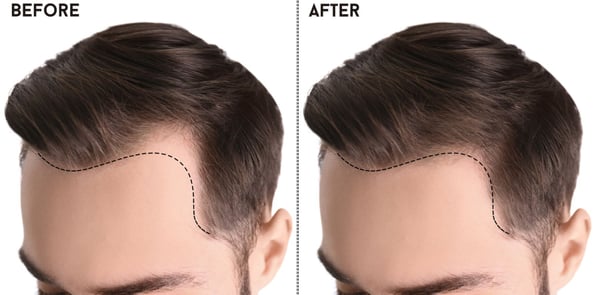
A hair transplant gives natural results because each follicle is placed at the correct angle, direction, and density. Once the transplanted hair grows, it behaves like normal hair that can be cut, styled, or washed without restrictions.
When Do Doctors Recommend a Hair Transplant?
Doctors recommend a hair transplant when hair loss becomes permanent and medical treatments no longer provide noticeable improvement. The procedure works best when the patient has a stable pattern of hair loss and enough healthy donor hair to create natural-looking coverage.
- Male Pattern Baldness: This is the most common reason for a hair transplant. Doctors recommend the procedure when the hairline recedes or the crown area thins permanently.
- Hair Thinning Not Responding to Medicines: If treatments like minoxidil or finasteride fail to stop hair loss, a transplant becomes a more effective long-term solution.
- Receding Hairline or Bald Patches: Patients with a clearly defined hairline recession or bald spots can benefit from strategically placed implants to restore density and shape.
- Crown Baldness: When the top or back of the head loses significant hair, a transplant helps rebuild density in those areas.
- Hair Loss Due to Injury or Burns: Transplantation works well for areas where hair loss occurs due to accidents, burns, or scarring.
- Stable Hair Loss Pattern: Doctors prefer to treat patients whose hair fall has stabilized. It ensures better results and reduces the risk of future uneven thinning.
Get a Free Treatment Plan
About Hair Transplant in India
What Is the Cost of a Hair Transplant in India?
The cost of a hair transplant in India usually ranges between $800 and $2,500 (approximately ₹65,000 to ₹2,00,000). The price depends on the number of grafts required, the technique used, and the surgeon's expertise. Because hair transplants are cosmetic procedures, the total cost varies widely from one patient to another.
India has become one of the most preferred destinations for hair restoration because it offers high success rates, modern techniques, and experienced surgeons at a fraction of the cost seen in Western countries.
Below is a clear breakdown of hair transplant costs in India.
Cost Per Graft in India
Technique | Cost per Graft (INR) | Cost per Graft (USD) |
| FUE | ₹25 – ₹45 | $0.30 – $0.55 |
| FUT | ₹20 – ₹35 | $0.25 – $0.45 |
| DHI | ₹35 – ₹70 | $0.45 – $0.85 |
Average Total Cost Based on Grafts
Grafts Needed | FUE Cost (USD) | Approx. Cost (INR) |
| 1,000 grafts | $350 – $550 | ₹28,000 – ₹45,000 |
| 2,000 grafts | $600 – $1,000 | ₹50,000 – ₹82,000 |
| 3,000 grafts | $900 – $1,500 | ₹74,000 – ₹1.23 lakh |
| 4,000+ grafts | $1,300 – $2,500 | ₹1.07 – ₹2.05 lakh |
- DHI and robotic techniques cost more due to the advanced tools required.
- Dense packing, hairline refinement, or correction surgeries may increase prices.
- Some clinics offer package pricing rather than per-graft billing.
- Additional PRP sessions may add to the total cost.
Stage-Wise Cost of a Hair Transplant in India
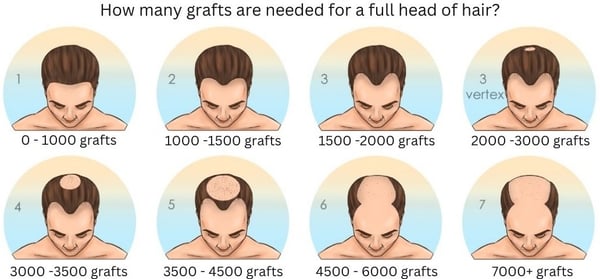
Hair transplant pricing often depends on the stage of baldness, mainly when graft requirements vary. The most commonly used scale is the Norwood Scale (for men), which helps clinics estimate the number of grafts needed.
Below is a clear, stage-wise average cost range:
- Norwood Stage 2: Early hairline recession requiring limited grafts
- Cost: USD 300 – 600 (₹25,000 – ₹50,000)
- Grafts needed: 800 – 1,200
- Norwood Stage 3: Deepening hairline recession, mild crown thinning
- Cost: USD 500 – 900 (₹40,000 – ₹75,000)
- Grafts needed: 1,200 – 1,800
- Norwood Stage 4: Moderate hair loss at the hairline and crown
- Cost: USD 800 – 1,300 (₹65,000 – ₹1.05 lakh)
- Grafts needed: 1,800 – 2,500
- Norwood Stage 5: Baldness at the crown and front begins to merge
- Cost: USD 1,000 – 1,700 (₹82,000 – ₹1.40 lakh)
- Grafts needed: 2,500 – 3,500
- Norwood Stage 6: Extensive crown and frontal loss with minimal natural hairline
- Cost: USD 1,400 – 2,200 (₹1.15 – ₹1.80 lakh)
- Grafts needed: 3,500 – 4,500
- Norwood Stage 7: Most severe stage of baldness with a narrow donor area
- Cost: USD 1,800 – 2,500 (₹1.50 – ₹2.05 lakh)
- Grafts needed: 4,500+ (may require two sessions)
What the Cost Includes
- Surgeon's fee for extraction, graft handling, and implantation
- Local anesthesia during the procedure
- Operation theatre/clinic charges
- Graft extraction and implantation (based on technique)
- Consumables and instruments used during the procedure
- Basic medications for pain control and infection prevention
- Post-procedure dressing and first wash
- Follow-up consultations for the initial healing period
These items are usually part of all standard hair transplant packages in India.
What the Cost Excludes
- PRP therapy sessions before or after the transplant
- Accommodation, travel, meals, and visas for international patients
- Blood tests or medical clearance if required
- Advanced imaging, such as trichoscopy (if charged separately)
- Corrective or revision procedures
- Special medications for long-term hair care
- Additional sessions if the patient wants higher density
- Beard or body hair extraction (if needed for donor support)
Since every patient has different hair loss needs, it is best to request a written cost estimate before starting the procedure.
What Is the Cost of a Hair Transplant in Different Indian Cities?
Hair transplant costs vary across India depending on the clinic's expertise, the technology used, and the surgeon's experience. Metro cities may charge slightly more because they offer advanced facilities and modern equipment.
Below is a clear comparison of average hair transplant costs across major cities:
City | Average Cost (USD) | Approx. Cost (INR) |
| New Delhi | $900 – $2,200 | ₹75,000 – ₹1.80 lakh |
| Mumbai | $1,000 – $2,500 | ₹82,000 – ₹2.05 lakh |
| Bangalore | $800 – $2,000 | ₹65,000 – ₹1.65 lakh |
| Chennai | $750 – $1,800 | ₹60,000 – ₹1.48 lakh |
| Hyderabad | $800 – $1,900 | ₹65,000 – ₹1.55 lakh |
- Delhi and Mumbai offer some of the most advanced clinics with experienced surgeons.
- Bangalore and Hyderabad combine modern technology with competitive pricing.
- Chennai is known for skilled transplant teams and cost-effective packages.
What Factors Affect the Cost of a Hair Transplant in India?
Several factors influence the total cost of a hair transplant in India. Since every patient has a different pattern of hair loss and different graft requirements, the final price varies from person to person.
- Number of Grafts Needed: The most significant cost factor is the number of grafts required. More grafts mean more time, labor, and precision, which increases the price.
- Technique Used (FUE, FUT, DHI, or Robotic): Advanced techniques like DHI and robotic FUE cost more than standard FUE or FUT because they require specialized tools and greater expertise.
- Surgeon's Experience: Highly experienced surgeons charge more for their skill and consistent results. Their involvement often improves graft survival and final appearance.
- Clinic Infrastructure and Technology: Clinics with modern microscopes, graft-preservation systems, and advanced implantation tools may incur higher treatment costs.
- Donor Area Quality: Patients with weaker donor hair may need beard or body hair grafts, which increases the total cost due to extra extraction time.
- Requirement for Multiple Sessions: Large bald areas or high-density goals sometimes need two sessions, increasing overall expense.
- Add-On Treatments: PRP therapy, medications, laser therapy, or corrective procedures add to the final amount.
- Revision or Corrective Transplants: Repairing old or poorly done hair transplants usually costs more because they require careful planning and higher expertise.
How Does the Cost in India Compare With Other Countries?
Hair transplants are significantly more affordable in India than in many Western and Middle Eastern countries. Despite the lower cost, India offers experienced surgeons, modern techniques, and strong clinical outcomes, making it a major global hub for hair restoration.
Below is a comparison of average hair transplant costs across popular destinations:
Country | Average Cost (USD) |
| United States | $4,000 – $15,000 |
| United Kingdom | $4,000 – $10,000 |
| Canada | $5,000 – $12,000 |
| UAE | $4,500 – $9,000 |
| Turkey | $1,800 – $4,000 |
| India | $800 – $2,500 |
Patients save 50% to 80% when they choose India for a hair transplant compared to Western countries. Even Turkey, another major destination, remains more expensive for high-quality FUE and DHI procedures.
Why Should You Choose India for a Hair Transplant?
India has become one of the most preferred destinations for hair restoration, attracting thousands of patients each year. The country combines skilled surgeons, modern techniques, and affordable pricing that is hard to match globally.
- Experienced Hair Transplant Surgeons: India has a large pool of dermatologists and hair restoration specialists who perform hundreds of successful transplant procedures each year. Their expertise helps deliver natural-looking results.
- Advanced Techniques and Technology: Clinics in India use modern tools, including motorized FUE punches, implantation pens, stereomicroscopes, and robotic systems.
- Customized Hairline Design and Treatment Plans: Surgeons in India focus on creating hairlines that match the patient's age, facial structure, and long-term hair loss pattern.
- High Success Rates and Natural Results: Most clinics achieve high graft survival rates and deliver dense, natural-looking results with minimal scarring.
- Comprehensive Support for International Patients: Many clinics offer airport pickup, accommodation support, travel guidance, and online follow-up consultations.
- Short Waiting Time and Same-Day Discharge: Most hair transplants are performed as day-care procedures, allowing patients to return to their hotels the same day with minimal downtime.
How Is a Hair Transplant Performed?
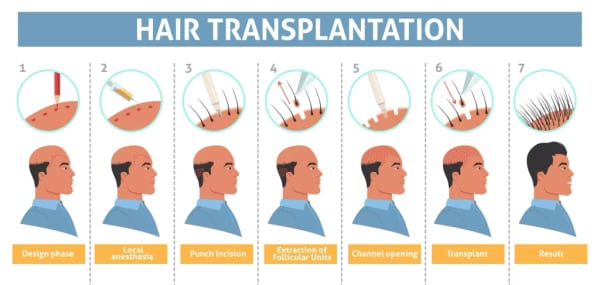
A hair transplant follows a structured process that focuses on natural results, precise follicle placement, and minimal discomfort. The procedure is usually done under local anesthesia, and most patients return home the same day.
- Initial Consultation and Hairline Planning: The surgeon examines the scalp, checks donor hair quality, and designs a natural-looking hairline. This step ensures balanced coverage and realistic density.
- Local Anesthesia and Preparation: Doctors numb the donor and recipient areas to keep the patient comfortable. The scalp is cleaned and prepared for extraction.
- Extraction of Hair Follicles: Depending on the chosen method, the surgeon extracts follicles using one of two approaches:
- In FUE, follicles are removed individually with a micro-punch tool.
- In FUT, a thin strip of scalp is taken and then separated into grafts.
- Graft Sorting and Preparation: The extracted follicles are examined and sorted by size (single, double, or multiple-hair grafts). It allows precise placement in the required zones.
- Creating Recipient Sites: The surgeon makes tiny incisions in the bald or thinning area. These incisions determine the angle, direction, and density of the new hair.
- Implanting Hair Follicles: Prepared grafts are carefully placed into the incisions. This step requires accuracy to achieve a natural-looking result.
- Post-Procedure Care: After implantation, the team provides detailed instructions on washing, medication, and scalp care. Mild swelling or redness may occur but settle within a few days.
What Are the Different Hair Transplant Methods?
Hair transplantation techniques have evolved over the decades, giving patients multiple options depending on their hair loss pattern, donor strength, and desired density. Each method has its own benefits, and doctors choose the best approach based on individual goals.
FUE (Follicular Unit Extraction)
FUE is the most commonly used method today. The hair transplant surgeon extracts individual hair follicles from the donor area using a micro-punch tool.
- Leaves tiny dot-like marks that heal quickly
- Offers natural results and faster recovery
- Best for patients who want to avoid a linear scar
FUT (Follicular Unit Transplantation)
Also known as the strip method, FUT involves removing a thin strip of scalp from the back of the head and dividing it into grafts.
- Suitable for patients who need a large number of grafts
- Leaves a linear scar but provides a high graft yield
- Often chosen for advanced baldness cases
DHI (Direct Hair Implantation)
DHI uses a specialized implantation pen to place grafts directly into the scalp.
- Allows precise depth, angle, and direction
- Can provide higher density in selected areas
- Requires an experienced team due to its technical demands
Robotic Hair Transplant (ARTAS, if available)
Some advanced centers use robotic systems to assist in graft extraction.
- Improves accuracy and consistency
- Reduces human error
- Suitable for FUE-based procedures
What Are the Benefits of a Hair Transplant?
A hair transplant offers long-lasting improvement for people dealing with baldness or thinning hair. Modern techniques make results look and feel natural, giving patients a renewed sense of confidence.
- Permanent Solution for Baldness: The transplanted hair comes from areas that resist hair fall, so it continues to grow for a lifetime.
- Natural-Looking Hair Growth: Doctors place each graft at the correct angle and direction, resulting in hair that blends seamlessly with existing hair.
- Minimal Scarring: Techniques like FUE leave tiny dot marks that heal quickly and remain almost invisible.
- Boost in Confidence and Appearance: Restoring a fuller hairline or covering bald patches can improve self-esteem and help patients feel more comfortable with their appearance.
- Quick Recovery: Most hair transplant patients return to normal activities within a few days. The procedure uses local anesthesia and does not require an overnight hospital stay.
- Suitable for Beard, Mustache, and Eyebrow Restoration: Hair transplant techniques can also enhance facial hair density or correct patchy areas.
- Low Maintenance After Growth: Once the transplanted hair grows in, it can be washed, cut, and styled just like natural hair, with no special care required.
Who Is Eligible for a Hair Transplant?
Doctors evaluate several factors before deciding whether a candidate is fit for a hair transplant. The procedure works best when the patient has stable hair loss and enough healthy donor hair to achieve natural-looking results.
- Patients with a Stable Hair Loss Pattern: Hair loss should stabilize before transplantation. Rapid or unpredictable thinning can affect long-term outcomes.
- People With Adequate Donor Hair: The back and sides of the scalp must have enough healthy follicles. These areas provide the grafts needed to cover bald spots effectively.
- Adults Age 21+: Surgeons prefer to treat patients after the early phase of hormonal hair loss, as younger patients may continue to lose hair rapidly.
- Individuals With Good Scalp and Skin Health: Healthy scalp tissue supports the growth of transplanted follicles.
- People in Good Overall Health: Chronic illnesses like uncontrolled diabetes, bleeding disorders, or severe skin conditions may reduce eligibility.
- Patients With Realistic Expectations: Doctors ensure that patients understand the achievable density based on donor supply and hair loss pattern.
- Non-smokers or Those Willing to Quit Temporarily: Smoking affects healing and graft survival. Patients who avoid smoking before and after the procedure get better results.
What Is the Recovery and Success Rate After a Hair Transplant?
Recovery after a hair transplant is usually smooth, and most candidates resume normal activities within a few days. Modern techniques ensure minimal discomfort, quick healing, and natural-looking results.
Recovery Timeline
- Day 1–3: Mild swelling or redness may appear around the transplanted area. Patients can walk, eat, and rest normally.
- Day 4–7: Scabs begin to form around newly implanted grafts. Gentle washing starts as instructed by the surgeon.
- Week 2: Most scabs fall off. Redness fades gradually.
- 1 Month: Some transplanted hair sheds naturally. It is a normal part of the growth cycle.
- 3–4 Months: New hair starts to grow from the transplanted follicles.
- 6 Months: Noticeable improvement in density and coverage.
- 9–12 Months: Final results appear with thicker, stronger, and fully matured hair growth.
Success Rate of a Hair Transplant
Hair transplant success depends on donor hair quality, surgeon expertise, and the technique used.
- Overall success rate: 85% to 95%
- Graft survival rate: 80% to 95%, depending on technique
- FUE success: High, especially when done by experienced surgeons
- DHI success: Often slightly higher due to precise implantation
Most patients achieve natural, permanent hair growth that blends seamlessly with their existing hair.
Hair Transplant Cost Comparison by Country
Compare Hair Transplant costs across different countries to make an informed decision about your medical treatment.
| Country | Cost Range (USD) | Potential Savings | Action |
|---|---|---|---|
IndiaCurrentBest Value | $800 - $2,500 | — | Get Quote |
Note: Costs may vary based on hospital choice, room type, additional services, and individual medical requirements. Contact us for a personalized quote.
Leading Hospitals for Hair Transplant in India

Medical Park Bahcelievler Hospital
Medical Park Bahcelievler Hospital is a 242-bed JCI-accredited hospital in Istanbul, established in 2007. Spread across 33,000 square meters and 19 fl...
Accreditations

Facilities

Hisar Intercontinental Hospital, Istanbul
Hisar Intercontinental Hospital in Istanbul is a JCI-accredited, 212-bed multispecialty hospital spanning 35,000 square meters and featuring 53 medica...
Accreditations
Facilities

Medipol Bahçelievler Hospital
Medipol Bahçelievler Hospital is a 441-bed private hospital in Istanbul that began operations in May 2022. Covering 60,000 square meters across 15 flo...
Accreditations
Facilities
Similar Procedures
Gallery
FAQ


Our website uses cookies. By clicking on accept you give your consent to the use of cookies as per our Privacy Policy.