
Skin Cancer Treatment Cost in India
About Skin Cancer Treatment
Skin cancer is among the most rapidly increasing cancers worldwide, affecting lakhs of people every year. According to global health reports, more than 2–3 million non-melanoma cases and over 130,000 melanoma cases are diagnosed annually, making it one of the most common forms of cancer across all age groups. The rising numbers are linked to factors such as increased sun exposure, changing lifestyles, and greater awareness that leads to more frequent screenings.
Early detection improves outcomes. Modern medical advances have enabled the rapid identification of suspicious skin changes, allowing for their treatment with precise, minimally invasive methods. Today, most types of skin cancer can be managed effectively when diagnosed early, leading to high success rates and faster recovery.
What Is Skin Cancer?
Skin cancer begins when abnormal cells in the skin grow and divide uncontrollably. These cells form a mass or lesion that can appear on any part of the body, including areas not regularly exposed to the sun. While many cases develop slowly, some forms grow more aggressively and require prompt medical attention.
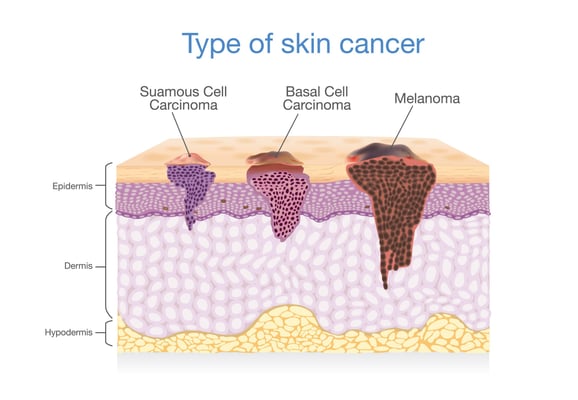
There are three major types of skin cancer.
- Basal cell carcinoma is the most common and usually grows slowly.
- Squamous cell carcinoma commonly develops in sun-exposed areas and can spread if left untreated.
- Melanoma is less common but more serious because it can spread quickly to other organs.
What Are the Symptoms and How Is Skin Cancer Diagnosed?
Skin cancer can appear in many forms, and early signs often seem harmless. Most symptoms involve visible changes on the skin that persist, grow, or look unusual compared to surrounding areas.
Common symptoms include:
- A new spot or growth that slowly increases in size
- A sore that does not heal or keeps returning
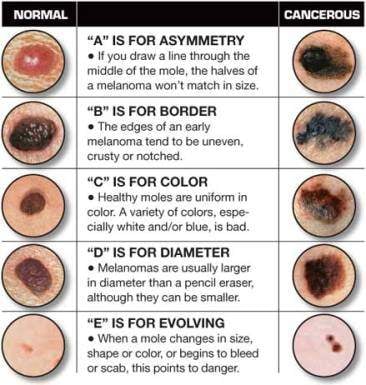
- A mole that changes in shape, color, or border
- A patch of skin that becomes rough, scaly, or crusted
- A raised bump that bleeds easily
- Dark streaks under the nails (in rare cases)
Doctors diagnose skin cancer through a series of simple and precise steps.
- A clinical skin examination is usually the first step, where the doctor studies the appearance, shape, and texture of the lesion.
- A dermoscopy tool may be used to view the deeper skin layers more clearly.
- If the spot looks suspicious, the next step is a biopsy, where doctors remove a small sample of skin and examine it under a microscope.
- For more advanced or deeper cancers, doctors may also recommend imaging tests, such as an ultrasound, CT scan, or MRI, to check if the cancer has spread to neighboring tissues or lymph nodes.
These tests help identify the type, depth, and stage of the cancer, allowing doctors to plan treatment with accuracy and confidence.
How is Skin Cancer Treated?
Skin cancer treatment varies depending on its type, the extent of its growth, and whether it has metastasized to nearby tissues. Most early-stage cases respond well to simple procedures, while advanced cancers may require more extensive care.
Surgical Excision
Surgical removal is one of the most common treatments for skin cancer. The doctor removes the cancerous spot along with a thin margin of healthy skin to ensure complete clearance. This method works well for many basal cell and squamous cell cancers.
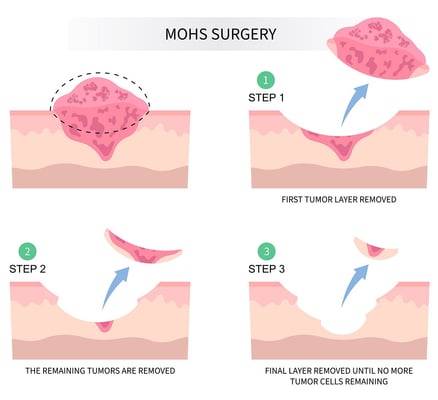
Mohs Surgery
Mohs surgery is a precise, layer-by-layer technique often used for treating cancers on the face or in areas where preserving appearance is crucial. The surgeon removes a thin layer of skin tissue and examines it immediately. This continues until no cancer cells remain. Mohs surgery has the highest cure rate while saving as much healthy skin as possible.
Cryotherapy
Cryotherapy uses extreme cold to freeze and destroy abnormal cells. Doctors usually recommend this for very early skin cancers or precancerous lesions. It is a quick, simple procedure that is performed on an outpatient basis.
Radiation Therapy
Radiation therapy may be used when surgery is not suitable or when the cancer is in a delicate area. Focused beams of radiation destroy cancer cells while minimizing damage to surrounding tissue.
Immunotherapy
Immunotherapy strengthens the body’s natural ability to recognize and attack cancer cells. It is commonly used for advanced melanoma or cancers that do not respond to standard treatments.
Targeted Therapy
Targeted therapy works by blocking specific genetic or molecular pathways that cancerous cells use to grow. It is beneficial for individuals with melanoma who have known genetic mutations.
Get a Free Treatment Plan
About Skin Cancer Treatment in India
What Is the Cost of Skin Cancer Treatment in India?
The cost of treating skin cancer in India ranges from $1,500 to $6,000, which is approximately ₹1.2 lakh to ₹5 lakh. Early-stage cancers treated with minor procedures cost less, while advanced melanoma requiring surgery, immunotherapy, or targeted therapy may fall on the higher end of the range.
Estimated Cost Breakdown:
- Surgical excision: ₹40,000 – ₹1,00,000
- Mohs surgery: ₹80,000 – ₹1,80,000
- Cryotherapy: ₹20,000 – ₹50,000
- Radiation therapy: ₹1.5 – ₹3 lakh (depending on sessions)
- Immunotherapy: ₹1 – ₹2 lakh per cycle (drug-dependent)
- Targeted therapy: Cost varies widely based on the medication
What the Cost Includes
Most hospitals include the following in the treatment package:
- Consultations with specialists, including dermatologists and oncologists.
- Surgery charges, including surgeon fees, anesthesia, and operating theatre use.
- Procedure-specific treatments, including excision, Mohs surgery, or cryotherapy.
- Hospital stay and nursing care for the recommended duration of treatment.
- Medications and dressings provided during hospitalization.
- Post-procedure monitoring until discharge, including wound checks and vital assessments.
What the Cost Excludes
Some expenses fall outside the base package and are billed separately:
- Diagnostic tests, including biopsy, dermoscopy, CT scan, MRI, or PET scan.
- Advanced therapies, such as immunotherapy or targeted therapy drugs, vary significantly in price.
- An extended hospital stay beyond the advised duration due to complications or advanced care needs.
- Travel, visa, and accommodation are personal expenses for international patients.
- Specialized reconstruction, if required, after large tumor removal.
What Is the City-Wise Cost of Skin Cancer Treatment in India?
The cost of skin cancer treatment varies slightly from one city to another. Factors such as hospital standards, availability of specialists, and regional healthcare expenses influence these differences.
Below is an approximate comparison to help patients plan their treatment more effectively.
City | Average Cost (USD) | Approx. Cost (INR) |
| New Delhi | $1,800 – $5,500 | ₹1,50,000 – ₹4,60,000 |
| Mumbai | $2,000 – $6,000 | ₹1,70,000 – ₹5,00,000 |
| Chennai | $1,600 – $5,000 | ₹1,30,000 – ₹4,10,000 |
| Bangalore | $1,700 – $5,200 | ₹1,40,000 – ₹4,30,000 |
| Hyderabad | $1,600 – $5,000 | ₹1,30,000 – ₹4,10,000 |
What Factors Affect the Cost of Skin Cancer Treatment in India?
The average price of skin cancer treatment in India varies for each patient because every case has different medical requirements. Several elements influence the total expense, including the type of cancer, the treatment plan, and the hospital’s services.
- Type of Skin Cancer: Basal and squamous cell cancers usually require simpler procedures, while melanoma often needs advanced therapies, which increases the overall cost.
- Stage of the Disease: Early-stage cancers involve straightforward treatment, whereas advanced cases may need complex surgery, extended therapy, and closer monitoring.
- Treatment Method Used: Costs vary depending on whether the patient requires excision, Mohs surgery, radiation, targeted therapy, or immunotherapy, with more advanced treatments being priced higher.
- Surgeon’s Experience: Specialists with extensive training in dermatologic or oncologic surgery may charge higher fees due to their expertise and precision.
- Hospital Category: Accredited multispecialty centers with advanced equipment and oncology units generally have higher treatment charges than standard hospitals.
- Diagnostic Tests and Follow-Up Care: Biopsies, imaging scans, and ongoing reviews contribute to the overall expense, particularly for cancers that necessitate long-term surveillance.
- Medications and Supportive Care: Post-procedure medications, dressings, and supportive therapies significantly impact the total cost, particularly for patients undergoing targeted or immune-based treatments.
How Does the Cost of Skin Cancer Treatment in India Compare With Other Countries?
Skin cancer treatment in India is far more affordable than in many Western nations. Patients receive advanced care, modern surgical techniques, and internationally approved medicines at significantly lower prices, making India a preferred destination for medical travelers.
Country | Average Cost (USD) |
| India | $1,500 – $6,000 |
| United States | $8,000 – $25,000 |
| United Kingdom | $7,000 – $20,000 |
| Thailand | $4,000 – $12,000 |
| UAE | $6,000 – $18,000 |
India offers treatment at nearly 70–80% lower prices while maintaining standards comparable to international oncology centers. Hospitals use the same globally approved medications and adhere to evidence-based treatment guidelines, ensuring safe and effective care.
What Is the Recovery and Success Rate for Skin Cancer Treatment?
Recovery from skin cancer depends on the type of cancer and the method used. Most early-stage cases treated with minor procedures typically heal quickly, while more advanced therapies may require a longer recovery period and ongoing follow-up.
- Recovery Timeline: Patients treated with excision or cryotherapy usually recover within a few days to two weeks. Procedures like Mohs surgery or radiation therapy may need a longer healing period, and advanced melanoma treatments require regular monitoring.
- Success Rate: Early-stage skin cancers have very high success rates, often above 90%, because they respond well to timely treatment. Advanced melanoma has a lower success rate, but modern therapies such as immunotherapy and targeted drugs have significantly improved outcomes.
- Long-Term Care: Regular check-ups, skin examinations, and maintaining good sun protection habits play a crucial role in achieving and sustaining good results, as well as reducing the risk of recurrence.
Why Choose India for Skin Cancer Treatment?
- Advanced Medical Infrastructure: Hospitals in India are equipped with modern dermatology units, high-precision surgical suites, and advanced imaging systems that support accurate diagnosis and safe treatment.
- Experienced Specialists: Dermatologic surgeons, oncologists, and Mohs surgery experts in India have extensive experience managing both common and complex skin cancers, ensuring reliable and precise care.
- Access to Modern Therapies: Patients benefit from the latest treatment options, including Mohs surgery, immunotherapy, and targeted therapy, which are used globally for effective skin cancer management.
- Affordable, High-Quality Care: India offers advanced skin cancer treatment at a fraction of Western costs. Lower pricing reflects the country’s healthcare structure, not a compromise in quality or safety.
- Accredited Hospitals: Many cancer centers are NABH or JCI accredited, following strict international standards for hygiene, safety, and clinical protocols.
- English-Speaking Medical Teams: Doctors, nurses, and support staff communicate effectively in English, ensuring a smooth treatment process for international patients.
- Comprehensive Patient Support: Hospitals offer assistance with medical visas, accommodation, airport transfers, and coordination throughout treatment, ensuring a stress-free experience.
Skin Cancer Treatment Cost Comparison by Country
Compare Skin Cancer Treatment costs across different countries to make an informed decision about your medical treatment.
| Country | Cost Range (USD) | Potential Savings | Action |
|---|---|---|---|
IndiaCurrentBest Value | $1,500 - $6,000 | — | Get Quote |
Note: Costs may vary based on hospital choice, room type, additional services, and individual medical requirements. Contact us for a personalized quote.
Similar Procedures
Gallery
FAQ

Our website uses cookies. By clicking on accept you give your consent to the use of cookies as per our Privacy Policy.