Hydrocephalus Treatment in India: VP Shunts, ETV, and Costs for International Patients

10/6/2026, 8:34:39 AM 9 min read Medical Tourism
Hydrocephalus Treatment in India: VP Shunts, ETV, and Costs for International Patients
Hydrocephalus affects an estimated 85 in every 100,000 people worldwide, according to a systematic review and meta-analysis published in PLOS One. It strikes at opposite ends of life with particular force: approximately 1 in every 1,000 infants is born with the condition, and in adults over 80, normal pressure hydrocephalus affects around 1 in 600 people. Between those two groups lies a broad, often misunderstood spectrum of patients who carry the same diagnosis, face very different causes, and need very different treatment approaches.


For many families, the challenge is not only clinical. It is logistical and financial. Hydrocephalus surgery in Western countries frequently runs to USD 20,000 to USD 50,000 or more, not counting post-operative monitoring, shunt revisions, or the follow-up care that can span decades. India has become one of the most sought-after destinations for hydrocephalus treatment among international patients, offering neurosurgical care at accredited hospitals for USD 3,000 to USD 4,500, including surgery, hospital stay, and post-operative management.


What Is Hydrocephalus and Why Does Cerebrospinal Fluid Accumulate?

The brain and spinal cord sit inside a continuous layer of cerebrospinal fluid (CSF). The choroid plexus, a network of blood vessels lining the brain's ventricles, produces approximately 500 mL of CSF every day at a rate of around 20 mL per hour. At any given moment, only 125 to 150 mL of CSF is present in the brain because arachnoid granulations continuously reabsorb the rest into the venous system.


Hydrocephalus occurs when this balance breaks down. Either CSF cannot drain through the ventricular system because of a physical blockage (obstructive hydrocephalus), or it reaches the absorption sites, but the arachnoid granulations fail to reabsorb it efficiently (communicating hydrocephalus), or, in a smaller subset of cases, the choroid plexus produces it in excess (hypersecretory hydrocephalus).


The resulting fluid buildup increases pressure inside the skull, compresses brain tissue against the surrounding bone, and causes damage that worsens with every day the condition goes untreated.


What Types of Hydrocephalus Affect Different Age Groups?

Hydrocephalus presents differently across the lifespan, and the type determines which treatment option is appropriate.


  • Congenital hydrocephalus is present at birth, most often due to aqueductal stenosis (narrowing of the cerebral aqueduct, the narrow channel connecting the third and fourth ventricles), neural tube defects such as spina bifida, or in utero infection. Aqueductal stenosis is the most common form of obstructive hydrocephalus in children and responds well to endoscopic third ventriculostomy (ETV).
  • Post-haemorrhagic hydrocephalus develops in premature infants following intraventricular haemorrhage. It is the leading cause of acquired hydrocephalus in newborns and typically requires a ventriculoperitoneal shunt because the haemorrhage interferes with CSF absorption rather than blocking the ventricular pathway.
  • Post-infectious hydrocephalus following tuberculous meningitis, bacterial meningitis, or cysticercosis accounts for a significant proportion of hydrocephalus cases in South Asia, Southeast Asia, and Sub-Saharan Africa. India, in particular, has significant institutional experience in treating post-tubercular hydrocephalus, which differs from other communicating forms and requires careful neurosurgical planning.
  • Normal pressure hydrocephalus (NPH) affects adults, predominantly those over 65. Despite the name, intracranial pressure is not always normal in NPH. The condition presents with the classic clinical triad of gait disturbance (a magnetic, shuffling walk), urinary incontinence, and progressive cognitive decline. NPH is frequently misdiagnosed as Parkinson's disease or dementia. Average diagnostic delay runs to three to five years, according to published epidemiological data.


What Is a Ventriculoperitoneal Shunt and When Is It Used?

ventriculoperitoneal (VP) shunt is the most widely performed hydrocephalus procedure worldwide. A neurosurgeon places a flexible catheter into one of the brain's ventricles and threads it under the skin, down the neck and chest, into the peritoneal cavity of the abdomen. A pressure-regulating valve sits along the catheter, typically behind the ear or near the collarbone. The valve controls how much CSF drains at different pressure levels, preventing over-drainage and under-drainage.


Modern VP shunts use programmable pressure valves, such as the Medtronic Strata valve and the Codman Hakim programmable valve, that allow neurosurgeons to adjust drainage settings non-invasively with an external magnetic programmer after implantation. This avoids repeat surgery when the patient's pressure requirements change, a significant advantage over fixed-pressure valves used in previous generations of shunt technology.


What Is Endoscopic Third Ventriculostomy (ETV) and Who Benefits Most?

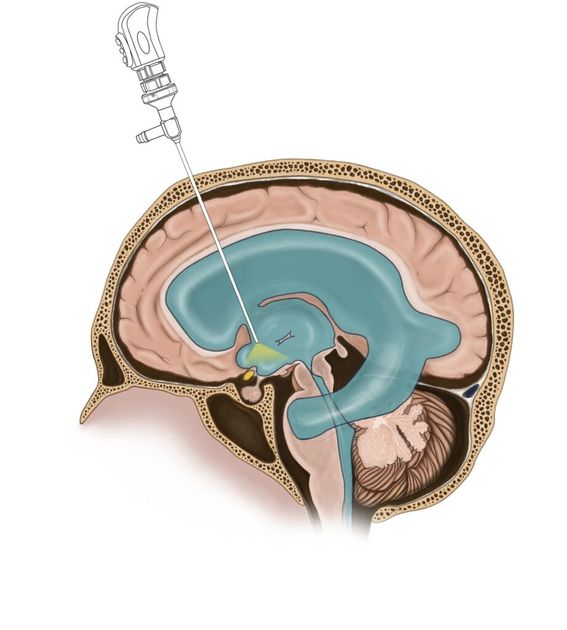
Endoscopic third ventriculostomy (ETV) is a minimally invasive neurosurgery that creates an opening in the floor of the third ventricle, allowing CSF to bypass a blockage and flow directly into the subarachnoid space where it can be absorbed. No foreign device is implanted. There is no catheter to malfunction or become infected.


ETV is performed through a small burr hole in the skull using a rigid endoscope. The neurosurgeon navigates to the third ventricle under direct vision and creates the ventriculostomy with either a balloon catheter or electrocautery.

In adult patients, ETV achieves an overall success rate of 74.7%, with a five-year success rate of 70.7%, according to a large longitudinal study in the United States. For the specific indication of obstructive hydrocephalus caused by aqueductal stenosis, success rates reach 90% at specialist centres.


ETV is not suitable for communicating hydrocephalus (where the blockage lies at the absorption sites rather than within the ventricles), for most cases of post-haemorrhagic hydrocephalus in premature infants, or for normal pressure hydrocephalus. Patient selection for ETV relies on the ETV Success Score (ETVSS), a validated scoring tool developed by Kulkarni et al. that assigns points based on patient age, aetiology of hydrocephalus, and prior shunt history to predict the likelihood of a successful ETV outcome.


Why Do International Patients Choose India for Hydrocephalus Treatment?

India offers a combination that very few medical destinations replicate: genuinely advanced neurosurgical capability at a fraction of Western costs.


Neurosurgery in India costs 60% to 80% less than comparable procedures in the United States or Western Europe. A VP shunt placement at an accredited Indian hospital costs approximately USD 3,000 to USD 4,500 for international patients, covering surgery, hospital stay, implant, and post-operative monitoring. The same procedure at a US hospital typically runs USD 30,000 to USD 50,000, or more, before post-operative care.


Leading Indian hospital groups operate dedicated neurosurgery departments staffed by specialists who have trained at institutions in the United Kingdom, the United States, and Germany. These teams manage high volumes of hydrocephalus across all age groups, including post-tubercular hydrocephalus, a condition that requires additional neurosurgical expertise that many Western centres rarely encounter. This volume translates directly into clinical depth.


Hospitals including Artemis Hospital in Gurgaon hold JCI (Joint Commission International) accreditation and NABH certification. Other major neurosurgical centres treating international patients are located in Delhi, Mumbai, Chennai, Bangalore, and Hyderabad, all with direct international flight connections from most source markets including GCC countries, African nations, Southeast Asia, and Central Asia.


What Technologies Are Available at Indian Neurosurgery Centres?

The technology available at accredited Indian neurosurgery centres for hydrocephalus treatment mirrors that used by specialist centres in Europe and North America.


  • Neuronavigation systems, including the Medtronic StealthStation, allow neurosurgeons to plan and guide VP shunt catheter placement with sub-millimetre accuracy by overlaying preoperative MRI data onto a real-time intraoperative display. It reduces the risk of catheter misplacement and the need for revision surgery, particularly in cases where ventricular anatomy is distorted.
  • Programmable shunt valves, including the Medtronic Strata valve and the Codman Hakim valve, allow non-invasive post-implantation pressure adjustment. For patients with normal-pressure hydrocephalus, accurate pressure calibration is critical to therapeutic success. Programmable valves allow the treating neurosurgeon to start at a conservative pressure setting and lower it incrementally as the patient responds, avoiding the over-drainage complications that can cause subdural haematoma.
  • Rigid and flexible endoscopes for ETV procedures are standard at major neurosurgery centres, along with intraoperative fluoroscopy and MRI-compatible equipment for post-operative ventricular volume assessment.
  • Paediatric and neonatal intensive care units at accredited Indian hospitals provide the critical monitoring infrastructure that hydrocephalus surgery in infants and young children requires.


What Should International Families Expect During the Treatment Journey?

For international patients and their families, understanding the full process before travelling helps avoid surprises and improve outcomes.


  • Pre-arrival: The treating neurosurgery team typically reviews brain MRI and CT scan images remotely before the patient travels. It allows the team to confirm the type of hydrocephalus, select the appropriate procedure, and arrange the hospital stay timeline. Patients should send DICOM-format imaging files rather than printed films for this review.
  • Hospital stay: VP shunt placement typically requires four to seven days of inpatient care. ETV patients are generally discharged within 3 to 5 days if the procedure proceeds without complications. Paediatric cases, particularly in very young infants, may require a longer monitoring period.
  • Post-operative monitoring: CSF flow studies, MRI, and clinical assessment are performed before discharge to confirm adequate ventricular decompression. For programmable shunt patients, the initial pressure setting is calibrated before discharge, and a written protocol is provided to the patient's local neurologist for managing ongoing adjustments.
  • Returning home: Most patients can travel within one to two weeks of surgery, subject to clinical clearance. The treating team provides a complete discharge summary and post-operative protocol that any local neurologist can follow. For patients implanted with programmable shunt valves, the local neurosurgeon will need a compatible external programmer for subsequent adjustments.


What Questions Should Families Ask Before Choosing a Centre in India?

Not every hospital in India offering hydrocephalus surgery maintains the same level of neurosurgical depth. Before committing, families should ask the following:


  1. Does the centre have a dedicated neurosurgery department with experience in both paediatric and adult hydrocephalus, and how many procedures does it perform per year?
  2. Which shunt systems does the centre implant: programmable valves such as the Medtronic Strata or Codman Hakim, or fixed-pressure valves only?
  3. Is neuronavigation-guided shunt placement available, and does the centre use the Medtronic StealthStation or an equivalent system?
  4. Does the centre offer ETV with the ETVSS to guide patient selection, or does it default to VP shunting for all cases?
  5. Is a dedicated paediatric neurosurgical team available for infant cases, alongside a neonatal or paediatric ICU?
  6. What is the centre's protocol for managing shunt complications after the patient returns home, and does it provide a discharge package for the local neurosurgeon?


Key Takeaway

Hydrocephalus does not wait. In infants, untreated raised intracranial pressure causes permanent cognitive and neurological damage within weeks. In adults with normal pressure hydrocephalus, every year of diagnostic delay represents lost neurological function that surgery could have preserved.


India's neurosurgery sector has built the capability to manage hydrocephalus across every age group, every subtype, and every level of complexity, at a cost that makes definitive surgical treatment reachable for families from regions where the same care is either unavailable or unaffordable at home.


The gap between knowing that hydrocephalus requires surgery and actually accessing that surgery has narrowed significantly. For international patients, India represents one of the most accessible points on that bridge.


Take the Next Step

Fill out this form to book a consultation with a neurosurgery team at an accredited Indian hospital. Begin by submitting the patient's MRI and CT imaging for remote review. Most major centres offer this at no charge.
 

The imaging review determines which procedure is appropriate, the likely outcome, and how long the patient will need to stay. Getting that review done costs nothing. Delaying it costs more than families often realise until later.


Disclaimer: This article provides general educational information about hydrocephalus treatment options in India. It does not constitute medical advice and must not replace a consultation with a qualified neurosurgeon or neurologist. Individual treatment decisions depend on the type of hydrocephalus, patient age, imaging findings, and overall clinical status. Patients and families should consult their treating medical team before making any travel or surgical decisions.

Related Hospitals

Discover hospitals and medical centers related to this topic for quality healthcare services.
Medical Park Bahcelievler Hospital
Platinum
View Details

Medical Park Bahcelievler Hospital

Istanbul, Turkey

Medical Park Bahcelievler Hospital is a 242-bed JCI-accredited hospital in Istanbul, established in 2007. Spread across 33,000 square meters and 19 fl...

Multi-specialty
Established 2007
242 beds
Accreditations
Joint Commission International (JCI)
Facilities
+13
BLK-Max Super Speciality Hospital, New Delhi
Platinum
View Details

BLK-Max Super Speciality Hospital, New Delhi

New Delhi, India

BLK-Max Super Speciality Hospital in New Delhi is one of India's premier healthcare institutions, offering 650 beds, 22 advanced operation theatres, a...

Multi-specialty
Established 1959
650 beds
Accreditations
Joint Commission International (JCI)
National Accreditation Board for Hospitals & Healthcare Providers (NABH)
Facilities
+13
Fortis Memorial Research Institute (FMRI), Gurgaon
Platinum
View Details

Fortis Memorial Research Institute (FMRI), Gurgaon

Gurgaon, India

Fortis Memorial Research Institute (FMRI), Gurgaon, is a world-class multi-specialty hospital established in 2013. The hospital offers 330 beds, 15 op...

Multi-specialty
Established 2013
330 beds
Accreditations
Joint Commission International (JCI)
National Accreditation Board for Hospitals & Healthcare Providers (NABH)
Facilities
+13
Artemis Hospital, Gurgaon
Platinum
View Details

Artemis Hospital, Gurgaon

Gurgaon, India

Artemis Hospital, Gurgaon, is a JCI accredited multispecialty hospital that was established in 2007. It offers 750+ beds and world -class infrastructu...

Multi-specialty
Established 2007
750 beds
Accreditations
Joint Commission International (JCI)
National Accreditation Board for Hospitals & Healthcare Providers (NABH)
International Organization for Standardization (ISO)
Facilities
+13
Kokilaben Dhirubhai Ambani Hospital, Mumbai
Platinum
View Details

Kokilaben Dhirubhai Ambani Hospital, Mumbai

Mumbai, India

Kokilaben Dhirubhai Ambani Hospital, Mumbai, is a JCI, NABH, NABL, and CAP-accredited quaternary care hospital established in 2009. With 750 beds, 180...

Multi-specialty
Established 2009
750 beds
Accreditations
Joint Commission International (JCI)
National Accreditation Board for Hospitals & Healthcare Providers (NABH)
International Organization for Standardization (ISO)
Facilities
+13
Medicover Hospitals, Hitech City, Hyderabad
Platinum
View Details

Medicover Hospitals, Hitech City, Hyderabad

Hyderabad, India

Medicover Hospitals, Hitech City, Hyderabad, is a 400-bed NABH-accredited super-specialty hospital established in 2011. It is part of Medicover, a glo...

Multi-specialty
Established 2011
400 beds
Accreditations
National Accreditation Board for Hospitals & Healthcare Providers (NABH)
Joint Commission International (JCI)
Facilities
+13

Related Doctors

Connect with experienced doctors and medical specialists in this field.
 Dr. Sandesh Nanisetty

Dr. Sandesh Nanisetty

Consultant

11 years of experience
View Details
Dr. Murthy JMK

Dr. Murthy JMK

Senior Consultant

52 years of experience
View Details
Dr. Prof. Umesh T

Dr. Prof. Umesh T

Director

36 years of experience
View Details
Dr. Dibendu Kr. Ray

Dr. Dibendu Kr. Ray

Consultant

20 years of experience
View Details
Dr. Sreejith M.D.

Dr. Sreejith M.D.

Consultant

7 years of experience
View Details
Dr. Sonu Kurian

Dr. Sonu Kurian

Consultant

8 years of experience
View Details

Related Articles

Explore more articles and insights on similar health topics.

Tummy Tuck Surgery in India: Cost, Recovery, Techniques, and Results
Medical Tourism

Tummy Tuck Surgery in India: Cost, Recovery, Techniques, and Results

11/6/2026, 7:02:43 AM
9 min read
There is a specific kind of frustration that brings people to a tummy tuck consultation. They have done the work. The weight is gone, or the pregnanci...
Breast Reconstruction After Breast Cancer Surgery
Medical Tourism

Breast Reconstruction After Breast Cancer Surgery

11/6/2026, 6:14:49 AM
11 min read
The conversation about breast reconstruction usually happens at the worst possible moment. A woman has just been told she needs a mastectomy. She is p...
Rhinoplasty in India: Cost, New Techniques, and Recovery

Medical Tourism

Rhinoplasty in India: Cost, New Techniques, and Recovery

11/6/2026, 5:58:34 AM
10 min read
Of all the cosmetic procedures patients travel abroad for, rhinoplasty is the one with the highest stakes and the smallest margin for error. The nose ...
Why IVF Fails: Common Causes and What to Do Next
Medical Tourism

Why IVF Fails: Common Causes and What to Do Next

10/6/2026, 8:51:09 PM
13 min read
A failed IVF cycle is a particular kind of grief. Unlike other fertility losses, it arrives after weeks of injections, monitoring appointments, early ...
IVF vs IUI: Differences, Success Rates, Costs, and Which Treatment Is Right for You

Medical Tourism

IVF vs IUI: Differences, Success Rates, Costs, and Which Treatment Is Right for You

10/6/2026, 8:35:36 PM
10 min read
Nobody arrives at a fertility clinic hoping to need IVF. Most couples start with the quieter hope that something simpler will work. IUI feels more app...
Egg Freezing Abroad: Best Countries, Costs, and What to Expect

Medical Tourism

Egg Freezing Abroad: Best Countries, Costs, and What to Expect

10/6/2026, 8:23:16 PM
10 min read
The question most women arrive with is simple enough: is it too late? They are usually 33, or 36, or 38. They have a demanding job, or the right perso...
Dr. Deepanshu Siwach

Sr. Medical Writer

Sr. Medical Content Writer Qonaq Health and Wellness
Doctor of Pharmacy

Dr. Deepanshu Siwach is an experienced clinical pharmacist with a Doctor of Pharmacy degree. He has over 4 years of experience and has worked with thousands of patients. He has been associated with ... Read More

Our website uses cookies. By clicking on accept you give your consent to the use of cookies as per our Privacy Policy.