How Long Can You Live After an Organ Transplant?

1/3/2026, 12:19:15 PM 7 min read Medical Tourism
How Long Can You Live After an Organ Transplant?

When you are told you need a transplant, the first question that hits you is often the hardest to ask: How much time will this buy me?


Internet searches often throw out scary, outdated numbers like "10 years." But in 2026, those numbers are history. With the arrival of Smart Surveillance and Steroid-Free Protocols, organ transplants are no longer just about surviving; they are about living a full, long life.


Before looking at the numbers, you must understand one thing: The life of the organ is NOT the life of the patient.


  • Graft Survival: How long the transplanted organ keeps working.
  • Patient Survival: How long you live.

If a kidney transplant fails after 20 years, you don't die. You simply return to dialysis or receive a second transplant. Many of our patients at Qonaq are thriving on their second graft, living well into their 70s and 80s.


How Does an Organ Transplant Improve Life Expectancy?

An organ transplant replaces a failing organ with a functioning one. This replacement restores normal or near-normal body function.


  • In kidney failure, dialysis can sustain life but does not fully replace kidney function. Kidney transplant restores better filtration, electrolyte balance, and hormonal regulation. Improved organ function reduces cardiovascular strain and improves overall survival.
  • In liver failure, a transplant removes a diseased liver that cannot regenerate adequately. A liver transplant restores metabolic and detoxification functions. This change can significantly improve survival.
  • In heart failure, a heart transplant replaces a weakened heart that cannot pump effectively. Restored cardiac output improves organ perfusion and reduces life-threatening complications.

A transplant does not eliminate all risk. However, for selected patients, it offers a clear survival benefit compared to continued end-stage organ failure.


What Is The Average Life Expectancy After Kidney Transplant?

Kidney transplant offers a strong long-term survival benefit in eligible patients.


  • On average, a successful kidney transplant can function for 10 to 20 years, sometimes longer. Many patients live 15 to 25 years after transplant, especially when surgery occurs at a younger age.
  • Five-year survival after a kidney transplant often exceeds 85–90% in stable patients. Ten-year survival commonly ranges between 60–75%, depending on age and co-morbidities.
  • Life expectancy improves significantly compared to long-term dialysis. Transplant reduces cardiovascular complications, improves blood pressure control, and enhances quality of life.

However, survival depends on several factors. Good medication adherence, infection prevention, and regular monitoring are essential for maintaining graft function.


What Is The Life Expectancy After Liver Transplant?

Liver transplant can significantly improve survival in patients with advanced liver disease. Without a transplant, end-stage liver failure often carries high short-term mortality.


  • After a successful liver transplant, one-year survival commonly exceeds 85–90% in stable patients. Five-year survival often ranges between 70–80%, depending on age and underlying condition.
  • Many patients live 10 to 20 years or longer after transplant. Younger patients with fewer co-existing illnesses often experience better long-term outcomes.

Life expectancy depends on the reason for the transplant. Patients transplanted for viral hepatitis, fatty liver disease, or early-stage liver cancer may show different long-term patterns. Strict follow-up and lifestyle control significantly influence long-term survival.


How Long Do Heart And Lung Transplant Patients Live?

Heart and lung transplants treat advanced cardiopulmonary failure. These procedures are more complex than a kidney transplant.


  • After a heart transplant, one-year survival often exceeds 85%. Five-year survival commonly ranges between 65–75%. Some patients live well beyond 10 to 15 years with proper follow-up.
  • Lung transplant survival remains slightly lower due to infection and rejection risk. One-year survival often reaches 80–85%. Five-year survival usually ranges between 50–65%, depending on underlying lung disease and patient condition.
  • Survival after heart or lung transplant depends heavily on immune control and infection prevention. Strict medication adherence remains critical.

Despite greater complexity, heart and lung transplants can dramatically restore functional capacity. Many patients return to daily activities with improved stamina and independence.


Which Factors Influence Survival After Organ Transplant?

Life expectancy after an organ transplant does not depend on surgery alone. Several medical and behavioral factors shape long-term survival.


  • Age at the Time of Transplant: Younger patients often experience longer graft survival. Older patients may still benefit, but co-existing conditions can influence outcomes.
  • Underlying Health Conditions: Diabetes, hypertension, and cardiovascular disease affect long-term survival. Controlled chronic conditions improve prognosis.
  • Infection Control: Infections remain a major risk after transplant. Strong infection monitoring and early treatment significantly improve survival.
  • Rejection Episodes: Acute or chronic rejection can reduce graft function over time. Early detection and medication adjustment help preserve organ health.
  • Lifestyle After Transplant: Smoking, alcohol misuse, and poor diet negatively affect long-term survival. Healthy lifestyle choices improve outcomes.
  • Access to Regular Follow-Up: Frequent monitoring allows doctors to adjust medication and detect complications early. Structured follow-up strengthens long-term stability.


Does Donor Type Affect Life Expectancy?

Donor type plays an important role in long-term transplant outcomes.


  • Living Donor Transplant: Living donor organs often show better early function. Planned surgery reduces cold ischemia time. These factors may improve long-term graft survival.
  • Deceased Donor Transplant: Deceased donor organs remain lifesaving but may involve longer preservation time before implantation. This delay can influence early graft performance.
  • Genetic Compatibility: Closer human leukocyte antigen matching improves immune acceptance. Better matching reduces the risk of rejection and supports longer graft survival.
  • Donor Health Quality: Younger and healthier donors often provide stronger graft function. Donor age can influence long-term performance.

While donor type influences survival, post-transplant care remains equally important. Medication adherence and monitoring strongly affect long-term life expectancy.


How Important Is Medication Adherence After Transplant?

Medicine adherence remains one of the most critical factors in long-term transplant survival. After a transplant, patients must take immunosuppressive drugs daily to prevent organ rejection.


  • Missing even a few doses can trigger immune activation. Rejection episodes can damage the transplanted organ permanently. Early rejection may respond to treatment, but repeated episodes reduce long-term graft survival.
  • Doctors adjust immunosuppressive doses carefully. Too little medication increases rejection risk. Too much medication increases infection risk. Regular blood testing helps maintain balance.
  • Patients must also take medications for blood pressure, cholesterol, or diabetes when required. Managing these conditions protects the transplanted organ from long-term damage.

Strong adherence to medications significantly improves life expectancy after an organ transplant.


Can Transplant Patients Live A Normal Life Span?

Many transplant recipients live long and productive lives. Some patients achieve near-normal life expectancy, especially after a kidney transplant.


Life span depends on age at transplant, organ type, and overall health. Younger patients with a strong donor match and strict follow-up often experience longer survival.


Quality of life often improves markedly after a transplant. Patients may return to work, travel, and physical activity once recovery stabilizes. Energy levels and functional independence frequently improve compared to the pre-transplant state.


However, a transplant requires lifelong monitoring. Regular medical follow-up remains essential to maintain stability. Patients who follow medical advice closely often maintain long-term health.


How Do Transplant Outcomes In India Compare Globally?

Transplant outcomes in India have improved steadily over the past two decades. Major transplant centers follow standardized surgical protocols, infection control systems, and postoperative monitoring practices consistent with international guidelines.


Kidney transplant survival rates in experienced Indian centers often match global benchmarks when patients receive proper follow-up. One-year survival commonly exceeds 90% in stable recipients. Liver transplant survival in specialized units also approaches international five-year survival averages when patient selection remains appropriate.


Foreign patients must understand that long-term survival depends heavily on continued monitoring after returning home. Global outcome equivalence requires structured follow-up care in the patient's home country.

India offers comparable surgical capability in established centers, but survival ultimately depends on medical discipline and continuity of care.


Takeaway

For too long, patients have looked at organ transplants as a temporary fix with an expiration date. In 2026, we need to delete that mindset. A transplant is not a stopwatch counting down to zero; it is a second lifetime waiting to be lived.


The data is clear: the biggest threat to your new organ isn't usually rejection. It's fear and neglect. By shifting your focus from 'How long do I have?' to 'How well can I live?', you change the outcome. With modern tools like donor-derived cell-free DNA testing and steroid-minimization protocols, we are seeing patients keep their kidneys for 25, 30, and even 40 years.


At Qonaq, we don't just help you get a surgery; we help you build your future for longevity. Whether it is connecting you with top endocrinologists to manage your post-transplant health or ensuring you have access to the latest non-invasive monitoring, our goal is simple: to make sure your second chance lasts a lifetime.

Related Hospitals

Discover hospitals and medical centers related to this topic for quality healthcare services.
Medical Park Bahcelievler Hospital
Platinum
View Details

Medical Park Bahcelievler Hospital

Istanbul, Turkey

Medical Park Bahcelievler Hospital is a 242-bed JCI-accredited hospital in Istanbul, established in 2007. Spread across 33,000 square meters and 19 fl...

Multi-specialty
Established 2007
242 beds
Accreditations
Joint Commission International (JCI)
Facilities
+13
BLK-Max Super Speciality Hospital, New Delhi
Platinum
View Details

BLK-Max Super Speciality Hospital, New Delhi

New Delhi, India

BLK-Max Super Speciality Hospital in New Delhi is one of India's premier healthcare institutions, offering 650 beds, 22 advanced operation theatres, a...

Multi-specialty
Established 1959
650 beds
Accreditations
Joint Commission International (JCI)
National Accreditation Board for Hospitals & Healthcare Providers (NABH)
Facilities
+13
Fortis Memorial Research Institute (FMRI), Gurgaon
Platinum
View Details

Fortis Memorial Research Institute (FMRI), Gurgaon

Gurgaon, India

Fortis Memorial Research Institute (FMRI), Gurgaon, is a world-class multi-specialty hospital established in 2013. The hospital offers 330 beds, 15 op...

Multi-specialty
Established 2013
330 beds
Accreditations
Joint Commission International (JCI)
National Accreditation Board for Hospitals & Healthcare Providers (NABH)
Facilities
+13
Artemis Hospital, Gurgaon
Platinum
View Details

Artemis Hospital, Gurgaon

Gurgaon, India

Artemis Hospital, Gurgaon, is a JCI accredited multispecialty hospital that was established in 2007. It offers 750+ beds and world -class infrastructu...

Multi-specialty
Established 2007
750 beds
Accreditations
Joint Commission International (JCI)
National Accreditation Board for Hospitals & Healthcare Providers (NABH)
International Organization for Standardization (ISO)
Facilities
+13
Kokilaben Dhirubhai Ambani Hospital, Mumbai
Platinum
View Details

Kokilaben Dhirubhai Ambani Hospital, Mumbai

Mumbai, India

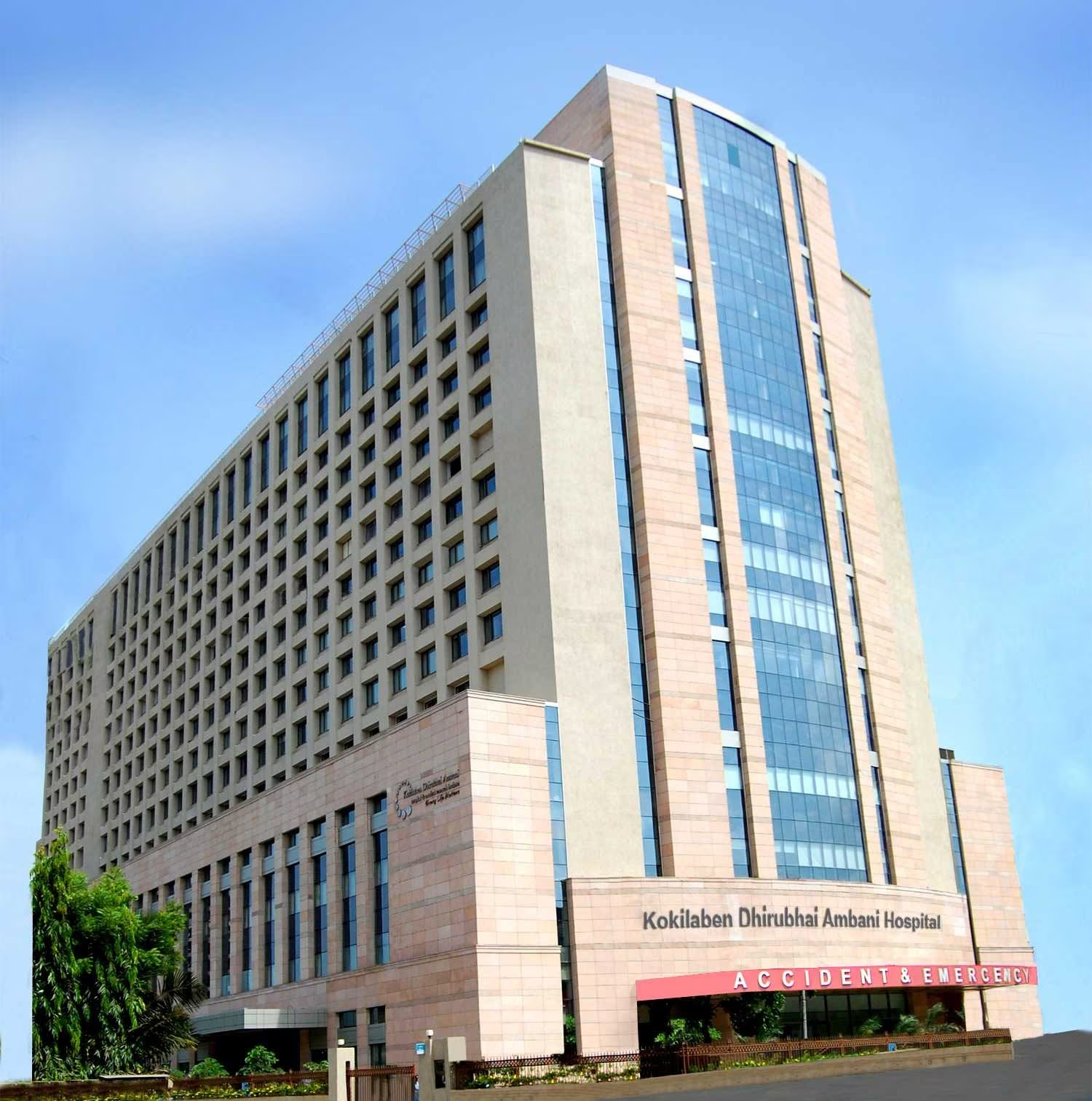
Kokilaben Dhirubhai Ambani Hospital, Mumbai, is a JCI, NABH, NABL, and CAP-accredited quaternary care hospital established in 2009. With 750 beds, 180...

Multi-specialty
Established 2009
750 beds
Accreditations
Joint Commission International (JCI)
National Accreditation Board for Hospitals & Healthcare Providers (NABH)
International Organization for Standardization (ISO)
Facilities
+13
Medicover Hospitals, Hitech City, Hyderabad
Platinum
View Details

Medicover Hospitals, Hitech City, Hyderabad

Hyderabad, India

Medicover Hospitals, Hitech City, Hyderabad, is a 400-bed NABH-accredited super-specialty hospital established in 2011. It is part of Medicover, a glo...

Multi-specialty
Established 2011
400 beds
Accreditations
National Accreditation Board for Hospitals & Healthcare Providers (NABH)
Joint Commission International (JCI)
Facilities
+13

Related Doctors

Connect with experienced doctors and medical specialists in this field.
Dr. Sabarinath C

Dr. Sabarinath C

Consultant

8 years of experience
View Details
Dr. Pradip Chakrabarti

Dr. Pradip Chakrabarti

Head of Department (HOD)

45 years of experience
View Details
Dr. Mukul Rastogi

Dr. Mukul Rastogi

Director

23 years of experience
View Details
Dr. Amit Rastogi

Dr. Amit Rastogi

Chairman

25 years of experience
View Details
Dr. Sushant Srivastava

Dr. Sushant Srivastava

Senior Consultant

30 years of experience
View Details
Dr. Satyendra Katewa

Dr. Satyendra Katewa

Head of Department (HOD)

20 years of experience
View Details

Related Articles

Explore more articles and insights on similar health topics.

MCL and Meniscus Repair in India: Surgery, Success Rate, and Recovery
Medical Tourism

MCL and Meniscus Repair in India: Surgery, Success Rate, and Recovery

1/7/2026, 4:09:39 PM
15 min read
Knee injuries rarely arrive alone. The medial collateral ligament (MCL) and the menisci sit on the same side of the joint and take force from the same...
Rotator Cuff Repair Surgery in India: Procedure, Success Rates and Cost
Medical Tourism

Rotator Cuff Repair Surgery in India: Procedure, Success Rates and Cost

1/7/2026, 3:51:06 PM
13 min read
Reaching for a glass on a high shelf, putting on a jacket, sleeping on one side-these are the small, automatic movements that a torn rotator cuff turn...
Best Countries for Orthopaedic Surgery and Sports Medicine in 2026
Medical Tourism

Best Countries for Orthopaedic Surgery and Sports Medicine in 2026

1/7/2026, 2:07:25 PM
13 min read
The question of where to have orthopaedic surgery involves more than finding the lowest price. A patient with a complex ACL tear alongside meniscal da...
ACL Reconstruction Surgery in India: Procedure, Cost, and Success Rate
Medical Tourism

ACL Reconstruction Surgery in India: Procedure, Cost, and Success Rate

1/7/2026, 1:27:59 PM
16 min read
An ACL tear announces itself clearly. Most patients describe a pop at the moment of injury, followed by rapid swelling and the unsettling feeling that...
Reverse Shoulder Replacement in India: Cost, Procedure, Recovery
Medical Tourism

Reverse Shoulder Replacement in India: Cost, Procedure, Recovery

30/6/2026, 6:09:19 PM
13 min read
The shoulder is the most mobile joint in the human body, but when a massive rotator cuff tear, progressive arthritis, or a complex fracture causes it ...
Hip Resurfacing Surgery in India: Procedure, Eligibility, and Recovery

Medical Tourism

Hip Resurfacing Surgery in India: Procedure, Eligibility, and Recovery

30/6/2026, 2:55:59 PM
13 min read
A 45-year-old man who runs, cycles, plays recreational football, and is told he has hip osteoarthritis faces a specific and uncomfortable decision. To...
Dr. Deepanshu Siwach

Sr. Medical Writer

Sr. Medical Content Writer Qonaq Health and Wellness
Doctor of Pharmacy

Dr. Deepanshu Siwach is an experienced clinical pharmacist with a Doctor of Pharmacy degree. He has over 4 years of experience and has worked with thousands of patients. He has been associated with ... Read More

Our website uses cookies. By clicking on accept you give your consent to the use of cookies as per our Privacy Policy.