
How to Choose the Right Hospital for Cancer Treatment Abroad

Getting a cancer diagnosis already turns your world upside down. Then comes another gut-punch: the treatment your doctor recommends may cost more than your house, have a six-month waiting list, or not be available in your country at all. That's the moment a lot of people start Googling "cancer treatment abroad," and suddenly they're staring at hundreds of hospitals across a dozen countries, all promising world-class care at a fraction of the price.
Here's the truth: some of those hospitals genuinely are world-class. Others are not. And when you're dealing with cancer, getting this choice wrong isn't just about wasted money. It can cost you time you don't have.
This guide will walk you through exactly how to evaluate and choose the right hospital for cancer treatment outside your home country. No vague advice. No sponsored rankings. Just a clear, structured process that helps you make a decision you can actually feel confident about.
Why People Travel Abroad for Cancer Treatment in the First Place
Before getting into the "how," it helps to understand the "why" because the reasons are more varied than most people assume.
- Cost is the most obvious one. Cancer care in the United States, for example, can easily cross $100,000 for a course of treatment. The same protocols (same drugs, same surgical techniques, same imaging) can cost between $20,000 and $40,000 in countries like India, Turkey, or Thailand. That gap is real, and it's not because the care is inferior. It largely comes down to lower operational costs, government-subsidized hospital infrastructure, and currency differences.
- Waiting times are a close second. In countries like Canada, the UK, and parts of Europe, public healthcare systems are stretched thin. Waiting weeks or even months to start oncology treatment isn't rare. For many cancers, especially aggressive ones, that delay is clinically unacceptable. Hospitals abroad, particularly those catering to international patients, often have significantly shorter turnaround times from consultation to treatment start.
- Access to specific therapies matters too. Proton therapy, certain immunotherapy protocols, robotic-assisted surgery, and some targeted therapies may not yet be available or may have extremely limited slots in a patient's home country. Specialized cancer centers abroad have built entire departments around these technologies.
- And finally, some patients want a second opinion from a different clinical environment, a fresh set of eyes from a team that doesn't share the original treating hospital's assumptions.
All of these are legitimate reasons. But none of them matter if you end up at the wrong facility.
Step 1: Know Exactly What You're Looking For Before You Start Comparing
This sounds obvious, but most people skip it, and it leads to an overwhelming, disorganized search. Before you open a single browser tab about hospitals in India or Germany, sit down and answer these questions:
- What type and stage of cancer are you dealing with? This changes everything. A Stage I breast cancer has entirely different treatment pathways than a Stage III pancreatic cancer. Some hospitals excel in specific cancer types. A facility famous for its liver transplant program may have a mediocre oncology unit.
- What treatment modality are you likely to need? Surgery, chemotherapy, radiation, immunotherapy, targeted therapy, proton therapy, and bone marrow transplant — these are not interchangeable services. Not every hospital offers all of them, and not every hospital that offers them does so at the same standard.
- What are your non-negotiables? For some patients, it's language. They need English-speaking doctors and nurses throughout. For others, it's travel distance, because long-haul flights are difficult during treatment. For others, it's a specific technology, such as CyberKnife or Da Vinci robotic surgery.
- What's your budget range? Not just for the treatment itself, but for travel, accommodation, accompanying family members, and potential follow-up visits. Be realistic here. Underestimating hidden costs is one of the most common mistakes in medical tourism.
Write these down. This is your filter. Everything from here on gets measured against it.
Step 2: Choose the Country, Then the Hospital
Many patients fall into the trap of finding one hospital that looks impressive and building their entire plan around it. The smarter approach is first to narrow down which country or region makes sense for your situation, and then find the best hospital within that shortlist.
- India has emerged as one of the most significant destinations for cancer treatment globally. It combines highly trained oncologists, many of whom have trained or practiced in the US or UK, with costs that are 60 to 80 percent lower than those in Western countries. Major hospital groups like Apollo, Tata Memorial, Fortis, and Manipal have dedicated oncology centers with technology that matches or exceeds what's available in most of Europe. The challenge is that quality varies enormously between hospitals, even within the same city.
- Turkey has invested heavily in oncology infrastructure over the past decade. Istanbul, in particular, is home to several internationally accredited hospitals that treat patients from Europe, Central Asia, and Africa. Treatment costs are competitive, and the country's geographic position makes it accessible from multiple continents.
- Germany represents the premium end of the European spectrum. German cancer centers, especially for complex cases, are among the most respected in the world. Survival rates across several cancer types are among the highest on the continent. The trade-off is cost. Germany is not cheap, though it's still less expensive than the US.
- Thailand (specifically Bangkok) remains a top destination for Southeast Asian and some Western patients, with hospitals such as Bumrungrad International having long-standing experience in international oncology cases.
- South Korea is quietly becoming a powerhouse for cancer care. Institutions like Samsung Medical Center and Asan Medical Center appear on global hospital rankings and have strong track records in gastrointestinal, thyroid, and lung cancers.
The right country for you depends on your cancer type, your budget, your travel capacity, and who you're comfortable handing your care over to. There's no single correct answer, but there is a right answer for your specific situation.
Step 3: Accreditation Is Your Baseline
When researching hospitals abroad, the first thing most articles tell you to check is whether the hospital is JCI-accredited. That advice is sound, but it needs some context.
Joint Commission International (JCI) is the global arm of the body that accredits hospitals in the United States. More than 1,000 healthcare organizations across 70+ countries have earned JCI's Gold Seal of Approval. To get it, hospitals undergo a rigorous evaluation of their clinical processes, patient safety protocols, infection control, staff credentialing, and dozens of other standards. The accreditation is renewed every three years, so it's not a one-time stamp.
For an international patient, a JCI-accredited hospital is a meaningful signal that the facility meets an internationally recognized baseline for safety and quality.
That said, JCI isn't the only credible accreditation. The International Society for Quality in Health Care (ISQua) is the umbrella body that accredits accreditation organizations, and several national systems, including NABH in India, ACHSI in Australia, and others, are ISQua-recognized. A hospital with strong national accreditation from an ISQua member body is not necessarily inferior to a JCI-accredited hospital.
What accreditation does not tell you is how good a hospital is specifically at treating your type of cancer. It tells you the systems are in place. You still need to dig deeper.
Step 4: Evaluate the Oncology Team and Not Just the Hospital Brand
Hospitals don't treat cancer. Doctors do. And within any large hospital, the quality of individual departments and specialists varies.
Here's what you want to know about the oncology team before you commit:
- Subspecialty training. A general oncologist is not the same as a surgical oncologist who has spent their career operating on pancreatic tumors. Ask whether the doctors who would lead your care are subspecialists in your specific cancer type. This matters more than almost anything else.
- Case volume. In oncology, this is one of the most consistent predictors of outcome. Surgeons and oncologists who perform high volumes of a specific procedure or treatment protocol get better at it. Ask how many cases of your specific cancer type the department treats per year.
- Tumor board reviews. The best cancer centers don't rely on one doctor's opinion. They convene multidisciplinary tumor boards (panels of surgical oncologists, medical oncologists, radiation oncologists, pathologists, and radiologists) to review complex cases together. Ask whether your case would go through this kind of review.
- International training and affiliations. Many leading oncologists at hospitals abroad have trained at institutions such as Johns Hopkins, MD Anderson, and major European cancer centers. Some hospitals maintain active clinical partnerships with these institutions. These affiliations are worth noting. They indicate exposure to cutting-edge protocols.
- Published research and clinical trials. Hospitals/Clinics that are vigorously involved in cancer research and running clinical trials are, generally speaking, operating at the frontier of treatment knowledge. If the hospital has access to trials relevant to your cancer type, that's a meaningful advantage.
Step 5: Technology and Infrastructure
Cancer treatment technology has evolved significantly in the past decade. The gap between what's available in different hospitals, even in the same country, can be enormous.
- Proton therapy is a form of radiation that targets tumors with remarkable precision while minimizing damage to surrounding healthy tissue. It's particularly valuable for pediatric cancers, brain tumors, and tumors near sensitive structures. Not every country has proton therapy centers, and not every hospital that claims to offer it has the same level of experience.
- Robotic surgery (most commonly the Da Vinci system) allows surgeons to perform minimally invasive procedures with greater precision and control than conventional laparoscopic techniques. For certain cancer surgeries (prostate, colorectal, gynecologic), this can translate into less blood loss, shorter hospital stays, and faster recovery.
- Imaging and diagnostics matter enormously. PET/CT scanning, 3T MRI, and molecular pathology capabilities affect both diagnostic accuracy and treatment planning. Ask specifically what imaging equipment is on-site (not shared with another facility down the road) and whether the hospital has in-house pathology.
- Radiation technology ranges from basic linear accelerators to advanced systems like CyberKnife, Gamma Knife, and IMRT/IGRT. The right system depends on your specific cancer, but you want to verify that what the hospital is marketing actually exists and is staffed by experienced radiation oncologists and physicists.
Don't just accept marketing brochures. Ask to see the department. Ask when the equipment was last updated. Ask how many procedures they perform weekly on that specific machine.
Step 6: International Patient Services
A hospital that treats its domestic patients exceptionally well may still be a frustrating experience for an international patient if it hasn't built the right support infrastructure for that journey.
When evaluating a hospital's international patient services, look for:
- Dedicated international patient coordinators. These are staff members whose entire job is to manage the experience of patients coming from abroad, from the first remote consultation through discharge and follow-up. A good coordinator handles medical record review, appointment scheduling, translation, accommodation help, and local transport. Their quality often determines how smooth your entire experience is.
- Language capacity. Medical communication is too important to leave to machine translation. Ask specifically whether English-speaking (or your language) doctors and nurses are available not just in the international desk, but in the actual treatment areas — the ward, the operating theater, the chemotherapy unit.
- Remote consultation capability. The ability to have your case reviewed before you travel is a significant advantage. A teleconsultation with the treating oncologist lets you assess the doctor directly and ensures the hospital genuinely understands your case before you board a plane.
- Visa and travel support. Many countries offer specific medical visa categories for cancer patients. A good hospital's international team will guide you through this process and provide the documentation your embassy requires.
- Aftercare coordination. Treatment doesn't end when you leave the hospital. Ask how the hospital coordinates your follow-up care with your oncologist back home. Whether they provide detailed discharge summaries in English, whether teleconsultations are available during the follow-up period, and how quickly they respond to concerns that arise after you return home.
Step 7: The Cost Question
Medical tourism costs often appear lower in the brochure than on the final bill. This isn't always deliberate. Oncology treatment genuinely involves variables that are hard to predict, but you can protect yourself by asking the right questions upfront.
- Get a written treatment estimate that itemizes the major cost components: diagnostic workup, specialist consultations, surgical or procedural fees, anesthesia, hospital room and board, medications, and nursing care. Understand what's included in a "package" price and what's not.
- Ask about the cost of unexpected extensions. What happens if your hospital stay is longer than planned? What if you need additional cycles of chemotherapy beyond what was initially estimated? What are the billing rates for complications?
- Factor in the full trip cost. This includes flights, accommodation for yourself and at least one companion, local transport, food, and a financial buffer for contingencies. Depending on the country and duration, this can add $3,000 to $10,000, or more, to the treatment cost.
- Understand your insurance position. Most local health insurance policies do not cover treatment abroad. Some international health insurance plans do. If you're relying on insurance, confirm coverage in writing before you travel. Some countries also have bilateral healthcare agreements that may apply.
- Don't optimize purely for cost. This is worth saying plainly. The cheapest option is rarely the right one for cancer care. The goal is value. The best possible quality of care for a cost that's sustainable for your situation.
Step 8: Red Flags to Watch For
As you research hospitals, certain patterns should raise concern:
A hospital that's eager to make a sales pitch before thoroughly reviewing your medical records is more focused on bookings than on clinical suitability. The first conversation with a legitimate cancer center should involve clinical questions, not financial ones.
Guaranteed outcomes or unusually optimistic survival statistics should be treated with skepticism. Oncology is complex and deeply individual. No ethical cancer specialist will promise you a cure.
Difficulty getting direct access to the treating specialist — where all communication is filtered through sales or "patient coordinator" staff who can't answer clinical questions — is a warning sign about how the institution prioritizes patient care.
Very low prices for complex procedures that are expensive everywhere else in the world deserve scrutiny. If a bone marrow transplant is being quoted at a fraction of what it costs at credible institutions globally, ask hard questions about what's being cut.
The Questions You Should Ask Every Hospital You're Seriously Considering
Before making a final decision, put these questions to the hospital's clinical team in writing, so you have a record:
- How many cases of my specific cancer type and stage does your department treat per year?
- Who will be my primary oncologist, and what is their specific subspecialty training?
- Will a multidisciplinary tumor board review my case?
- What treatment protocol would you recommend, and how does it compare to NCCN or ESMO guidelines?
- Is this hospital currently running any clinical trials relevant to my cancer type?
- What is your five-year survival rate for patients with my diagnosis? (Not all hospitals publish this, but it's fair to ask.)
- Who is my dedicated point of contact throughout the treatment journey?
- How will my treating oncologist communicate with my doctor back home?
- What is your protocol if I develop a complication after returning to my home country?
- Can I speak directly with the oncologist who would lead my care, before I commit?
A hospital that responds to these questions thoughtfully, specifically, and without pressure is one that treats you as a patient rather than a revenue source.
One Final Thought
Traveling abroad for cancer treatment can be genuinely life-changing — in the best way. There are oncologists and cancer centers outside North America and Western Europe doing extraordinary work. The cost savings can remove enormous financial stress at an already brutal time. Access to technologies and therapies not available at home can open clinical options that wouldn't otherwise exist.
But this decision deserves the same rigor and critical thinking you'd apply to any major medical choice. Don't let urgency push you into a shortcut. Don't let glossy brochures substitute for hard clinical questions. And don't go through this process alone. Lean on a trusted oncologist at home, patient advocates, and people who've been through similar experiences at the hospitals you're considering.
The right hospital is out there. With the right process, you'll find it.
Need help evaluating hospitals for cancer treatment abroad? Connect with our medical tourism advisors who specialize in oncology case coordination. The consultation is absolutely free, and we won't push you toward a hospital until we thoroughly understand your diagnosis.
Related Hospitals
Discover hospitals and medical centers related to this topic for quality healthcare services.
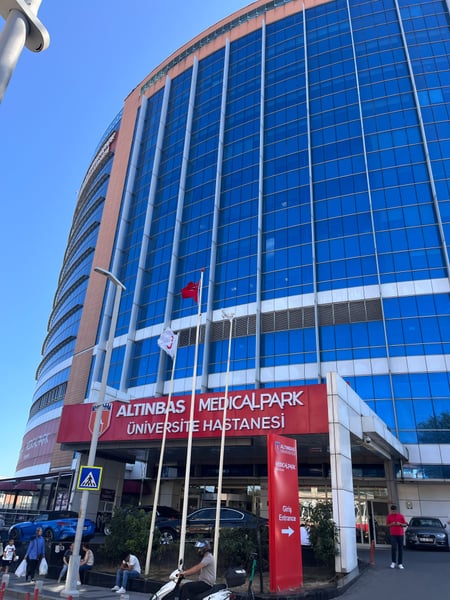
Medical Park Bahcelievler Hospital
Medical Park Bahcelievler Hospital is a 242-bed JCI-accredited hospital in Istanbul, established in 2007. Spread across 33,000 square meters and 19 fl...
Accreditations
Facilities

BLK-Max Super Speciality Hospital, New Delhi
BLK-Max Super Speciality Hospital in New Delhi is one of India's premier healthcare institutions, offering 650 beds, 22 advanced operation theatres, a...
Accreditations


Facilities

Fortis Memorial Research Institute (FMRI), Gurgaon
Fortis Memorial Research Institute (FMRI), Gurgaon, is a world-class multi-specialty hospital established in 2013. The hospital offers 330 beds, 15 op...
Accreditations


Facilities

Artemis Hospital, Gurgaon
Artemis Hospital, Gurgaon, is a JCI accredited multispecialty hospital that was established in 2007. It offers 750+ beds and world -class infrastructu...
Accreditations



Facilities

Kokilaben Dhirubhai Ambani Hospital, Mumbai
Kokilaben Dhirubhai Ambani Hospital, Mumbai, is a JCI, NABH, NABL, and CAP-accredited quaternary care hospital established in 2009. With 750 beds, 180...
Accreditations


Facilities

Medicover Hospitals, Hitech City, Hyderabad
Medicover Hospitals, Hitech City, Hyderabad, is a 400-bed NABH-accredited super-specialty hospital established in 2011. It is part of Medicover, a glo...
Accreditations


Facilities
Related Doctors
Connect with experienced doctors and medical specialists in this field.
Dr. Wichit Arpornwirat
Consultant

Dr. Prasan Kachonrattanadet
Consultant

Dr. Suporn Chuncharunee
Associate Professor

Dr. Ekaphop Sirachainan
Associate Professor

Dr. Ajai Sasidhar
Consultant
Dr. Boben Thomas
Senior Consultant
Related Articles
Explore more articles and insights on similar health topics.

How Multidisciplinary Teams Improve Patient Outcomes

Why Hospital Accreditation Matters in Medical Tourism
Is Brain Tumour Surgery Risky? What Patients Need to Know Before Making a Decision

Managing Pain After Spine Surgery

How Long Does Recovery Take After Spine Surgery?

Post-Transplant Care for International Patients

Author
View AllHead - International Patient Services
Dr. Riya Shree is a clinical physiotherapist who completed her internship at Mata Chanan Devi Hospital, New Delhi, gaining hands-on experience in patient care and rehabilitation. She served on the fr... Read More
Our website uses cookies. By clicking on accept you give your consent to the use of cookies as per our Privacy Policy.
