
Plasmapheresis Cost in India
About Plasmapheresis
Plasmapheresis is a specialized medical procedure that removes harmful substances from the blood, such as abnormal antibodies, toxins, or inflammatory proteins. Doctors use this treatment when the immune system becomes overactive or when the blood contains components that damage nerves, muscles, or vital organs. Because the procedure acts quickly, it is often used in emergency situations and in chronic autoimmune or neurological conditions.
Around the world, the demand for plasmapheresis continues to rise, especially in neurology, nephrology, and critical care. Conditions like Guillain-Barré Syndrome, Myasthenia Gravis, and certain kidney disorders respond very well to this treatment, which has led to widespread adoption in hospitals and intensive care units. As medical technology advances, modern apheresis machines allow the procedure to be performed safely, efficiently, and with excellent clinical results.
Plasmapheresis plays a life-saving role for many patients by reducing disease activity, stabilizing symptoms, and supporting recovery when other treatments alone are not enough.
What Is Plasmapheresis?
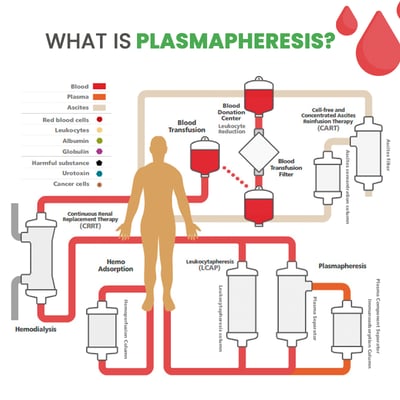
Plasmapheresis is a therapeutic procedure that removes the patient’s plasma (the liquid part of the blood) and replaces it with a clean substitute such as saline, albumin, or donor plasma. Doctors use it to eliminate harmful substances circulating in the bloodstream, especially disease-causing antibodies and inflammatory proteins.
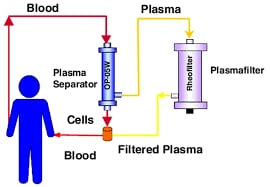
During the procedure, a machine separates blood into its components. The red blood cells, white blood cells, and platelets are returned to the patient, while the plasma containing unwanted elements is filtered out and replaced with a safe fluid. This process helps reset the immune system and reduce the severity of conditions driven by abnormal immune activity.
Plasmapheresis differs from plasma donation because it focuses on treatment rather than collection. The goal is to remove harmful substances quickly, providing relief from symptoms and preventing further damage to the organs or nervous system.
Why Is Plasmapheresis Recommended?
Doctors recommend plasmapheresis when the immune system starts attacking the body’s own tissues or when harmful substances in the bloodstream need to be removed quickly. The procedure helps stabilize patients, improve symptoms, and support recovery when medications alone may not act fast enough.
- Autoimmune Disorders: In many autoimmune diseases, the body produces antibodies that damage nerves, muscles, or organs. Plasmapheresis removes these abnormal antibodies and reduces inflammation.
- Systemic Lupus Erythematosus (SLE)
- Vasculitis
- Goodpasture syndrome (Anti-GBM disease)
- Neurological Conditions: Neurological disorders often respond well to plasmapheresis because it helps prevent the immune system from interfering with nerve signals.
- Guillain-Barré Syndrome (GBS)
- Myasthenia Gravis (MG)
- Neuromyelitis Optica (NMO)
- Multiple Sclerosis (MS) relapses
- Chronic Inflammatory Demyelinating Polyneuropathy (CIDP)
- Blood Disorders: Certain blood-related conditions involve abnormal proteins or clotting factors. Plasmapheresis removes these harmful components and helps restore healthy blood function.
- Thrombotic Thrombocytopenic Purpura (TTP)
- Hyperviscosity syndromes
- Cryoglobulinemia
- Kidney and Metabolic Diseases: Doctors use plasmapheresis to remove circulating toxins, immune complexes, or antibodies that damage the kidneys, especially in rapidly progressing conditions.
- Rapidly progressive glomerulonephritis
- Anti-GBM nephritis
- Some instances of IgA nephropathy
- Transplant Medicine: Plasmapheresis helps prevent organ rejection and is often used when patients have antibodies that could damage a newly transplanted organ.
How Is Plasmapheresis Performed?
Doctors perform plasmapheresis using a specialized apheresis machine that separates plasma from the blood and replaces it with a clean substitute. The procedure is safe, controlled, and closely monitored by trained medical professionals.
Step 1: Establishing Vascular Access: The doctor inserts a catheter into a vein, either in the arm or through a central line in the neck or groin. This allows blood to flow smoothly in and out of the apheresis machine.
Step 2: Blood Separation: The machine draws blood, spins it, and separates it into plasma and cellular components. The machine removes the plasma containing harmful antibodies or toxins. Red and white blood cells and platelets return to the patient immediately.
Step 3: Plasma Replacement The removed plasma is replaced with saline, albumin, or donor plasma, depending on the patient’s condition and medical needs.
Step 4: Monitoring During the Procedure: Doctors and nurses monitor blood pressure, heart rate, electrolytes, and calcium levels throughout the session to ensure safety and comfort.
Step 5: Completion and Recovery: A single session usually lasts 1.5 to 3 hours. Most patients recover quickly and may need several sessions over a few days, depending on their diagnosis.
Get a Free Treatment Plan
About Plasmapheresis in India
What Is the Cost of Plasmapheresis in India?
The cost of plasmapheresis in India generally ranges from $300 to $650 per session (approximately ₹25,000 to ₹55,000). Most patients require 3 to 7 sessions, depending on the underlying condition, severity, and the treatment response. This brings the total cost to approximately $900-$4,500, or ₹75,000-₹3.7 lakh.
Prices vary based on hospital facilities, the type of replacement fluid used, and whether the patient requires ICU care.
Plasmapheresis Cost Breakdown in India
Type of Service | Average Cost (USD) | Approx. Cost (INR) |
| Plasmapheresis (per session) | $300 – $650 | ₹25,000 – ₹55,000 |
| Albumin Replacement (per session) | $80 – $150 | ₹6,500 – ₹12,000 |
| Fresh Frozen Plasma (if used) | $100 – $180 | ₹8,000 – ₹15,000 |
| Central Line Insertion (if required) | $120 – $250 | ₹10,000 – ₹20,000 |
| ICU Stay (per day, if needed) | $150 – $350 | ₹12,000 – ₹28,000 |
| Consultation + Monitoring Charges | $40 – $100 | ₹3,300 – ₹8,200 |
- Patients with severe neurological diseases like GBS and NMO often require five cycles, which increases the overall cost.
- Albumin-based replacement is more expensive but safer than plasma in many cases.
- ICU care can significantly add to the final bill, but is needed only in critical cases.
What the Cost Includes
- Procedure charges for each plasmapheresis session
- Apheresis machine usage
- Doctor and nursing fees during the procedure
- Standard consumables such as tubing sets and filters
- Replacement fluids (if included in the package)
- Basic monitoring, like blood pressure, heart rate, and electrolytes
- Daycare room charges for non-ICU patients
- Routine blood tests before and after sessions
These inclusions cover the essential requirements for safe and effective plasmapheresis.
What the Cost Excludes
- Albumin or plasma replacement fluids (if billed separately)
- ICU stay for patients who need critical monitoring
- Central venous catheter insertion
- Specialized investigations such as PET-CT, autoimmune panels, or antibody titers
- Medications for symptom control, infections, or complications
- Extended hospitalization beyond the planned duration
- Management of underlying disease (e.g., immunotherapy, steroids)
- Travel, accommodation, and interpreter services for international patients
These exclusions vary across hospitals, so patients often request a detailed cost estimate before starting treatment.
What Is the Cost of Plasmapheresis in Different Indian Cities?
The cost of plasmapheresis varies across India based on hospital infrastructure, critical care facilities, the apheresis machine used, and the cost of replacement fluids such as albumin and plasma. Metropolitan cities generally have higher prices due to advanced ICU units and super-specialty neurology and nephrology departments. Tier-2 cities offer more budget-friendly options while maintaining good standards of care.
City | Cost per Session (USD) | Approx. Cost per Session (INR) |
| New Delhi | $350 – $650 | ₹28,000 – ₹55,000 |
| Mumbai | $380 – $700 | ₹31,000 – ₹58,000 |
| Bangalore | $320 – $600 | ₹26,000 – ₹50,000 |
| Chennai | $300 – $580 | ₹25,000 – ₹48,000 |
| Hyderabad | $320 – $600 | ₹26,000 – ₹50,000 |
- Delhi and Mumbai offer advanced critical-care units and the latest apheresis technology.
- Bangalore and Hyderabad balance affordability with strong neurology and nephrology teams.
- Chennai provides cost-effective treatment with highly experienced specialists in autoimmune and neurological disorders.
What Factors Affect the Cost of Plasmapheresis in India?
The total cost of plasmapheresis can vary widely from patient to patient. Each case is different because the number of sessions, replacement fluids, and level of monitoring depend entirely on the patient’s medical condition.
- Number of Sessions Required: Most patients need 3 to 7 sessions, but severe cases such as GBS or TTP may require more. More sessions directly increase the overall cost.
- Type of Replacement Fluid Used: Albumin is commonly used and increases cost. Fresh Frozen Plasma (FFP) is needed in certain disorders like TTP and may cost more.
- ICU Requirement: Patients who require intensive monitoring or ventilator support may need ICU admission. ICU care adds significantly to daily expenses.
- Underlying Medical Condition: Serious neurological and autoimmune disorders often require additional medications, tests, and prolonged hospitalization.
- Use of Central Venous Catheter: Some patients need a central line for repeated sessions. Placement and maintenance increase the cost.
- Hospital Category: Super-specialty hospitals with advanced apheresis units and round-the-clock critical care charge higher fees than mid-range facilities.
- Additional Laboratory Tests: Frequent blood tests, antibody titers, electrolyte evaluation, and infection screening add to the total cost.
- Medications and Supportive Treatments: Patients may need steroids, IV fluids, calcium supplements, or immunomodulators, which are billed separately.
How Does the Cost in India Compare With Other Countries?
Plasmapheresis is significantly more affordable in India than in many Western and Middle Eastern countries. Despite the lower cost, India offers advanced apheresis technology, skilled critical-care teams, and well-equipped neurology and nephrology departments.
Below is a global cost comparison:
Country | Cost per Session (USD) |
| United States | $1,500 – $3,500 |
| United Kingdom | $1,200 – $2,800 |
| Singapore | $1,000 – $2,200 |
| UAE | $900 – $2,000 |
| Thailand | $600 – $1,200 |
| India | $300 – $650 |
Patients save 50% to 80% by choosing India while still receiving world-class care from experienced specialists using the latest apheresis systems.
India’s affordability, combined with strong clinical outcomes, positions it among the best global destinations for plasmapheresis treatment.
Why Should You Choose India for Plasmapheresis?
India has become a trusted destination for plasmapheresis because it offers advanced medical facilities, skilled specialists, and highly affordable treatment options. Patients from around the world travel to India for neurological, autoimmune, and critical care management due to consistent clinical outcomes and streamlined patient support.
- Experienced Neurologists and Critical-Care Specialists: India has a strong team of neurologists, nephrologists, hematologists, and ICU physicians who regularly treat complex conditions requiring plasmapheresis. Their experience ensures safe and effective care.
- Modern Apheresis Technology: Hospitals use advanced apheresis machines that allow precise plasma separation and smooth return of blood components. This ensures safety, accuracy, and comfort during the procedure.
- Strong ICU and Emergency Support: Many patients needing plasmapheresis have severe neurological conditions or autoimmune flare-ups. India offers excellent ICU care with continuous monitoring and rapid response.
- Multi-Specialty Support Under One Roof: Hospitals provide neurologists, nephrologists, hematologists, physiotherapists, dieticians, and rehabilitation experts in one location, making treatment seamless.
- Quick Access and Minimal Waiting Periods: Patients can begin treatment immediately, which is critical in conditions like GBS, TTP, or severe autoimmune crises, where rapid intervention improves outcomes.
- Dedicated International Patient Services: Hospitals assist with medical visas, airport pickup, accommodation planning, translators, and end-to-end support for international patients.
What Is the Recovery and Success Rate After Plasmapheresis?
Recovery after plasmapheresis depends on the condition being treated, the number of sessions required, and the patient’s overall health. Many patients begin to feel relief even after the first few sessions because the procedure removes harmful antibodies or proteins that trigger symptoms.
Recovery After Each Session
Most patients recover quickly after plasmapheresis.
- Mild tiredness or light-headedness may occur but usually settles within a few hours.
- Patients can return to normal activities the same or the next day unless their underlying condition requires hospitalization.
- Calcium supplements are sometimes given to prevent tingling or muscle cramps.
Recovery Timeline Based on Condition
- Guillain-Barré Syndrome: Improvement often begins within a week of starting treatment.
- Myasthenia Gravis: Muscle strength typically improves within a few days.
- TTP: Plasmapheresis acts rapidly and may be lifesaving, with daily sessions until stabilization.
- NMO or MS Relapse: Inflammatory symptoms gradually decrease over several sessions.
Each condition has its own recovery pattern, but plasmapheresis generally produces rapid improvement.
Success Rate of Plasmapheresis
Success varies across diseases, but overall results are strong:
- GBS: High success rate when started early; many patients avoid long-term paralysis.
- Myasthenia Gravis: Effective in crises, improving breathing and muscle strength.
- TTP: Life-saving in most cases with daily sessions until platelet count recovers.
- Autoimmune Disorders: Helps reduce antibody levels and control relapses.
The effectiveness depends on how early treatment begins and how well the underlying disease responds.
Plasmapheresis Cost Comparison by Country
Compare Plasmapheresis costs across different countries to make an informed decision about your medical treatment.
| Country | Cost Range (USD) | Potential Savings | Action |
|---|---|---|---|
IndiaCurrentBest Value | $300 - $650 | — | Get Quote |
Note: Costs may vary based on hospital choice, room type, additional services, and individual medical requirements. Contact us for a personalized quote.
Leading Hospitals for Plasmapheresis in India
Medical Park Bahcelievler Hospital
Medical Park Bahcelievler Hospital is a 242-bed JCI-accredited hospital in Istanbul, established in 2007. Spread across 33,000 square meters and 19 fl...
Accreditations

Facilities

Hisar Intercontinental Hospital, Istanbul
Hisar Intercontinental Hospital in Istanbul is a JCI-accredited, 212-bed multispecialty hospital spanning 35,000 square meters and featuring 53 medica...
Accreditations
Facilities

Medipol Bahçelievler Hospital
Medipol Bahçelievler Hospital is a 441-bed private hospital in Istanbul that began operations in May 2022. Covering 60,000 square meters across 15 flo...
Accreditations
Facilities
Similar Procedures
Gallery
FAQ


Our website uses cookies. By clicking on accept you give your consent to the use of cookies as per our Privacy Policy.